
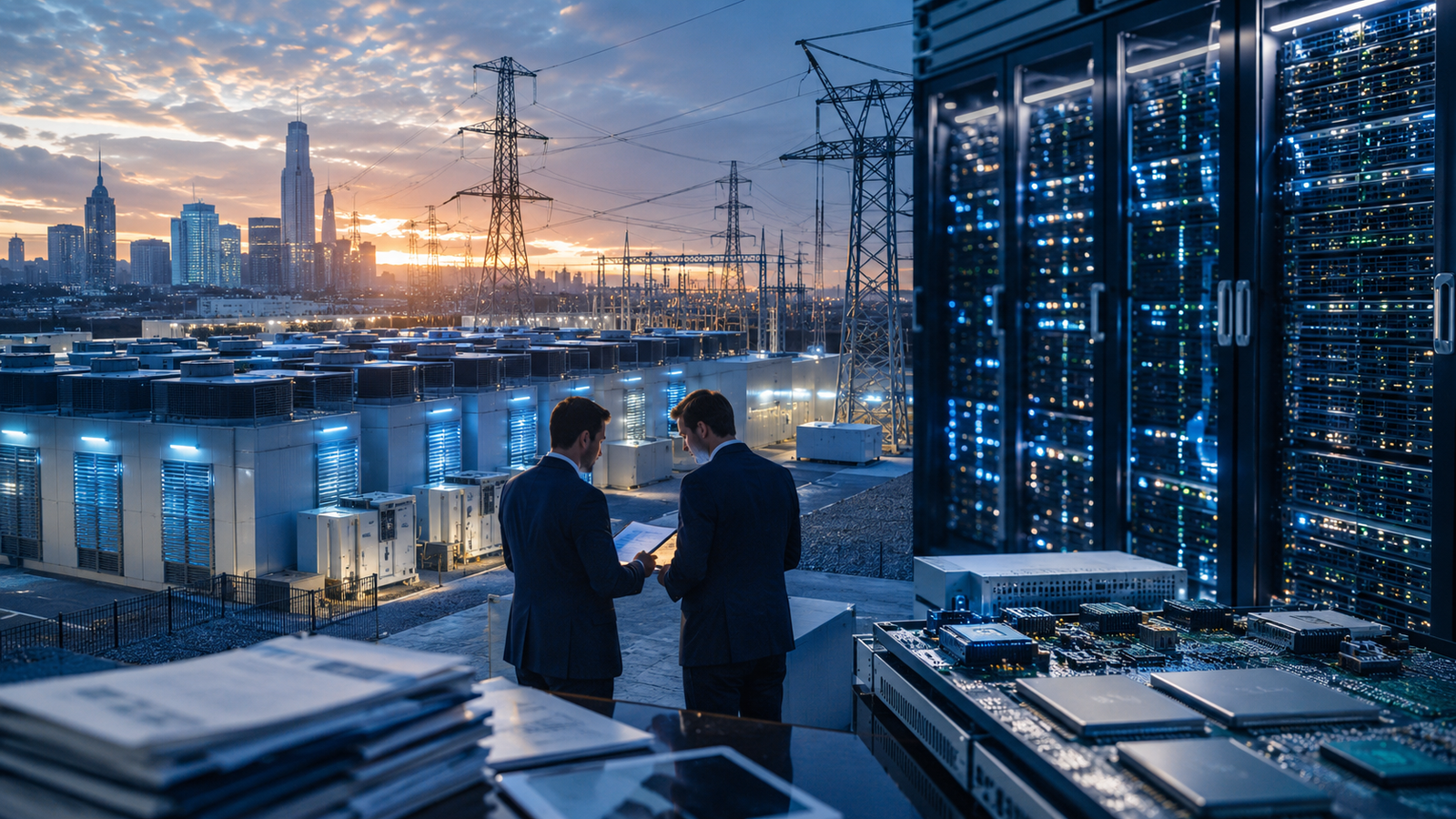
Artificial intelligence has already transformed financial markets by driving record demand for advanced chips, cloud computing, and enterprise software. Now, a new investment story is rapidly gaining momentum—one that extends far beyond the companies building AI models. Wall Street is increasingly focused on financing the massive physical infrastructure needed to power the next generation of artificial intelligence.
According to Reuters’ July 3 market outlook, investment banks are rapidly expanding financing solutions for AI infrastructure projects as demand for hyperscale data centers, advanced semiconductors, high-performance computing (HPC), and supporting energy infrastructure accelerates. New financing structures are emerging to fund hundreds of billions of dollars in AI-related capital expenditures, creating one of the fastest-growing investment themes in global markets.
For investors, this marks an important evolution in the AI story. While software developers and AI platform providers continue attracting attention, the broader infrastructure ecosystem—the “picks-and-shovels” supporting the AI revolution—may offer some of the most compelling long-term opportunities.
AI Is Becoming an Infrastructure Investment Story
The first phase of the AI boom was defined by breakthroughs in generative AI models and explosive demand for advanced graphics processing units (GPUs).
The next phase is centered on building the infrastructure required to operate these increasingly sophisticated systems.
Training and deploying frontier AI models requires enormous computing power, vast quantities of electricity, advanced networking equipment, specialized cooling technologies, and highly secure hyperscale data centers.
Technology companies are responding with unprecedented capital spending.
Major cloud providers, enterprise software companies, and AI developers continue investing billions of dollars to expand computing capacity, modernize infrastructure, and secure long-term access to high-performance hardware.
As these investments grow larger, Wall Street is stepping in to provide increasingly sophisticated financing solutions.
According to Reuters, banks are developing new lending structures and investment vehicles specifically designed to support AI infrastructure, reflecting the sector’s rapid emergence as a major capital market opportunity.
Financing the AI Buildout
The scale of AI infrastructure investment is difficult to overstate.
Constructing modern AI data centers requires billions of dollars in capital, while supporting infrastructure—including substations, transmission lines, backup power systems, cooling equipment, networking hardware, and semiconductor manufacturing capacity—adds significantly to overall costs.
Rather than relying exclusively on corporate balance sheets, companies are increasingly turning to financial institutions for project financing, structured lending, private credit, infrastructure funds, and long-term leasing arrangements.
This trend mirrors previous infrastructure booms in sectors such as telecommunications, renewable energy, and transportation.
As institutional investors search for stable long-term returns, AI infrastructure is increasingly being viewed as a new asset class capable of generating predictable cash flows backed by long-duration technology demand.
Data Centers Become the New Digital Real Estate
At the center of this investment cycle are hyperscale data centers.
Artificial intelligence workloads consume significantly more computing resources than traditional cloud applications, requiring specialized facilities capable of housing thousands of high-performance processors while maintaining continuous operation.
This growing demand has created significant opportunities for companies involved in:
- Data center development.
- Digital infrastructure real estate.
- Server deployment.
- High-speed networking.
- Fiber connectivity.
- Cloud hosting services.
Data center real estate investment trusts (REITs) have become particularly attractive because they own and lease mission-critical facilities supporting AI deployment.
As occupancy rates remain high and new capacity struggles to keep pace with demand, these companies could continue benefiting from long-term leasing agreements with major technology firms.
The Energy Challenge Creates New Opportunities
Artificial intelligence is not only transforming computing—it is reshaping energy demand.
Large AI data centers require enormous amounts of electricity, often consuming power comparable to small cities.
This has increased investor interest in companies involved in:
- Electric utilities.
- Independent power producers.
- Renewable energy developers.
- Grid modernization.
- Transmission infrastructure.
- Battery storage systems.
Governments and utilities are also accelerating investments in electrical infrastructure to ensure reliable power supplies for future AI facilities.
As a result, the AI investment opportunity increasingly extends well beyond traditional technology companies.
Power generation and electrical infrastructure may become equally important beneficiaries of long-term AI adoption.
Semiconductor Equipment Remains Essential
Although semiconductor manufacturers have dominated AI headlines, companies supplying the tools needed to manufacture advanced chips also stand to benefit.
Semiconductor equipment manufacturers provide critical technologies used throughout the fabrication process, including lithography, testing, packaging, inspection, and wafer processing.
As global chip production expands to meet AI demand, these suppliers could experience sustained growth regardless of which chip designer ultimately leads the market.
Investors increasingly recognize that semiconductor equipment companies often benefit from industry-wide capital spending rather than relying on the commercial success of any single AI platform.
Cooling Technology Is Becoming Mission Critical
One often overlooked area of AI infrastructure is thermal management.
High-performance processors generate substantial heat, making advanced cooling systems essential for maintaining efficiency and preventing equipment failures.
Traditional air cooling is increasingly being supplemented—or replaced—by liquid cooling technologies capable of supporting significantly higher computing densities.
This trend has created opportunities for companies specializing in:
- Liquid cooling systems.
- Industrial HVAC equipment.
- Precision thermal management.
- Industrial pumps and fluid systems.
- Energy-efficient cooling technologies.
As AI workloads continue expanding, cooling infrastructure may become one of the fastest-growing segments within digital infrastructure.
Why This Matters for Investors
The AI investment landscape is becoming significantly broader.
While many investors remain focused on software developers and semiconductor designers, Wall Street increasingly views AI infrastructure as the foundation supporting long-term industry growth.
This creates investment opportunities across multiple sectors, including:
- Data center REITs.
- Power generation companies.
- Electrical equipment manufacturers.
- Grid infrastructure providers.
- Cooling technology specialists.
- Semiconductor equipment manufacturers.
- Industrial automation companies.
- Digital infrastructure financing firms.
Unlike AI application developers, many of these businesses benefit regardless of which language model or software platform ultimately dominates the market.
Their products and services remain essential across the entire AI ecosystem.
Future Trends to Watch
Several developments could shape the next phase of AI infrastructure investing:
- Continued increases in capital spending by hyperscale cloud providers.
- Expansion of AI-focused infrastructure financing by investment banks.
- Growth in private credit funding for digital infrastructure.
- Rising electricity demand driven by AI workloads.
- Government investments in power grids and digital infrastructure.
- Advances in semiconductor manufacturing capacity.
- Increased adoption of liquid cooling technologies.
- Long-term leasing activity among data center operators.
Collectively, these trends suggest that AI infrastructure will remain one of the most important investment themes over the coming decade.
Key Investment Insight
The next stage of the AI revolution is likely to be defined not only by software innovation but also by the infrastructure required to support it. Investors should consider expanding their focus beyond AI application developers to include the broader ecosystem of “picks-and-shovels” businesses that enable artificial intelligence at scale. Data center REITs, power generation companies, electrical equipment manufacturers, cooling technology firms, grid infrastructure providers, and semiconductor equipment companies are all positioned to benefit from sustained AI-related capital spending, regardless of which AI platforms ultimately emerge as market leaders.
According to Reuters’ July 3 market outlook, investment banks are rapidly developing new financing structures to support hundreds of billions of dollars in AI infrastructure investments, underscoring Wall Street’s growing confidence in the sector’s long-term growth potential. As institutional capital continues flowing into AI infrastructure, investors should closely monitor capital expenditure trends, financing activity, energy demand, and digital infrastructure expansion for signals about where the next wave of opportunities may emerge.
For investors seeking timely market intelligence, in-depth sector analysis, and actionable insights across artificial intelligence, emerging industries, infrastructure, and global financial markets, stay connected with MoneyNews.Today—your trusted source for daily investor news and market analysis.




