
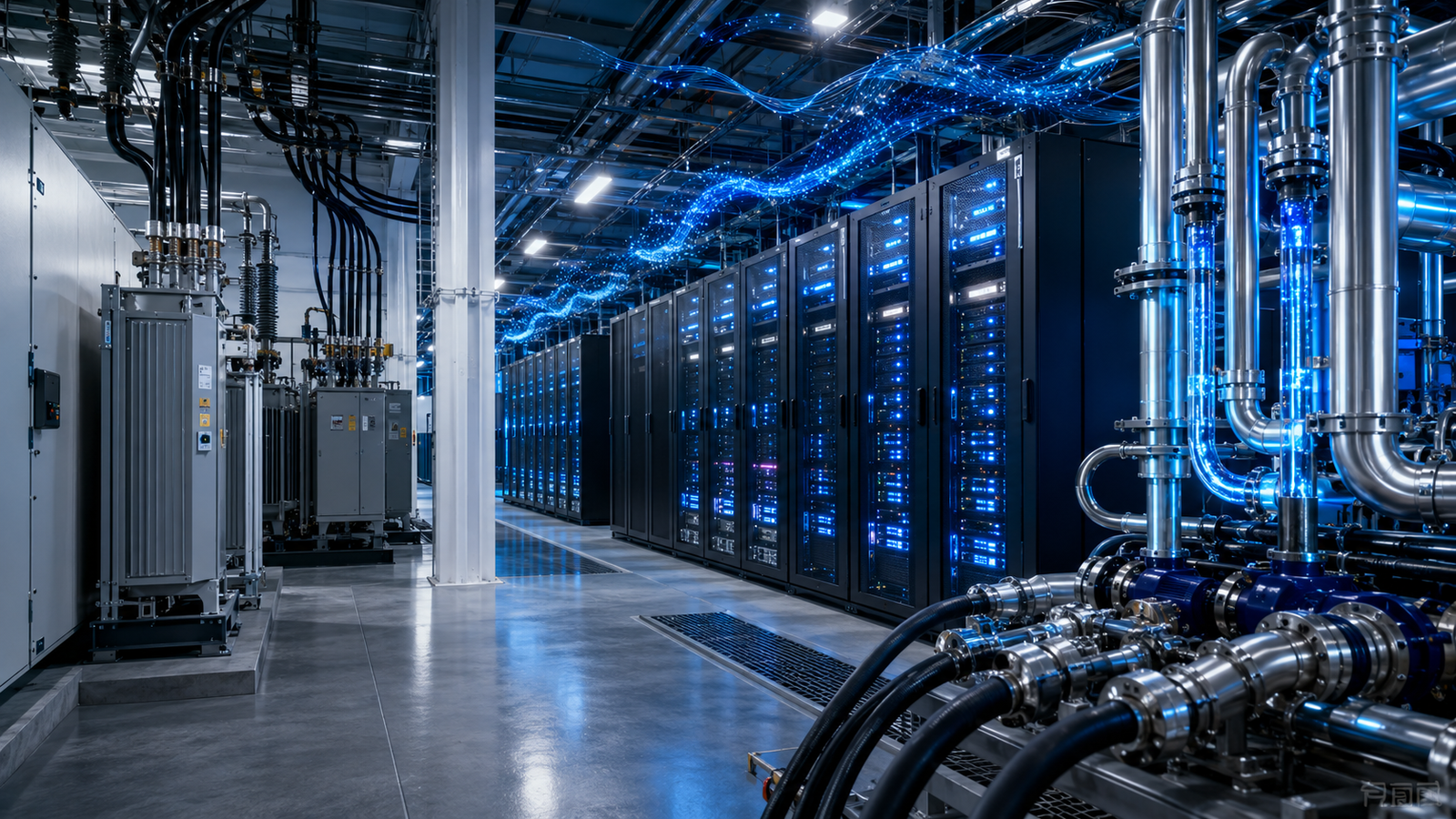
Artificial intelligence has already transformed software, cloud computing, and semiconductor markets, but the next phase of the AI revolution may be unfolding in places many investors have overlooked. From electricity generation and power grids to cooling technologies, industrial automation, networking equipment, and data-center construction, the infrastructure supporting AI is rapidly becoming one of the most compelling investment themes entering the second half of 2026.
As enterprises race to deploy increasingly sophisticated AI models, demand is expanding far beyond graphics processors and software platforms. Massive AI data centers require enormous amounts of electricity, advanced cooling systems, fiber-optic networking, backup power solutions, transformers, and specialized industrial equipment. According to a Reuters analysis published on July 1, investors are increasingly looking beyond mega-cap technology companies and identifying opportunities throughout the broader AI infrastructure ecosystem.
For long-term investors, this shift could represent one of the most significant structural growth stories of the decade.
AI’s Next Investment Wave Is Infrastructure
Much of the market’s attention over the past two years has focused on companies developing generative AI software or designing advanced AI chips. While these businesses remain central to the industry’s growth, the rapid expansion of AI computing capacity has exposed another reality: artificial intelligence requires an unprecedented amount of physical infrastructure.
Every new AI model, cloud platform, and enterprise application depends on data centers equipped with high-performance servers, advanced networking equipment, cooling technologies, and reliable electrical infrastructure.
This growing demand has created investment opportunities across industries that historically had little direct connection to artificial intelligence.
Utilities are expanding power generation capacity. Industrial manufacturers are producing transformers, switchgear, and electrical components. Engineering firms are designing next-generation data centers, while companies specializing in HVAC systems, liquid cooling, and power management are experiencing increasing demand.
Rather than representing isolated investment opportunities, these sectors have become essential components of the global AI economy.
Data Centers Have Become Strategic Assets
One of the clearest beneficiaries of AI infrastructure spending is the global data-center industry.
Training and operating large language models require thousands of interconnected processors operating simultaneously. These facilities consume significantly more electricity than traditional cloud computing centers while generating substantial heat that must be managed through sophisticated cooling systems.
Major cloud providers continue announcing billions of dollars in capital expenditures to expand hyperscale AI infrastructure throughout North America, Europe, and Asia.
These investments extend well beyond technology hardware.
Construction firms, engineering consultants, electrical equipment manufacturers, industrial automation companies, networking providers, and real estate developers specializing in data centers are all benefiting from increased capital spending.
Bloomberg Intelligence and several Wall Street analysts have noted that AI-related data-center investment is likely to remain elevated for years as enterprise AI adoption accelerates across virtually every industry.
Electricity Demand Is Emerging as a Major Investment Theme
Perhaps the most unexpected consequence of AI growth has been its impact on electricity demand.
Advanced AI workloads consume enormous amounts of power, creating new challenges for utilities and energy infrastructure providers.
According to projections from the International Energy Agency (IEA), electricity consumption from data centers is expected to increase substantially over the coming years as artificial intelligence adoption expands globally.
Utilities are now investing in additional generation capacity, grid modernization, transmission infrastructure, and energy storage systems to support future demand.
This shift has attracted growing attention from institutional investors seeking exposure to AI through sectors traditionally viewed as defensive rather than high growth.
Companies involved in renewable energy, natural gas generation, nuclear power, transmission equipment, and battery storage may all benefit as AI infrastructure continues expanding.
The intersection of AI and energy is quickly becoming one of the market’s most closely watched long-term investment themes.
Cooling Technologies Move Into the Spotlight
As AI processors become more powerful, heat management has emerged as one of the industry’s most important technical challenges.
Traditional air-cooling systems are increasingly being supplemented—or replaced—by advanced liquid cooling technologies capable of supporting high-density computing environments.
This has created significant opportunities for manufacturers producing industrial cooling equipment, pumps, thermal management systems, heat exchangers, and specialized HVAC technologies.
Many of these companies historically served industrial or commercial markets but are now becoming critical suppliers to hyperscale AI data centers.
Industry analysts expect cooling infrastructure spending to remain strong throughout the remainder of the decade as next-generation AI systems continue requiring greater computational density.
Networking and Industrial Equipment Demand Continues Rising
Artificial intelligence is also transforming demand for networking infrastructure.
High-speed fiber connections, advanced switching equipment, optical networking technologies, and low-latency communications systems have become essential components of modern AI deployments.
At the same time, industrial manufacturers supplying electrical distribution systems, backup generators, transformers, switchgear, and automation equipment are benefiting from large-scale infrastructure expansion.
Reuters notes that institutional investors are increasingly identifying opportunities across this broader industrial ecosystem rather than concentrating solely on software developers or semiconductor manufacturers.
The result is a more diversified AI investment landscape that extends across multiple sectors of the economy.
Why This Matters for Investors
The evolution of AI infrastructure presents investors with a broader range of opportunities than previous technology cycles.
Instead of relying exclusively on a handful of mega-cap technology companies, investors can now gain exposure through businesses involved in electricity generation, industrial manufacturing, engineering services, networking infrastructure, cooling technologies, and data-center development.
This diversification may help reduce concentration risk while allowing portfolios to participate in the continued expansion of artificial intelligence.
Consulting firm McKinsey & Company estimates that generative AI could create trillions of dollars in annual economic value globally over the coming decade. Supporting that transformation will require sustained investment in physical infrastructure, suggesting many of today’s beneficiaries may enjoy multi-year growth opportunities.
Future Trends to Watch
Several developments are likely to influence AI infrastructure investing during the remainder of 2026 and beyond.
Corporate capital expenditure announcements from major cloud providers will remain a leading indicator of future demand. Investors should also monitor utility investment plans, electricity demand forecasts, semiconductor production capacity, and government initiatives supporting domestic AI infrastructure.
Another important trend is the growing emphasis on energy efficiency.
As electricity consumption rises, companies developing more efficient processors, advanced cooling technologies, and sustainable power solutions could gain competitive advantages.
Government incentives supporting energy infrastructure, grid modernization, and domestic semiconductor manufacturing may also continue strengthening the long-term outlook for companies operating throughout the AI ecosystem.
Key Investment Insight
Artificial intelligence is no longer simply a software story—it has become one of the world’s largest infrastructure investment cycles. While semiconductor manufacturers and AI software developers continue attracting attention, some of the most durable long-term opportunities may emerge from the companies supplying electricity, industrial equipment, networking systems, cooling technologies, and hyperscale data-center infrastructure.
Investors should consider monitoring utilities, engineering firms, industrial manufacturers, electrical equipment suppliers, cooling technology providers, and data-center developers alongside traditional AI leaders. As enterprise AI adoption accelerates, these businesses are positioned to benefit from sustained capital expenditures across the global economy.
Reuters’ latest market analysis, combined with research from McKinsey & Company, the International Energy Agency, and ongoing corporate investment announcements, points to a clear trend: the next stage of AI growth will depend as much on physical infrastructure as technological innovation.
For investors seeking timely analysis of emerging industries, market-moving developments, and the long-term trends shaping tomorrow’s economy, stay connected with MoneyNews.Today for trusted daily insights that help you identify opportunities before they become mainstream.




