
Artificial intelligence, clean energy, and defense modernization may appear to be separate investment themes, but they share one increasingly important foundation: access to critical minerals. As global competition for strategic resources intensifies, governments are moving beyond policy discussions and committing capital to secure long-term supply chains. For investors, that shift is creating new opportunities across the mining sector.
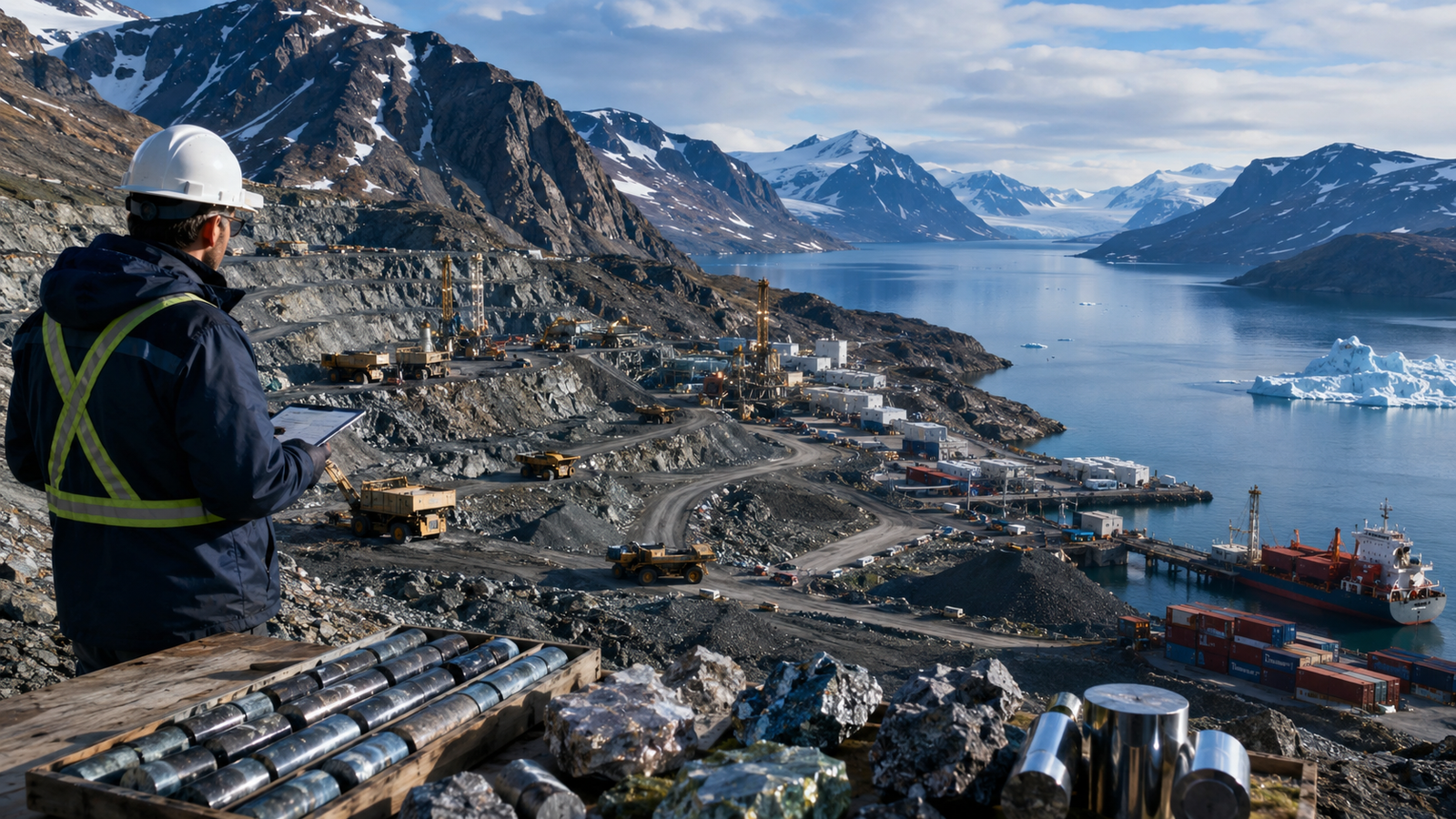
On June 29, Canada announced C$7 million in funding to support Greenland Resources’ Malmbjerg molybdenum project, according to Reuters. While modest in size compared with large-scale mining investments, the funding carries significant strategic importance. Molybdenum is classified as a critical mineral by both the United States and the European Union and plays a vital role in aerospace, defense systems, energy infrastructure, industrial manufacturing, and advanced technologies.
The announcement reflects a broader Western strategy to reduce dependence on China for critical minerals while strengthening domestic and allied supply chains. For investors, it highlights a long-term structural trend that extends well beyond a single project: governments are increasingly treating critical minerals as strategic assets essential to economic security and technological leadership.
Critical Minerals Are Becoming a National Security Priority
For decades, global supply chains prioritized efficiency and low production costs.
Today, geopolitical tensions, trade disruptions, and growing demand for advanced technologies have shifted the focus toward supply-chain resilience.
Governments across North America and Europe are investing in mining projects that can diversify supplies of strategic metals used in defense equipment, semiconductors, renewable energy systems, electric vehicles, and AI infrastructure.
Canada’s investment in the Malmbjerg project aligns with this broader strategy.
Rather than relying heavily on imports from a limited number of producing countries, Western governments are supporting projects located in politically stable jurisdictions with strong environmental and regulatory standards.
This trend reflects growing recognition that access to critical minerals has become as strategically important as access to energy resources.
Why Molybdenum Matters
Although it receives far less attention than lithium or copper, molybdenum is one of the world’s most strategically important industrial metals.
The metal is primarily used to strengthen steel and specialized alloys that must withstand extreme temperatures, corrosion, and mechanical stress.
Its applications span numerous high-growth industries, including:
- Aerospace components
- Defense equipment
- Power generation infrastructure
- Oil and gas pipelines
- Nuclear energy facilities
- Industrial machinery
- Advanced manufacturing systems
As governments continue increasing investment in defense modernization and infrastructure upgrades, demand for high-performance alloys containing molybdenum is expected to remain resilient.
The growing expansion of AI data centers also indirectly supports demand through increased investment in electrical infrastructure, industrial construction, and transmission systems.
The China Factor Continues to Influence Global Mining
One of the strongest drivers behind Western critical mineral strategies is reducing supply-chain concentration.
China remains a dominant producer or processor of numerous strategic minerals essential to modern industries.
This concentration has prompted policymakers in the United States, Canada, the European Union, and other allied nations to encourage domestic production and develop alternative international partnerships.
Greenland has emerged as an increasingly attractive location because of its significant untapped mineral resources and its strategic position within the North Atlantic region.
Canada’s financial support demonstrates growing confidence in developing allied sources of critical minerals outside traditional supply chains.
For investors, this policy shift could provide long-term support for mining companies operating in jurisdictions viewed as geopolitically reliable.
AI and Electrification Are Creating New Demand
The rise of artificial intelligence has expanded the investment case for critical minerals beyond traditional industrial demand.
Modern AI infrastructure requires massive investments in:
- Data centers
- Electrical transmission networks
- Power generation facilities
- Industrial construction
- Advanced manufacturing equipment
Each of these sectors depends heavily on metals ranging from copper and aluminum to molybdenum and rare earth elements.
At the same time, electrification continues driving demand for transmission infrastructure, renewable energy systems, electric vehicles, battery storage, and grid modernization.
Together, these structural trends create multiple long-term sources of demand for strategic metals.
Industry research from organizations such as the International Energy Agency (IEA) and McKinsey & Company has consistently highlighted the growing importance of critical minerals in supporting the global energy transition and digital economy.
Opportunities Across the Mining Sector
Although the Malmbjerg project focuses on molybdenum, investors should view the announcement within the broader context of strategic resource development.
Several categories of mining companies could benefit from continued government support.
Copper Producers
Copper remains essential for electrical transmission, AI infrastructure, renewable energy, and electric vehicles.
Many analysts consider copper one of the most important long-term beneficiaries of global electrification.
Rare Earth Companies
Rare earth elements support permanent magnets used in wind turbines, electric vehicles, advanced electronics, and military technologies.
Governments continue prioritizing alternative sources outside China.
Uranium Producers
Nuclear energy is gaining renewed attention as countries seek reliable, low-carbon electricity capable of supporting growing AI-related power demand.
Critical Mineral Developers
Exploration and development companies focused on strategic minerals may benefit from increasing government funding, permitting support, and strategic partnerships.
Future Trends to Watch
Several developments could shape investment opportunities across the critical minerals sector.
Government Investment Programs
Additional funding initiatives from Canada, the United States, and the European Union could accelerate project development across multiple mineral categories.
Defense Spending
Growing military modernization programs are expected to increase demand for high-performance metals used in aerospace, naval systems, and advanced weapons technologies.
AI Infrastructure Expansion
The rapid growth of hyperscale data centers will continue increasing demand for industrial metals required to build electrical grids, substations, cooling systems, and transmission networks.
Supply-Chain Policies
Trade agreements, permitting reforms, and strategic partnerships could significantly influence project economics and long-term production capacity.
Reuters, along with reports from the International Energy Agency, the U.S. Geological Survey, and industry research from McKinsey & Company, continues to highlight critical minerals as one of the defining investment themes of the coming decade.
Why This Matters for Investors
Canada’s investment in Greenland Resources’ Malmbjerg project represents more than financial support for a single mining development.
It signals an accelerating shift in government priorities toward resource security, supply-chain resilience, and strategic industrial policy.
For investors, this creates opportunities that extend beyond traditional commodity cycles.
Demand is increasingly being driven not only by economic growth but also by national security, energy transition initiatives, AI infrastructure expansion, and geopolitical considerations.
These structural drivers may provide longer-term support for companies involved in producing critical minerals essential to modern industries.
Key Investment Insight
Investors should broaden their focus beyond gold and traditional base metals to include strategically important resources that support AI infrastructure, electrification, defense modernization, and energy security.
Companies involved in molybdenum, copper, rare earth elements, uranium, and other critical minerals could benefit from increasing government investment, stronger industrial demand, and ongoing efforts to diversify Western supply chains away from China.
As governments increasingly view critical minerals as strategic national assets rather than ordinary commodities, the mining sector may become one of the most important long-term beneficiaries of global industrial transformation.
Stay informed with MoneyNews.Today for daily investor-focused market analysis, breaking financial news, and actionable insights covering the commodities, industries, and macroeconomic trends shaping the future of global investing.




