
Artificial intelligence may be grabbing the headlines, but one of the most important investment stories of the decade could be buried deep underground.
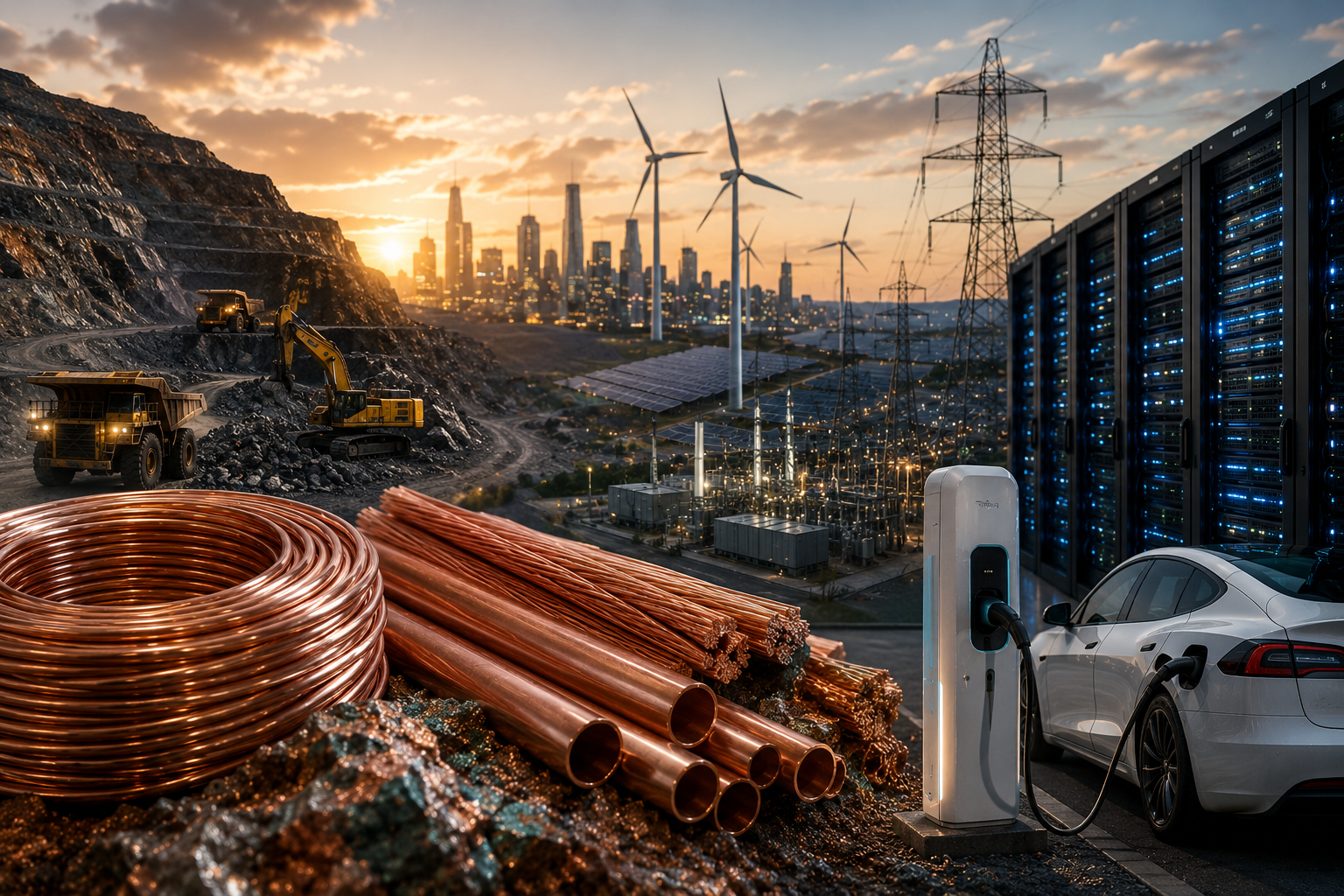
As governments, technology companies, utilities, and manufacturers race to build the infrastructure required for AI, electrification, and energy transition initiatives, demand for copper is accelerating at a pace that many industry experts believe the global mining sector cannot easily match. From AI data centers and electric vehicles to power-grid upgrades and renewable energy projects, copper has become one of the most critical commodities powering the modern economy.
The result is a growing concern among investors, analysts, and mining executives: the world may be heading toward a prolonged structural copper deficit.
Industry discussions across Canadian mining and investor communities, combined with forecasts from organizations such as the International Energy Agency (IEA), S&P Global, Wood Mackenzie, and major investment banks, increasingly point to a future where copper demand significantly exceeds available supply.
For investors, this is more than a commodity story. It is a multi-decade investment theme tied directly to some of the most powerful economic trends shaping global markets.
The Metal Behind the AI Revolution
Most investors associate artificial intelligence with semiconductors, cloud computing, and software companies.
However, every AI model, data center, and computing cluster ultimately depends on a massive physical infrastructure network. Data centers require enormous amounts of electricity, advanced cooling systems, transmission networks, and power-distribution equipment—all of which rely heavily on copper.
The rapid expansion of AI infrastructure is creating a new source of demand that few commodity analysts fully appreciated just a few years ago.
Major technology companies continue investing billions of dollars in new data-center construction projects to support AI applications. These facilities consume significantly more electricity than traditional computing operations, increasing the need for copper-intensive electrical systems and grid infrastructure.
According to industry estimates, a single large-scale AI data center can require thousands of tons of copper throughout its construction and operational lifecycle.
As AI adoption expands globally, this demand is expected to grow substantially.
For investors, the implication is clear: the AI boom is not only benefiting semiconductor companies—it is also creating a powerful tailwind for industrial metals.
Electrification Is Reshaping Commodity Markets
While AI is attracting considerable attention, electrification remains the larger long-term demand driver for copper.
Electric vehicles require significantly more copper than traditional internal combustion engine vehicles. Battery systems, electric motors, charging infrastructure, and supporting power networks all depend heavily on the metal.
At the same time, governments worldwide are investing heavily in renewable energy projects and power-grid modernization.
Solar farms, wind turbines, battery-storage facilities, and transmission systems require large quantities of copper to generate, store, and distribute electricity.
The International Energy Agency has repeatedly highlighted copper as one of the most important minerals needed for the global energy transition.
This convergence of trends—AI expansion, vehicle electrification, renewable energy development, and grid modernization—is creating unprecedented demand growth across multiple industries simultaneously.
Few commodities enjoy such a broad range of structural demand catalysts.
Why New Supply Is Struggling to Keep Up
Demand is only half the story.
The more significant challenge may be the mining industry’s ability to increase supply.
Developing a new copper mine is a lengthy and capital-intensive process. From initial exploration to commercial production, projects often require more than a decade to complete. Environmental permitting, regulatory approvals, financing requirements, infrastructure construction, and community consultations can further extend timelines.
In many regions, declining ore grades are creating additional challenges.
Mining companies must process larger volumes of material to produce the same amount of copper, increasing costs and operational complexity.
Industry research from S&P Global and Wood Mackenzie suggests that existing mines alone may not be sufficient to meet projected future demand.
Without significant investment in exploration and development, global copper markets could face persistent supply deficits throughout the coming decade.
This supply-demand imbalance is one reason many analysts remain constructive on long-term copper prices despite short-term market volatility.
North America’s Strategic Advantage
One of the most important developments emerging from the copper market is the growing emphasis on supply-chain security.
Governments in the United States and Canada increasingly view critical minerals as strategic assets.
Recent geopolitical tensions, trade disputes, and concerns regarding resource dependence have encouraged policymakers to support domestic mining projects and critical-mineral development initiatives.
As a result, North American copper assets are attracting heightened investor interest.
Projects located in politically stable jurisdictions often command valuation premiums because they offer lower geopolitical risk and greater supply-chain reliability.
Major mining companies are actively seeking acquisitions and partnerships that can expand their exposure to high-quality copper resources.
For investors, this trend creates opportunities not only among established producers but also among developers and exploration companies advancing promising projects.
The next generation of copper mines could become increasingly valuable as governments and corporations prioritize resource security.
Why Investors Are Paying Attention Again
Commodity markets tend to move in cycles, and copper has experienced periods of both enthusiasm and neglect.
Today, investor sentiment appears to be shifting once again.
Several factors are driving renewed interest:
- AI infrastructure spending continues accelerating.
- Electric vehicle adoption remains a long-term growth trend.
- Renewable energy investment is increasing globally.
- Grid modernization projects are expanding.
- Supply growth remains constrained.
Together, these factors have created one of the strongest long-term demand narratives in the commodity sector.
Major financial institutions, including Goldman Sachs, JPMorgan, and Bank of America, have repeatedly identified copper as a strategic metal likely to benefit from structural economic changes.
While short-term price fluctuations remain inevitable, many analysts believe the long-term outlook remains favorable.
Future Trends to Watch
Several developments could determine how the copper market evolves over the next several years.
AI Infrastructure Expansion
New data-center construction and AI computing investments are creating an emerging source of copper demand that investors should monitor closely.
Electric Vehicle Adoption
The pace of EV penetration will significantly influence future copper consumption.
Renewable Energy Growth
Solar, wind, battery-storage, and transmission projects remain major demand drivers.
Mining Project Development
Investors should track permitting approvals, financing developments, and production timelines for major copper projects.
Government Critical-Mineral Policies
Policy initiatives supporting domestic resource development could reshape supply chains and investment opportunities.
Key Investment Insight
Copper is increasingly becoming the commodity that connects two of the most important investment themes of the decade: artificial intelligence and electrification.
Unlike many commodity cycles driven by a single demand source, copper benefits from multiple structural growth trends simultaneously. AI data centers, electric vehicles, renewable energy infrastructure, battery storage systems, and grid modernization projects all require substantial amounts of copper.
At the same time, supply growth remains constrained by long development timelines, permitting challenges, declining ore grades, and capital requirements.
For investors, this creates a compelling long-term opportunity. Established producers may benefit from higher prices and increased cash flow, while developers and exploration companies with high-quality North American assets could become increasingly attractive acquisition targets as the supply crunch intensifies.
As markets focus on the future of artificial intelligence and clean energy, copper may quietly emerge as one of the most important strategic resources underpinning both trends.
Stay informed with MoneyNews.Today for daily investor insights, market-moving developments, and in-depth analysis of the trends shaping commodities, mining, technology, and the future of global investing.




