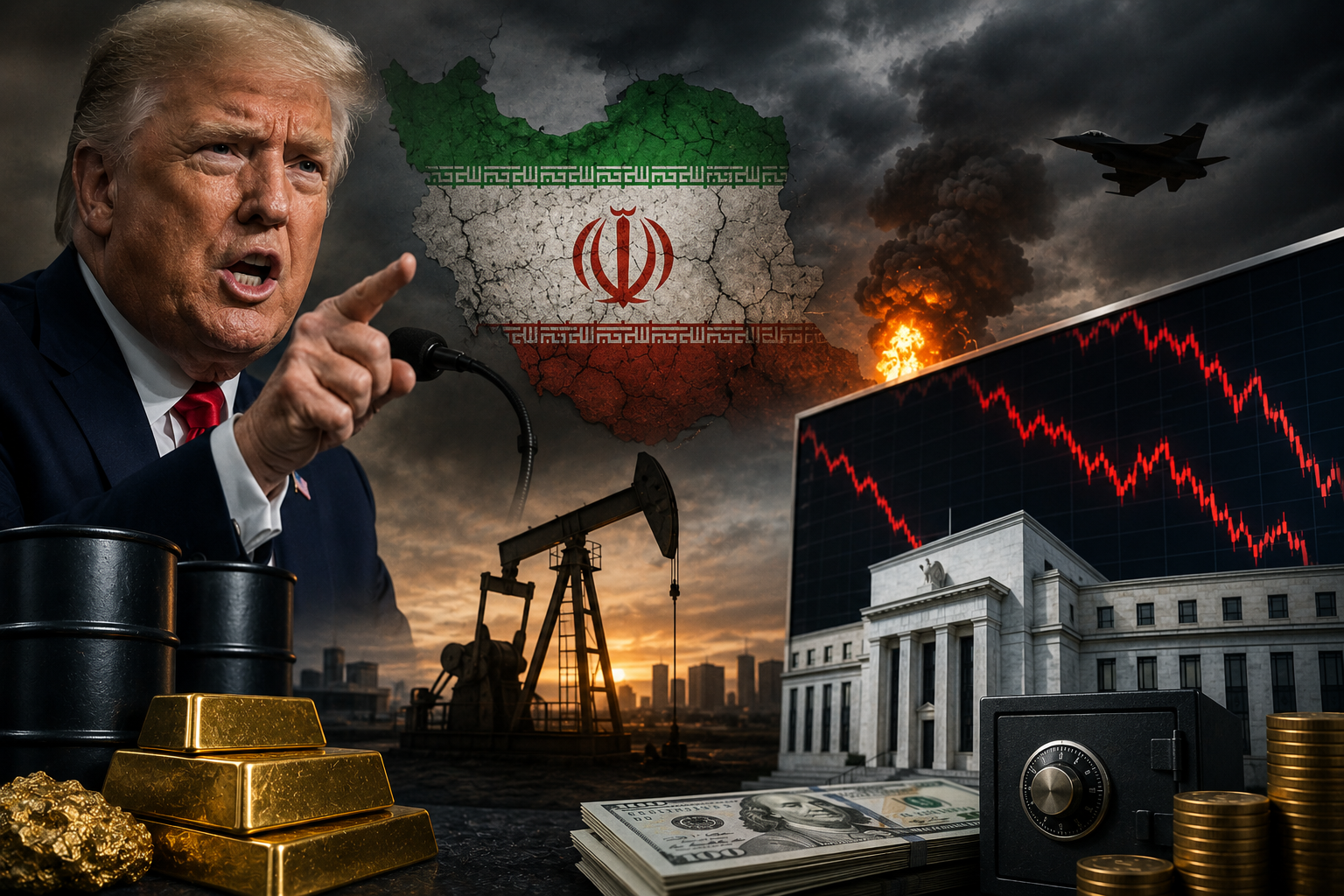
Politics has always played a role in financial markets, but few political issues carry as much weight as the independence of the U.S. Federal Reserve. As investors navigate an environment shaped by persistent inflation, elevated interest rates, and slowing global growth, the central bank’s ability to make policy decisions free from political influence has become one of Wall Street’s biggest concerns. On Thursday, that issue returned to center stage after Federal Reserve Chair Kevin Warsh reaffirmed the central bank’s commitment to restoring inflation to its long-term 2% target, despite continued public pressure from President Donald Trump to lower interest rates.
The comments come at a critical moment for investors, with markets closely watching fresh employment data, inflation trends, and Treasury yields for clues about the future direction of U.S. monetary policy. While political headlines often dominate the news cycle, investors increasingly recognize that the interaction between politics and central bank policy can have a far greater impact on portfolios than most corporate announcements.
According to Reuters, Warsh emphasized that maintaining price stability remains the Federal Reserve’s primary responsibility, reinforcing the institution’s long-standing commitment to making policy decisions based on economic data rather than political considerations. The statement was welcomed by many market participants, who continue to view central bank independence as a cornerstone of financial market stability.
Why Federal Reserve Independence Matters
The Federal Reserve was established with a degree of independence from elected officials to ensure that monetary policy decisions are guided by economic conditions rather than short-term political objectives.
While Congress establishes the Federal Reserve’s mandate—promoting maximum employment, stable prices, and moderate long-term interest rates—the central bank retains operational independence when determining interest rate policy.
This independence is widely viewed by economists as essential for maintaining investor confidence and preserving the credibility of U.S. monetary policy.
History has shown that central banks subjected to excessive political influence often struggle to control inflation effectively, leading to greater economic instability and reduced investor confidence.
For financial markets, confidence in the Federal Reserve’s independence helps anchor inflation expectations, stabilize bond markets, and reduce uncertainty regarding future monetary policy.
Political Pressure and Market Expectations
President Donald Trump has repeatedly advocated for lower interest rates, arguing that reduced borrowing costs would support economic growth, business investment, and financial markets.
While elected leaders frequently express opinions on monetary policy, Federal Reserve officials have consistently maintained that policy decisions will remain dependent on incoming economic data.
Warsh’s reaffirmation of the Fed’s commitment to its inflation objective reinforces that message.
Investors generally view predictable and independent policymaking as preferable because it reduces uncertainty surrounding future interest rate decisions.
Any perception that monetary policy is becoming increasingly influenced by political considerations could increase market volatility, particularly within Treasury markets, foreign exchange, and interest-rate-sensitive equity sectors.
Why Economic Data Matters More Than Political Rhetoric
Although political headlines often generate immediate market reactions, long-term investors understand that economic fundamentals ultimately determine the direction of monetary policy.
Employment reports, inflation data, consumer spending, manufacturing activity, and wage growth remain the primary indicators guiding Federal Reserve decisions.
Today’s focus on the June nonfarm payrolls report illustrates this dynamic.
If employment growth remains strong while inflation continues exceeding the Federal Reserve’s target, policymakers may conclude that restrictive monetary policy remains appropriate.
Conversely, evidence of slowing economic activity could support a more balanced policy approach if inflation continues moderating.
Rather than reacting to political statements alone, investors increasingly evaluate whether incoming economic data strengthens or weakens the case for future policy adjustments.
Treasury Yields Continue Driving Financial Markets
One of the clearest examples of monetary policy’s influence can be seen in Treasury yields.
Government bond yields serve as the benchmark for borrowing costs throughout the global financial system, affecting everything from mortgage rates to corporate financing and equity valuations.
When investors expect higher interest rates, Treasury yields generally rise.
Higher yields often pressure technology stocks and other growth-oriented sectors because future earnings become less valuable when discounted at higher rates.
Financial institutions may initially benefit from higher rates through improved lending margins, while real estate investment trusts and utilities often experience additional pressure due to increased financing costs.
Because Treasury yields respond directly to changing Federal Reserve expectations, they remain one of the most important indicators for investors monitoring political and economic developments.
Equity Markets Face Multiple Crosscurrents
The relationship between politics, monetary policy, and equity markets has become increasingly complex.
Technology companies continue benefiting from strong artificial intelligence investment, but elevated interest rates create valuation challenges for high-growth businesses.
Consumer discretionary companies remain dependent on a healthy labor market and resilient household spending.
Industrials and manufacturing firms continue monitoring trade policy alongside borrowing costs, while energy and commodity producers remain sensitive to both global demand and currency movements.
These interconnected dynamics explain why investors often pay closer attention to Federal Reserve communications than to individual political developments.
Ultimately, monetary policy influences virtually every sector of the economy through financing costs, consumer demand, and corporate investment decisions.
Global Investors Are Watching Closely
The Federal Reserve’s influence extends far beyond the United States.
Because the U.S. dollar remains the world’s primary reserve currency, changes in Federal Reserve policy affect global capital flows, emerging markets, commodity prices, and international exchange rates.
Foreign central banks frequently consider Federal Reserve actions when determining their own monetary policies, creating ripple effects across global financial markets.
International investors also closely monitor the Federal Reserve’s credibility because confidence in U.S. institutions plays a critical role in supporting demand for Treasury securities and dollar-denominated assets.
Maintaining the perception of an independent and data-driven central bank therefore remains important not only for domestic markets but also for the stability of the broader global financial system.
Future Trends to Watch
Looking ahead, investors should focus on several developments that are likely to shape market sentiment over the coming months.
Monthly inflation reports and employment data will continue serving as the most influential economic indicators for Federal Reserve policy decisions.
Treasury yield movements should remain closely monitored, as they often provide early signals regarding changing market expectations.
Federal Reserve speeches, policy meeting minutes, and official economic projections will also receive heightened scrutiny as investors seek additional clarity on future interest rate decisions.
Political developments may continue generating headlines, but markets are likely to remain primarily driven by whether incoming economic data supports or challenges the Federal Reserve’s inflation objectives.
Key Investment Insight
While political debate surrounding interest rates is unlikely to disappear, investors should remain focused on the economic indicators that actually influence Federal Reserve policy.
Employment growth, inflation trends, wage data, and Treasury yields will likely have a far greater impact on portfolio performance than most political commentary over the coming weeks.
Investors may benefit from maintaining diversified portfolios while closely monitoring sectors most sensitive to changing interest rate expectations, including technology, financials, real estate, and utilities.
Understanding the relationship between political developments and monetary policy can help investors better navigate periods of elevated market volatility without overreacting to short-term headlines.
As the second half of the year unfolds, the Federal Reserve’s commitment to independent, data-driven decision-making will remain one of the most important themes shaping global financial markets.
Stay informed with MoneyNews.Today for trusted daily investor news, in-depth market analysis, and actionable insights covering politics, monetary policy, global markets, technology, commodities, and the economy.