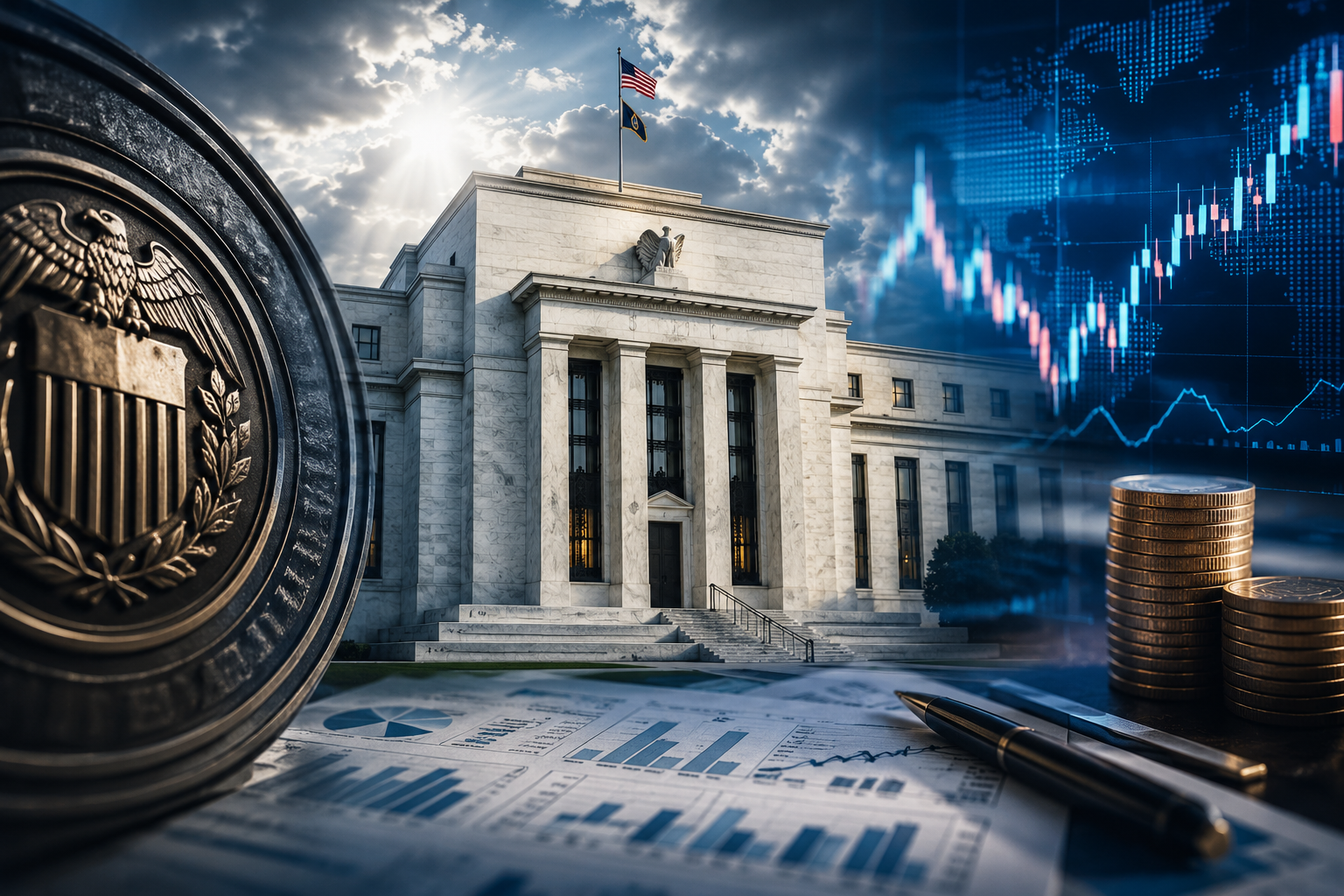
Just days after a softer-than-expected U.S. employment report fueled optimism across financial markets, Wall Street has turned its attention back to the institution that continues to exert the greatest influence over global asset prices: the Federal Reserve. While investors have spent much of the past two years navigating inflation, interest-rate hikes, and artificial intelligence-driven market rallies, monetary policy is once again emerging as the dominant political and economic force shaping investment decisions.
This week, investors are closely watching the release of the Federal Reserve’s latest meeting minutes along with scheduled speeches from several Fed policymakers. Markets are looking for clearer signals on the central bank’s outlook for inflation, labor market conditions, and the path of interest rates during the remainder of 2026.
The combination of softer employment data and evolving inflation trends has reduced expectations for additional interest-rate hikes, increasing the importance of every public comment from Federal Reserve officials. For investors across equities, bonds, commodities, cryptocurrencies, and foreign exchange markets, even subtle changes in the Fed’s language could trigger significant market movements.
As the second-half earnings season begins, the interaction between corporate results and Federal Reserve policy may determine the direction of financial markets for the rest of the summer.
Why Federal Reserve Policy Matters More Than Ever
The Federal Reserve plays a central role in shaping economic conditions through monetary policy.
By adjusting interest rates and managing financial conditions, the Fed influences borrowing costs, business investment, consumer spending, corporate profitability, and ultimately stock market valuations.
During periods of economic uncertainty, markets often react more strongly to central bank communication than to individual economic data releases.
That dynamic is becoming increasingly visible once again.
Although last week’s employment report suggested the U.S. labor market is gradually cooling, investors remain uncertain about whether inflation has slowed enough for policymakers to maintain a less restrictive stance.
The result is heightened sensitivity to every speech, interview, and policy statement released by Federal Reserve officials.
The Jobs Report Changed Market Expectations
Last week’s employment report represented an important turning point for investor sentiment.
Job growth moderated compared with previous months, easing concerns that an overheated labor market might keep inflation elevated.
Financial markets responded positively.
Treasury yields declined.
Equities advanced.
Technology stocks stabilized.
Cryptocurrencies also benefited from improving expectations that financial conditions may become less restrictive.
The report encouraged investors to believe the Federal Reserve may have greater flexibility in managing interest rates over the coming months.
However, policymakers have repeatedly emphasized that future decisions remain dependent on incoming economic data.
This uncertainty explains why investors are now shifting their attention toward Federal Reserve communication rather than relying solely on one employment report.
Federal Reserve Meeting Minutes Could Reveal Policy Direction
One of the week’s most closely watched events is the release of the Federal Reserve’s latest meeting minutes.
Unlike the official policy statement, the minutes provide greater detail regarding discussions among policymakers.
Investors often examine the document for clues about:
- Inflation risks
- Labor market conditions
- Economic growth expectations
- Financial stability concerns
- Interest-rate outlook
- Balance sheet policy
Small changes in wording can significantly influence market expectations.
If the minutes suggest growing confidence that inflation continues moving toward the Fed’s target, investors may interpret the discussion as supportive for risk assets.
Conversely, indications that policymakers remain concerned about persistent inflation could increase expectations for tighter financial conditions.
Why Policymakers’ Speeches Matter
Beyond the meeting minutes, several Federal Reserve officials are scheduled to speak throughout the week.
These speeches often provide additional insight into how policymakers interpret recent economic developments.
Because monetary policy remains data dependent, markets closely analyze every public appearance for subtle shifts in tone.
Comments regarding inflation, wage growth, consumer spending, business investment, or financial conditions frequently influence expectations for future interest-rate decisions.
Even when officials largely repeat existing guidance, investors compare speeches for differences in emphasis or confidence.
As a result, markets may experience increased volatility following individual policy speeches.
Technology Stocks Remain Especially Sensitive
Few sectors are more influenced by interest-rate expectations than technology.
Companies with higher future growth expectations generally experience greater valuation sensitivity when interest rates change.
Artificial intelligence leaders—including Nvidia, Microsoft, Amazon, Alphabet, Meta Platforms, Apple, and AMD—have been among the strongest performers during the AI investment boom.
However, elevated valuations make these companies particularly responsive to changes in monetary policy expectations.
Lower Treasury yields generally improve the attractiveness of long-duration growth stocks.
Higher yields often produce the opposite effect.
As technology earnings season approaches, investors will evaluate both corporate fundamentals and Federal Reserve communication simultaneously.
The Impact Extends Beyond Equities
Federal Reserve policy influences virtually every major financial market.
Treasury Markets
Government bond yields respond directly to changing interest-rate expectations.
U.S. Dollar
Monetary policy influences currency markets by affecting interest-rate differentials between countries.
Cryptocurrencies
Digital assets often benefit when investors anticipate easier financial conditions and improved liquidity.
Commodities
Changes in the U.S. dollar and inflation expectations frequently affect prices for oil, gold, copper, and other commodities.
Corporate Borrowing
Interest rates influence financing costs, capital investment, mergers, acquisitions, and overall corporate profitability.
This broad market impact explains why Federal Reserve communication remains one of the most closely followed events by institutional investors worldwide.
Future Trends Investors Should Watch
Several developments could shape market expectations during the coming weeks.
Federal Reserve Communication
Investors should monitor speeches from policymakers for changes in inflation assessments and economic outlooks.
Inflation Data
Upcoming inflation reports will remain critical in determining future monetary policy decisions.
Corporate Earnings
Technology companies will provide important insight into business investment, AI spending, and consumer demand.
Treasury Yield Movements
Bond market reactions often provide early signals regarding changing monetary policy expectations.
Global Central Banks
Policy decisions from other major central banks—including the Bank of Canada, European Central Bank, and Bank of England—may also influence investor sentiment.
Why This Matters for Investors
Financial markets are entering a period where monetary policy and corporate fundamentals will interact more closely than at any point this year.
Recent employment data reduced expectations for additional tightening, but policymakers continue emphasizing caution regarding inflation.
This creates an environment where both economic releases and Federal Reserve communication may produce larger-than-normal market reactions.
For investors, understanding the relationship between monetary policy and asset valuations is becoming increasingly important.
Growth-oriented sectors such as technology may remain particularly sensitive to changing interest-rate expectations, while defensive sectors could outperform if economic uncertainty increases.
Reuters’ July 7 reporting highlights how rapidly investor attention has shifted back toward Federal Reserve policy as the primary political driver of financial markets.
Key Investment Insight
Federal Reserve policy has once again become the most important political variable influencing global financial markets. While investors remain focused on artificial intelligence, corporate earnings, and economic growth, interest-rate expectations continue to shape valuations across equities, bonds, commodities, cryptocurrencies, and currencies.
This week’s Federal Reserve meeting minutes and policymakers’ speeches could provide valuable insight into the central bank’s confidence regarding inflation and future policy direction. Investors should pay close attention not only to official statements but also to shifts in tone, language, and economic assessments, as even modest changes can significantly influence market expectations.
With earnings season now underway, markets will likely be driven by a combination of Federal Reserve communication and corporate guidance. Investors who closely monitor both developments will be better positioned to navigate short-term volatility while identifying long-term opportunities across technology, financials, fixed income, commodities, and digital assets.
Stay with MoneyNews.Today for daily investor-focused coverage of Federal Reserve policy, financial markets, politics, economic developments, and the investment trends shaping the global economy.