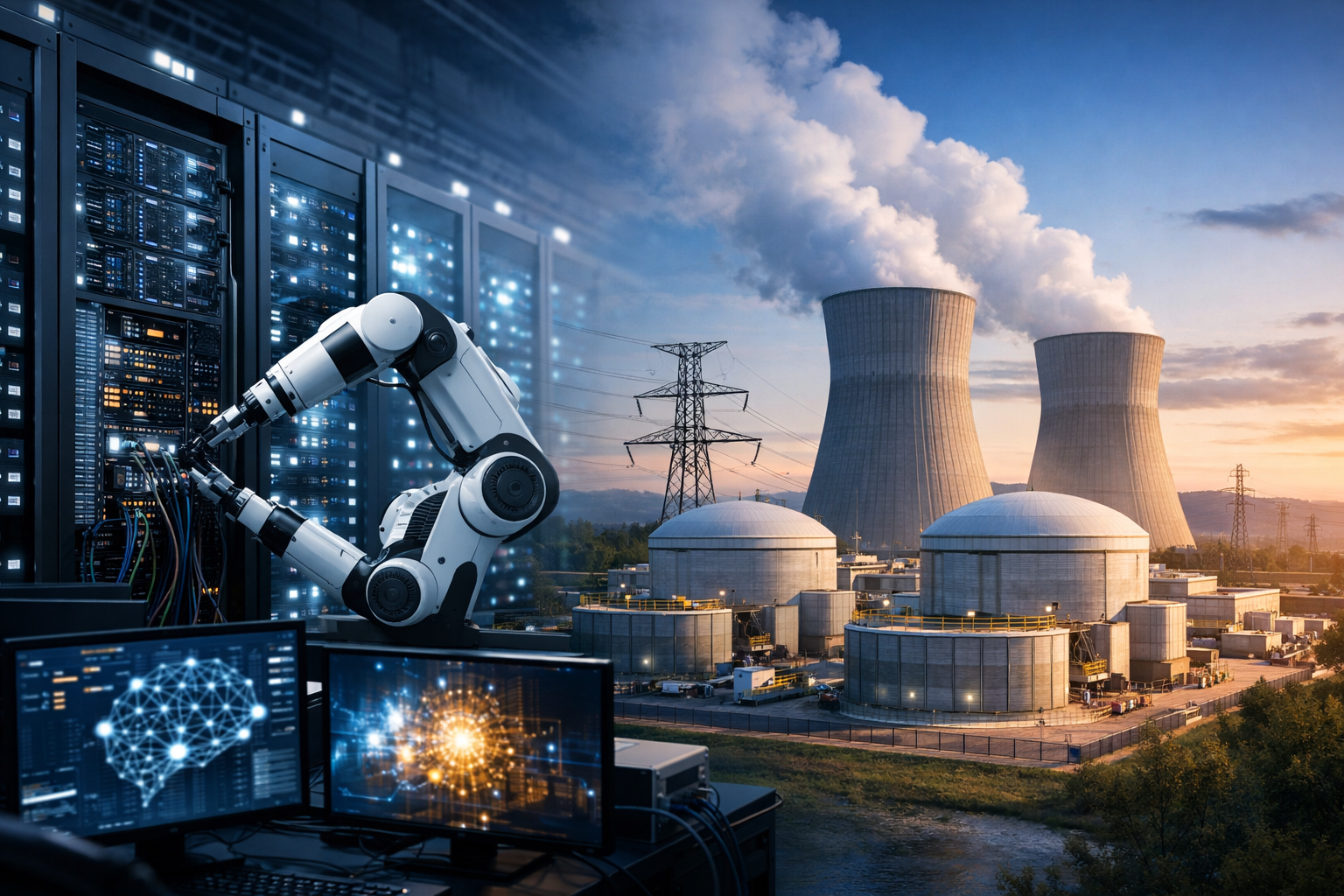
The artificial intelligence boom is no longer just a software revolution—it is becoming an energy crisis.
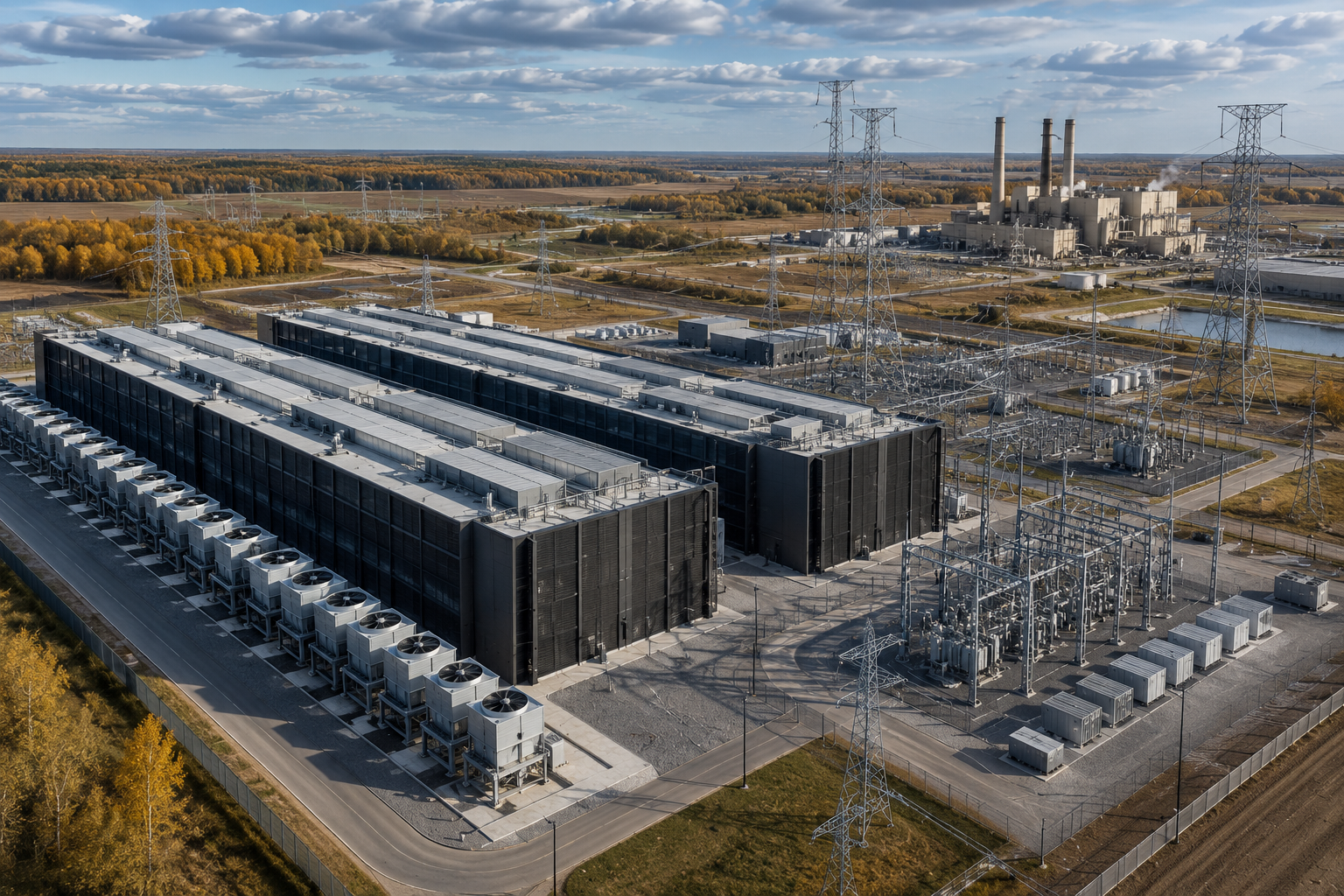
As AI models scale and data centers expand across North America, electricity demand is surging at a pace the current grid was not designed to handle. In response, governments and private capital are accelerating investment into nuclear energy, positioning it as a cornerstone of future power infrastructure. According to Reuters and the Financial Times (April 14, 2026), small modular reactors (SMRs) are emerging as a key solution to meet this rising demand.
For investors, this represents a powerful convergence of two megatrends: AI-driven electricity demand and the global nuclear renaissance.
AI Is Rewriting the Global Energy Equation
Artificial intelligence is rapidly becoming one of the most energy-intensive technologies in history.
Training large-scale AI models and running inference at scale requires enormous computing power, which directly translates into higher electricity consumption. Hyperscale data center operators such as Microsoft, Amazon, and Alphabet are expanding infrastructure aggressively to support AI workloads.
According to industry estimates cited by the Financial Times, AI-related electricity demand could more than double by the end of the decade, driven by:
- Large language models
- Cloud-based AI services
- Enterprise AI adoption
- Edge computing expansion
This surge is placing unprecedented strain on existing energy infrastructure.
Nuclear Energy Re-emerges as a Strategic Solution
After decades of stagnation, nuclear power is re-entering the global energy conversation—not as a legacy technology, but as a critical enabler of the digital economy.
Nuclear energy offers three key advantages:
- Reliable baseload power (24/7 output)
- Low carbon emissions aligned with climate targets
- High energy density compared to renewables
Governments in both the United States and Canada are actively supporting nuclear expansion through policy incentives and public-private partnerships.
The U.S. Department of Energy has increasingly emphasized nuclear power as essential to maintaining grid stability while meeting rising electricity demand from AI and industrial electrification.
Reuters reports that policymakers now view nuclear not just as an environmental solution—but as a strategic infrastructure asset.
The Rise of Small Modular Reactors (SMRs)
At the center of this nuclear revival is a new generation of technology: small modular reactors (SMRs).
Unlike traditional nuclear plants, SMRs are:
- Smaller and more flexible in design
- Faster to construct
- Scalable in deployment
- Potentially lower cost over time
This makes them particularly well-suited for powering:
- AI data centers
- Industrial hubs
- Remote energy grids
Companies like NuScale Power are leading development efforts in SMR technology, while traditional nuclear players such as Cameco remain central to the fuel supply chain.
The Financial Times highlights SMRs as a potential “game changer” for grid modernization and decentralized energy deployment.
Why This Matters for Investors
1. A Multi-Decade Energy Supercycle Is Forming
The intersection of AI growth and energy demand is creating a long-duration investment theme.
Unlike short-term commodity cycles, this trend is driven by:
- Structural electricity demand growth
- Technology infrastructure expansion
- Government-backed energy transition policies
This positions nuclear energy as a foundational pillar of the global economy for decades to come.
2. Uranium Demand Is Entering a Structural Uptrend
Nuclear expansion directly increases demand for uranium, which is already facing supply constraints.
Years of underinvestment in mining capacity have created a tight market, and new reactor development will intensify this imbalance.
Producers like Cameco are increasingly positioned at the center of this demand shift, alongside a broader uranium supply chain that includes exploration and enrichment services.
Reuters notes that uranium markets are increasingly being viewed as strategic rather than purely cyclical commodities.
3. Energy Security Is Becoming a Strategic Priority
Beyond economics, energy security is now a geopolitical concern.
Countries are prioritizing domestic energy sources to reduce reliance on volatile global markets. This shift is driving:
- Faster nuclear project approvals
- Increased government funding
- Strategic investment in SMR development
This trend is particularly strong in North America, where policymakers are linking energy independence directly to technological competitiveness.
Key Investment Segments to Watch
Nuclear Developers and SMR Innovators
Companies focused on next-generation reactor design stand to benefit from early-stage adoption.
NuScale Power and similar firms represent high-growth opportunities tied to commercialization of SMR technology.
Uranium Producers and Supply Chain
The uranium sector is the backbone of nuclear expansion.
Cameco and other producers may benefit from:
- Rising contract prices
- Long-term supply agreements
- Tightening global inventory levels
Energy Infrastructure and Grid Modernization
Beyond reactors and fuel, the broader energy infrastructure ecosystem is also set to benefit.
This includes:
- Transmission infrastructure
- Cooling systems for data centers
- Energy storage and grid balancing solutions
Future Trends to Watch
Big Tech Direct Energy Investment
One of the most important emerging trends is direct investment by technology companies into energy infrastructure.
Hyperscalers may increasingly:
- Co-develop nuclear projects
- Sign long-term power purchase agreements
- Invest in dedicated energy assets for AI workloads
This would blur the line between technology companies and utilities.
Regulatory Acceleration
The nuclear sector has historically faced long approval timelines, but this is changing.
Governments are actively working to:
- Streamline licensing processes
- Support SMR pilot projects
- Increase funding for nuclear R&D
The U.S. Department of Energy is expected to play a central role in accelerating deployment timelines.
Grid Constraints as a Growth Catalyst
Electricity grid limitations are becoming one of the biggest bottlenecks for AI expansion.
This creates a direct link between:
- AI infrastructure growth
- Energy demand expansion
- Nuclear deployment acceleration
In effect, grid constraints are becoming a catalyst for nuclear investment.
Credible Market Signals
Recent developments reinforce the strength of this emerging theme:
- Reuters reports accelerating nuclear investment tied to AI demand
- Financial Times highlights SMRs as a scalable solution for future energy needs
- Government agencies are actively prioritizing nuclear expansion in energy policy
Together, these signals point to a structural shift in how energy systems are being designed for the AI era.
Key Investment Insight
The convergence of AI and nuclear energy is creating one of the most compelling long-term investment themes in global markets.
Investors should consider:
- Early exposure to SMR developers for high-growth potential
- Uranium producers and suppliers for structural demand upside
- Energy infrastructure firms supporting grid modernization
The key is positioning early—before institutional capital fully prices in the scale of future demand.
This is not a short-term trade. It is a multi-decade transformation of the global energy system.
The Bigger Picture
AI is not just transforming industries—it is reshaping the physical infrastructure that powers them.
As electricity demand accelerates, nuclear energy is re-emerging as one of the few scalable, reliable, and low-carbon solutions capable of meeting the challenge.
For investors, this represents a rare alignment of technology, energy, and policy—all converging into a single powerful megatrend.
Those who recognize this shift early may be positioned at the forefront of the next great infrastructure cycle.
Stay ahead of transformative investment trends with MoneyNews.Today—your trusted source for daily insights across markets, technology, and global energy shifts.