
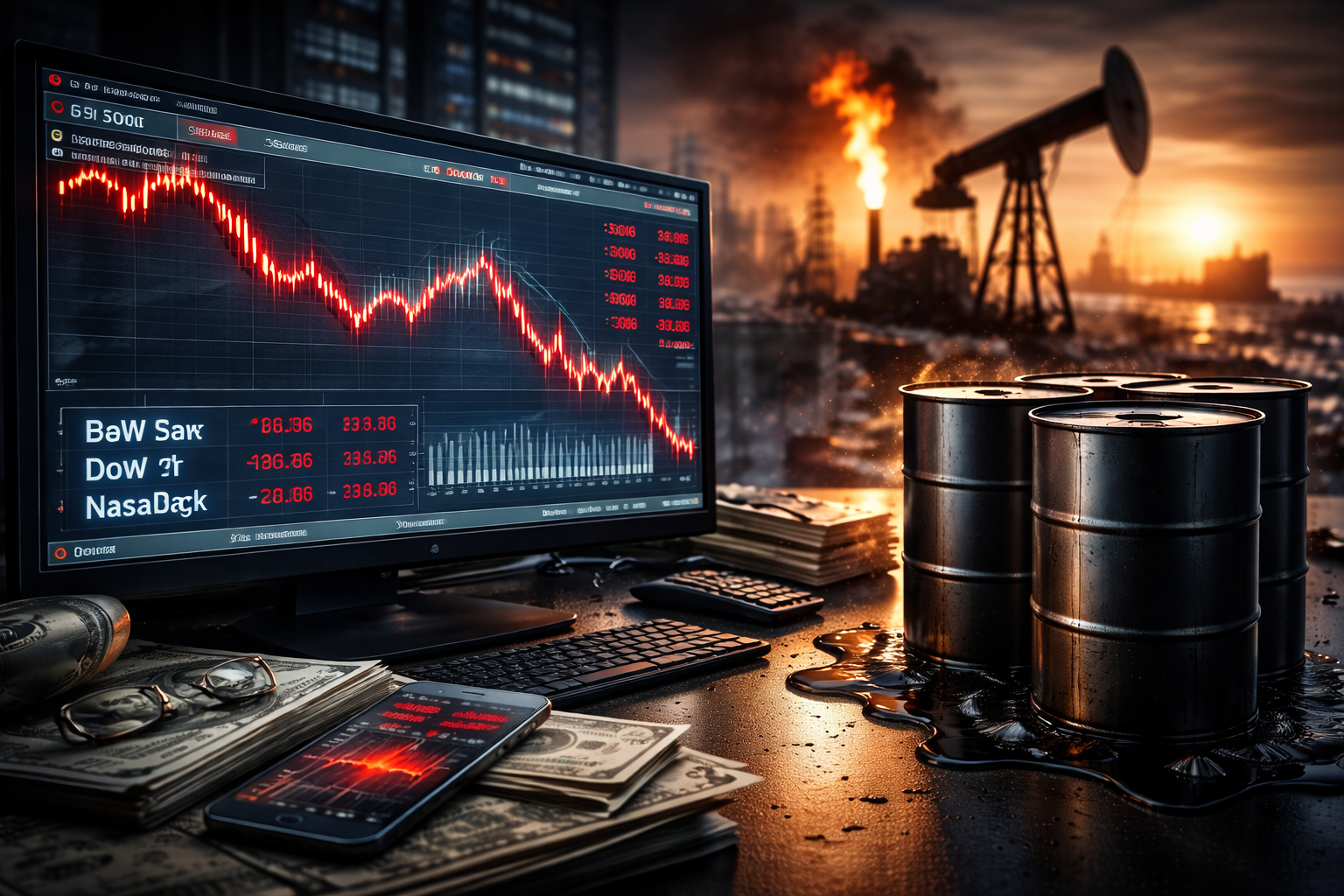
Markets don’t move in isolation—and right now, the message from global assets is clear: risk is rising.
U.S. and Canadian futures are edging lower as oil prices surge and geopolitical tensions intensify, forcing investors to reassess inflation risks and the path of monetary policy. According to Reuters (April 14, 2026), the latest developments are triggering a broad repricing across equities, commodities, and currencies, signaling that markets may be entering a more volatile phase.
For investors, this is not just another pullback—it’s a potential regime shift, where macro forces once again dominate market direction.
Oil Is Driving the Narrative
At the center of the current market unease is a sharp move in crude oil prices.
Oil has surged amid escalating geopolitical tensions, raising concerns about supply disruptions and higher transportation and production costs globally. Energy markets are reacting quickly, but equities are struggling to keep up with the implications.
Rising oil prices create a chain reaction:
- Increased input costs for businesses
- Upward pressure on consumer prices
- Reduced discretionary spending
- Lower corporate margins
This dynamic is particularly concerning because it comes at a time when inflation had only recently shown signs of stabilizing.
Reuters highlights that the latest oil spike is forcing traders to rethink expectations for inflation—and by extension, central bank policy.
Inflation Fears Are Back in Focus
For much of the past year, markets have been pricing in a gradual easing of inflation and a potential shift toward looser monetary policy.
That narrative is now being challenged.
Higher energy prices feed directly into inflation metrics, making it more difficult for central banks like the Federal Reserve to justify rate cuts.
Instead, the market is beginning to price in a scenario where:
- Interest rates remain higher for longer
- Financial conditions stay tight
- Economic growth slows
This recalibration is one of the key drivers behind the recent weakness in equity futures.
Why This Matters for Investors
1. A Shift Toward a Volatility Regime
The combination of rising oil prices and geopolitical uncertainty is creating a more unstable market environment.
Periods like this are typically characterized by:
- Increased market swings
- Sector rotation
- Correlation breakdowns between assets
Investors should expect higher volatility across equities, particularly in growth and rate-sensitive sectors.
2. Pressure on Growth Stocks
Higher inflation and interest rate expectations tend to weigh heavily on growth stocks, especially in the technology sector.
Companies with high valuations and long-duration cash flows are more sensitive to:
- Rising discount rates
- Slower economic growth
- Margin compression
This could lead to a rotation away from high-growth names toward more defensive areas of the market.
3. Commodities Are Regaining Strength
While equities face pressure, commodities—particularly energy—are benefiting from the current environment.
Oil’s upward momentum reflects both:
- Supply-side constraints
- Geopolitical risk premiums
This reinforces the role of commodities as a hedge against inflation and uncertainty.
Geopolitics: The Wild Card
Markets are increasingly being driven by geopolitical developments, which are inherently unpredictable.
Recent tensions involving global energy supply routes have heightened concerns about:
- Trade disruptions
- Supply chain instability
- Escalation risks
Reuters reports that these factors are contributing to a growing sense of caution among investors.
Unlike economic data, geopolitical risks are difficult to model—and can trigger sudden, sharp market reactions.
Future Trends to Watch
Central Bank Policy Signals
The next moves from the Federal Reserve will be critical.
Investors should closely monitor:
- Inflation data releases
- Fed commentary and guidance
- Bond market movements
Any संकेत that rate cuts may be delayed could further pressure equities.
Energy Market Volatility
Oil prices will remain a key driver of market sentiment.
Key factors to watch include:
- Supply disruptions
- OPEC+ policy decisions
- Global demand trends
Sustained high oil prices could reinforce inflationary pressures and extend market volatility.
Sector Rotation Accelerates
As macro conditions shift, sector leadership is likely to change.
Potential beneficiaries include:
- Energy stocks
- Utilities
- Consumer staples
Meanwhile, sectors like technology and consumer discretionary may face headwinds.
Credible Signals from the Market
Several indicators reinforce the current market dynamics:
- Reuters reports declining U.S. and Canadian futures amid rising oil prices
- Bond yields are showing sensitivity to inflation expectations
- Commodity markets are reflecting increased demand for hedging instruments
Additionally, market volatility indices are beginning to trend higher, suggesting that investors are pricing in greater uncertainty.
These signals point to a market that is transitioning from a growth-driven rally to a macro-driven environment.
Key Investment Insight
The current market environment calls for a more defensive and strategic approach.
Investors should consider:
- Increasing exposure to defensive sectors such as utilities and healthcare
- Allocating to commodities, particularly energy, as an inflation hedge
- Maintaining liquidity to take advantage of potential market dislocations
At the same time, it’s important to avoid overreacting to short-term volatility.
Long-term investors should focus on:
- High-quality companies with strong balance sheets
- Businesses with pricing power
- Sectors aligned with structural growth trends
The Bigger Picture
What we are witnessing is a reminder that markets are cyclical—and that macro forces can quickly reshape the investment landscape.
The recent pullback in futures is not just about oil or geopolitics. It reflects a broader shift in investor expectations around:
- Inflation
- Interest rates
- Economic growth
In this environment, adaptability becomes a key advantage.
Investors who can navigate volatility, identify emerging trends, and adjust their strategies accordingly will be better positioned to manage risk and capture opportunities.
Stay informed and ahead of market-moving developments with MoneyNews.Today—your trusted source for daily investor insights in an ever-changing global landscape.




