
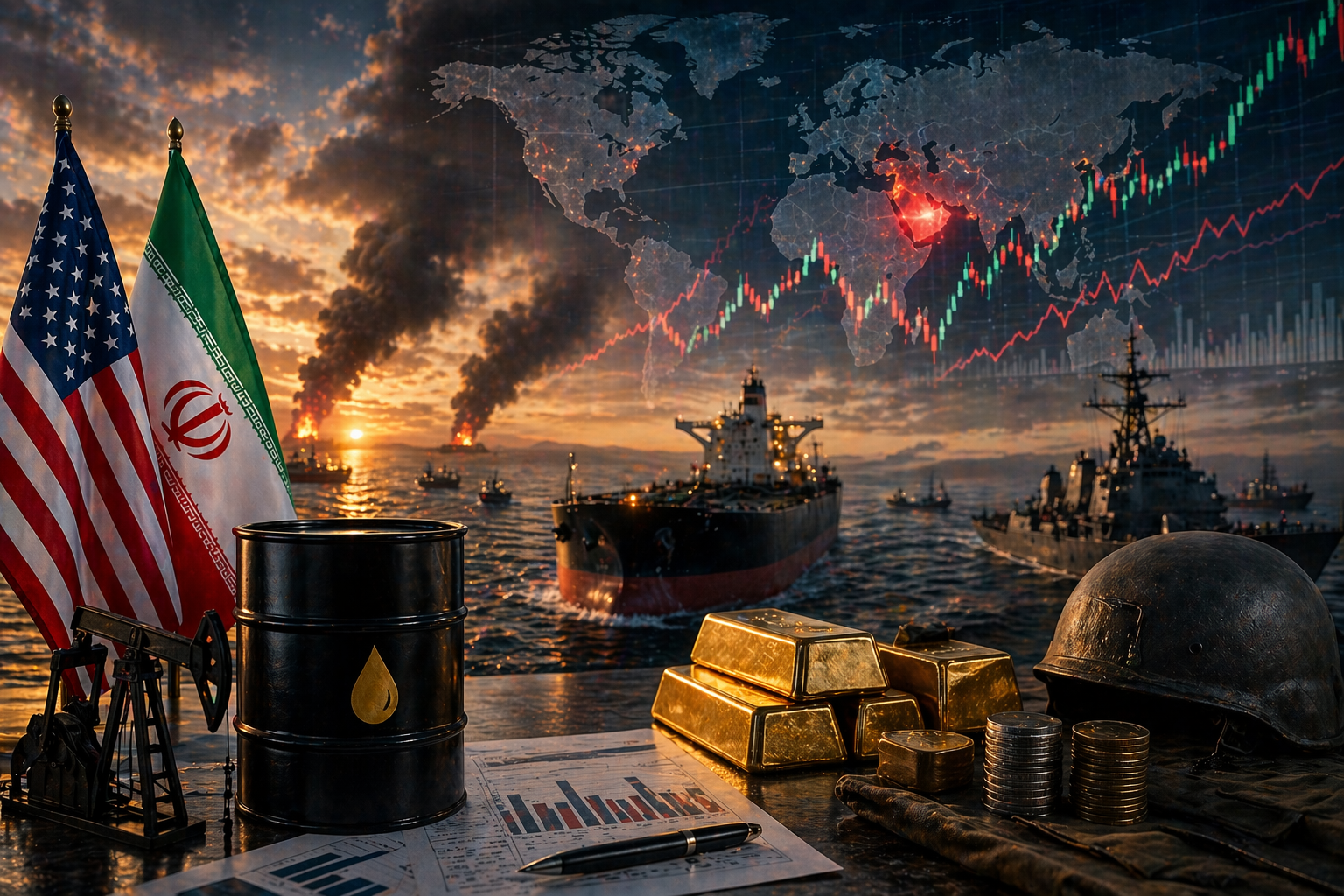
Geopolitics is once again front and center in global markets—and investors are feeling the impact in real time. Rising tensions between the United States and Iran are sending shockwaves across asset classes, triggering sharp moves in oil, renewed volatility in equities, and a growing sense of uncertainty across financial markets.
What began as a regional flashpoint is rapidly evolving into a global macro driver. From energy supply disruptions to shifting risk sentiment, the escalation is reshaping investor behavior and forcing a reassessment of portfolio strategies.
According to Reuters and Investopedia (April 23, 2026), disruptions in critical النفط (oil) shipping routes—particularly around the Strait of Hormuz—are intensifying fears of supply constraints, pushing energy prices higher and amplifying market instability.
For investors, the message is clear: geopolitics is no longer a background risk—it is a primary market force.
Energy Markets React First—and Fast
The most immediate impact of the escalating conflict is being felt in oil markets.
Global benchmarks like Brent Crude and West Texas Intermediate have surged sharply as traders price in the risk of supply disruptions. The Strait of Hormuz, through which a significant portion of the world’s النفط supply flows, has become a focal point of concern.
Even the possibility of restricted access to this critical shipping route is enough to send prices higher. Markets are highly sensitive to supply shocks, and geopolitical tensions tend to introduce a “risk premium” into energy prices.
Key Data Point: Historically, even minor disruptions in the region have led to significant spikes in oil prices, with ripple effects across global economies.
Why This Matters for Investors
The implications of rising geopolitical tensions extend far beyond the energy sector. Investors must consider the broader market impact:
1. Inflation Pressures Are Rising
Higher oil prices feed directly into inflation, increasing costs for transportation, manufacturing, and consumer goods. This complicates the outlook for central banks, which may delay rate cuts or maintain tighter policies.
2. Equity Market Volatility Is Increasing
Global equities, particularly in the U.S., are reacting to heightened uncertainty. Indices like the S&P 500 and Nasdaq Composite are experiencing increased volatility as investors reassess risk exposure.
3. Safe-Haven Assets Are Gaining Traction
Assets such as Gold are seeing renewed demand as investors seek protection against uncertainty.
4. Sector Rotation Is Accelerating
Capital is shifting toward sectors that benefit from geopolitical instability—particularly energy and defense—while more sensitive sectors face pressure.
Defense and Energy Stocks in Focus
One of the clearest trends emerging from the current environment is the outperformance of defense and energy stocks.
Defense contractors such as Lockheed Martin and Northrop Grumman are attracting investor interest amid expectations of increased government spending. Historically, periods of geopolitical tension have led to higher defense budgets, benefiting companies in the sector.
Similarly, energy producers are positioned to capitalize on rising النفط prices. Higher revenues and improved margins can drive earnings growth, making the sector an attractive hedge against broader market volatility.
Credible Signals from the Market
Leading financial institutions and market analysts are closely monitoring the situation:
- Reuters (April 23, 2026): Reports escalating tensions and their direct impact on oil prices and global markets.
- Investopedia: Highlights the growing role of geopolitical risk in shaping investor sentiment.
- Bloomberg: Notes increased volatility across equities and commodities tied to Middle East developments.
- International Energy Agency (IEA): Warns of potential supply disruptions affecting global النفط markets.
These sources collectively reinforce the view that geopolitics is once again a dominant force influencing financial markets.
Future Trends to Watch
1. Escalation or De-escalation Scenarios
Markets will react sharply to any changes in the geopolitical landscape. Diplomatic breakthroughs could ease volatility, while further escalation could intensify it.
2. Oil Price Trajectory
Sustained high oil prices could have long-term implications for inflation, corporate earnings, and economic growth.
3. Central Bank Responses
Policymakers may face difficult decisions as they balance inflation risks with economic stability.
4. Global Trade and Supply Chains
Disruptions in shipping routes could impact global trade, affecting industries ranging from manufacturing to retail.
Actionable Investment Insight
Navigating a geopolitically driven market requires a strategic and disciplined approach:
- Increase Exposure to Defensive Sectors: Energy and defense stocks can provide a hedge against geopolitical risk.
- Diversify Across Asset Classes: Incorporate commodities and safe-haven assets to balance portfolio risk.
- Monitor Macro Indicators Closely: Oil prices, inflation data, and central bank signals will be key drivers.
- Avoid Overreacting to Short-Term Volatility: While markets may experience sharp swings, long-term investment strategies should remain grounded in fundamentals.
- Consider Hedging Strategies: Options, commodities, or alternative assets can help mitigate downside risk.
The key takeaway: geopolitics introduces uncertainty—but it also creates opportunities for those who are prepared.
A Market Shaped by Uncertainty—and Opportunity
The escalation of tensions between the U.S. and Iran is a stark reminder of how quickly global markets can shift. What may seem like a regional issue can have far-reaching implications, influencing everything from energy prices to equity valuations.
For investors, this environment demands vigilance, adaptability, and a willingness to look beyond traditional market drivers. Geopolitics is no longer a secondary consideration—it is a central factor shaping investment decisions.
As markets continue to respond to evolving developments, staying informed will be critical.
Stay ahead of global market shifts with MoneyNews.Today—your trusted source for timely, actionable investor insights.




