The global battle for critical minerals is entering a new and controversial frontier: the ocean floor.
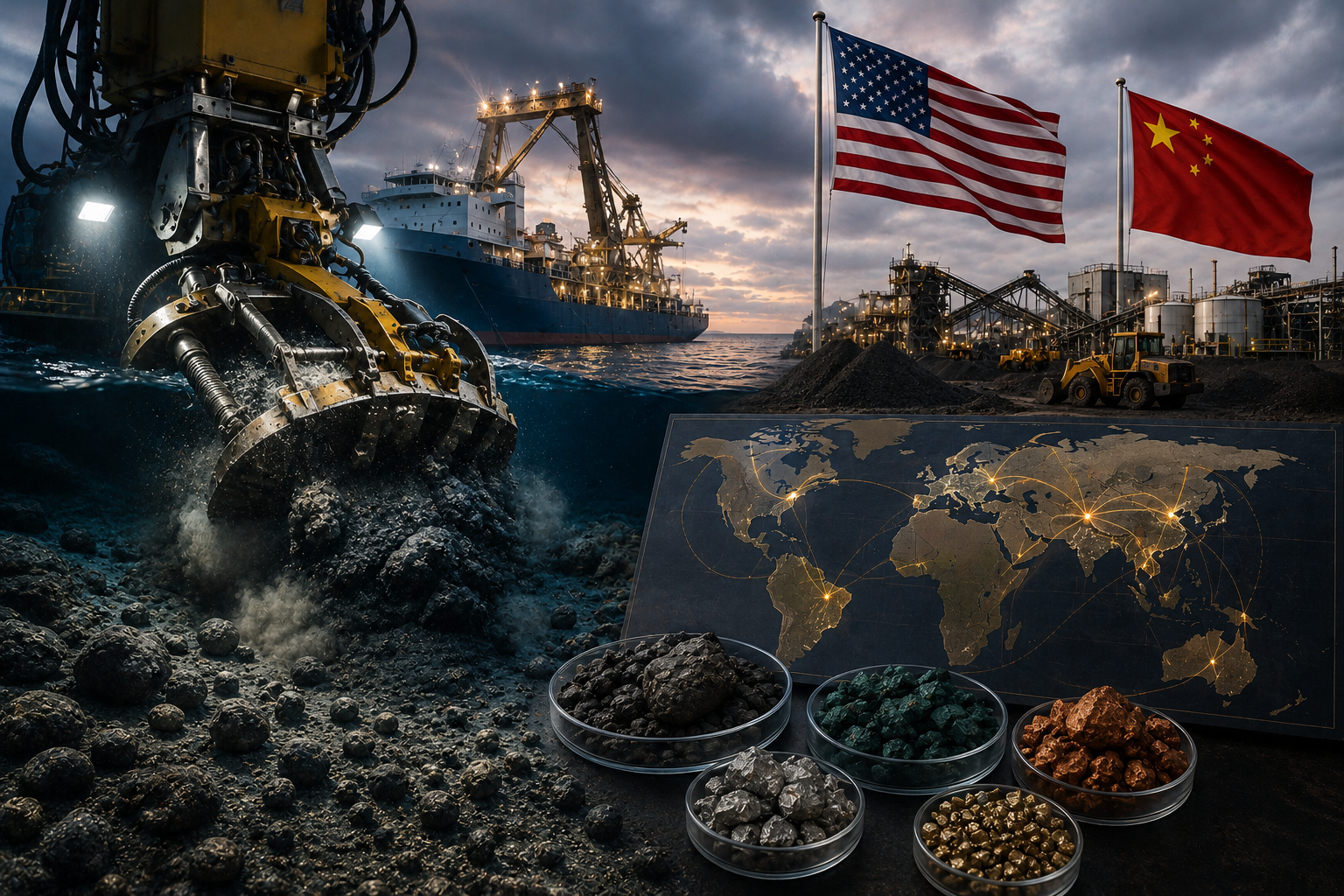
As geopolitical tensions reshape global supply chains and artificial intelligence, electric vehicles, defense systems, and renewable energy technologies drive surging demand for strategic metals, the Trump administration is aggressively accelerating efforts to expand deep-sea mining initiatives focused on nickel, cobalt, copper, manganese, and rare earth-related resources.
According to an Associated Press report published May 21, 2026, the administration’s push is already triggering a wave of new exploration companies, fast-tracked permitting discussions, and renewed investor interest in securing alternative sources of critical minerals outside China’s influence.
The move underscores a major reality investors are increasingly confronting: control of critical mineral supply chains may become one of the defining geopolitical and economic battles of the next decade.
For financial markets, this is not simply an environmental or industrial story. It is rapidly evolving into a long-term investment megatrend tied directly to national security, energy transition policies, advanced manufacturing, and global technological leadership.
And increasingly, governments are willing to spend aggressively to secure it.
Why Critical Minerals Have Become a Strategic Priority
Critical minerals sit at the center of nearly every major industrial growth theme shaping the global economy.
Electric vehicles require large quantities of nickel, lithium, cobalt, graphite, and copper. Artificial intelligence infrastructure depends heavily on advanced semiconductors, electrical grids, cooling systems, and high-capacity energy transmission networks. Defense technologies rely on rare earth elements used in radar systems, missiles, satellites, and advanced communications equipment.
The challenge is that much of the current global supply chain remains heavily concentrated in China.
China dominates significant portions of:
- Rare earth processing
- Battery material refining
- Critical mineral manufacturing
- Strategic metals supply chains
- Industrial processing infrastructure
That concentration has increasingly alarmed policymakers in Washington and allied governments worldwide.
The Trump administration’s deep-sea mining push reflects broader efforts to reduce U.S. dependence on foreign-controlled mineral supply chains and strengthen domestic or allied sourcing capabilities.
This shift is reshaping the investment landscape for mining, materials, and industrial infrastructure companies.
Deep-Sea Mining Is Moving From Theory to Reality
For years, deep-sea mining remained largely speculative due to technological, regulatory, and environmental challenges.
Now, geopolitical urgency is accelerating interest dramatically.
The ocean floor contains vast deposits of polymetallic nodules rich in nickel, cobalt, copper, and manganese — materials essential for batteries, electrification infrastructure, and industrial technologies.
Advocates argue that deep-sea mining could help solve looming shortages in strategic metals as demand accelerates globally.
According to estimates from the International Energy Agency, demand for critical minerals tied to clean energy technologies could multiply several times over the next two decades. Copper demand alone is expected to rise sharply due to expanding power grids, electric vehicles, and AI-driven data-center construction.
This growing supply-demand imbalance is fueling investor interest in alternative extraction methods.
The Trump administration’s support appears aimed at accelerating permitting frameworks, encouraging private-sector exploration, and positioning the United States more competitively against China’s mineral dominance.
As a result, several new exploration firms and resource ventures are rapidly emerging around the deep-sea mining theme.
Why Investors Are Paying Attention
The critical minerals trade has evolved far beyond traditional commodity investing.
Today, it intersects directly with:
- Artificial intelligence infrastructure
- Electric vehicle adoption
- Defense modernization
- Energy security
- Geopolitical strategy
- Semiconductor manufacturing
- Industrial reshoring initiatives
This creates broad implications across multiple industries and sectors.
Battery Metals Demand Continues Rising
Nickel and cobalt remain essential components in many advanced battery technologies used in electric vehicles and grid-scale storage systems.
As EV adoption expands globally, long-term demand for these materials is expected to remain elevated despite ongoing efforts to reduce dependency on certain battery chemistries.
Mining firms tied to battery metals may continue benefiting from strategic government support and rising industrial demand.
Copper Is Emerging as One of the Most Important Commodities
Copper demand is surging due to electrification trends, renewable energy expansion, AI infrastructure growth, and transmission grid modernization.
Some analysts now describe copper as “the new oil” because of its importance across nearly every industrial growth sector.
Deep-sea mining projects targeting copper-rich deposits could attract substantial investor interest if supply shortages intensify.
Rare Earth and Strategic Materials Remain Geopolitical Priorities
Governments worldwide are increasing investments in rare earth independence, processing infrastructure, and domestic sourcing initiatives.
The United States, Canada, Australia, and Europe are all attempting to reduce reliance on Chinese-controlled refining systems.
That trend could create long-term opportunities for mining companies aligned with Western industrial policy goals.
Environmental Concerns Could Create Market Volatility
Despite growing investor enthusiasm, deep-sea mining remains highly controversial.
Environmental groups, marine scientists, and several international organizations have warned that large-scale seabed extraction could damage fragile ocean ecosystems and create long-term environmental consequences that remain poorly understood.
Critics argue that:
- Deep-sea ecosystems remain largely unexplored
- Mining operations could disrupt biodiversity
- Sediment plumes may affect marine food chains
- Regulatory oversight remains incomplete
- Long-term environmental impacts remain uncertain
This introduces a significant political and regulatory variable for investors.
Projects tied to deep-sea extraction could face:
- Regulatory delays
- Legal challenges
- International treaty disputes
- ESG-related investor scrutiny
- Volatile permitting timelines
As a result, investors should recognize that while the sector offers substantial upside potential, it also carries elevated political and execution risks.
Geopolitics Is Reshaping Commodity Markets
One of the biggest shifts occurring across global markets is the growing overlap between commodities and geopolitics.
For years, investors largely treated mining and materials as cyclical sectors tied primarily to economic growth. Today, strategic considerations are becoming equally important.
Governments increasingly view critical minerals as national security assets.
This shift is driving:
- Subsidies for domestic mining
- Strategic stockpile development
- Trade restrictions
- Export controls
- Supply-chain reshoring
- Public-private partnerships
The Trump administration’s latest push reflects this broader transformation.
Rather than relying solely on free-market forces, policymakers are becoming more willing to intervene directly in commodity supply chains to secure strategic advantages.
That could create long-term support for mining and industrial infrastructure investments.
Future Trends Investors Should Watch
Several developments may determine how the critical minerals race evolves over the coming years.
Expansion of Government Support
Additional federal financing, tax incentives, and industrial policy initiatives could accelerate mining investment activity.
Supply Chain Diversification
Countries aligned with U.S. strategic interests may increasingly collaborate on critical mineral partnerships and refining infrastructure.
Rising AI Infrastructure Demand
Artificial intelligence expansion is significantly increasing electricity consumption, semiconductor manufacturing, and grid infrastructure requirements — all of which depend heavily on industrial metals.
Environmental Regulation
Future international environmental agreements and regulatory decisions could strongly influence the pace of deep-sea mining development.
Consolidation Across Mining Firms
Larger mining companies may increasingly acquire smaller exploration firms positioned in strategic mineral markets.
Key Investment Insight
Critical minerals are becoming one of the most important geopolitical investment themes of the modern economy, and the Trump administration’s deep-sea mining initiative highlights how aggressively governments are moving to secure supply-chain independence.
Investors should closely monitor companies tied to battery metals, copper, rare earths, strategic mineral refining, and Western-aligned supply-chain development. Mining firms positioned within U.S.-supported industrial initiatives could benefit from long-term structural demand growth as AI, electrification, defense spending, and energy infrastructure expansion accelerate.
At the same time, investors should remain mindful of regulatory uncertainty and environmental risks tied to deep-sea extraction projects. The sector offers potentially transformative opportunities, but also heightened volatility tied to politics, permitting, and ESG pressures.
As the global competition for critical resources intensifies, commodities and geopolitics are becoming increasingly inseparable — and investors who recognize that shift early may be best positioned for the next industrial cycle.
Stay ahead of the markets with more daily investor insights and breaking financial analysis at MoneyNews.Today.