
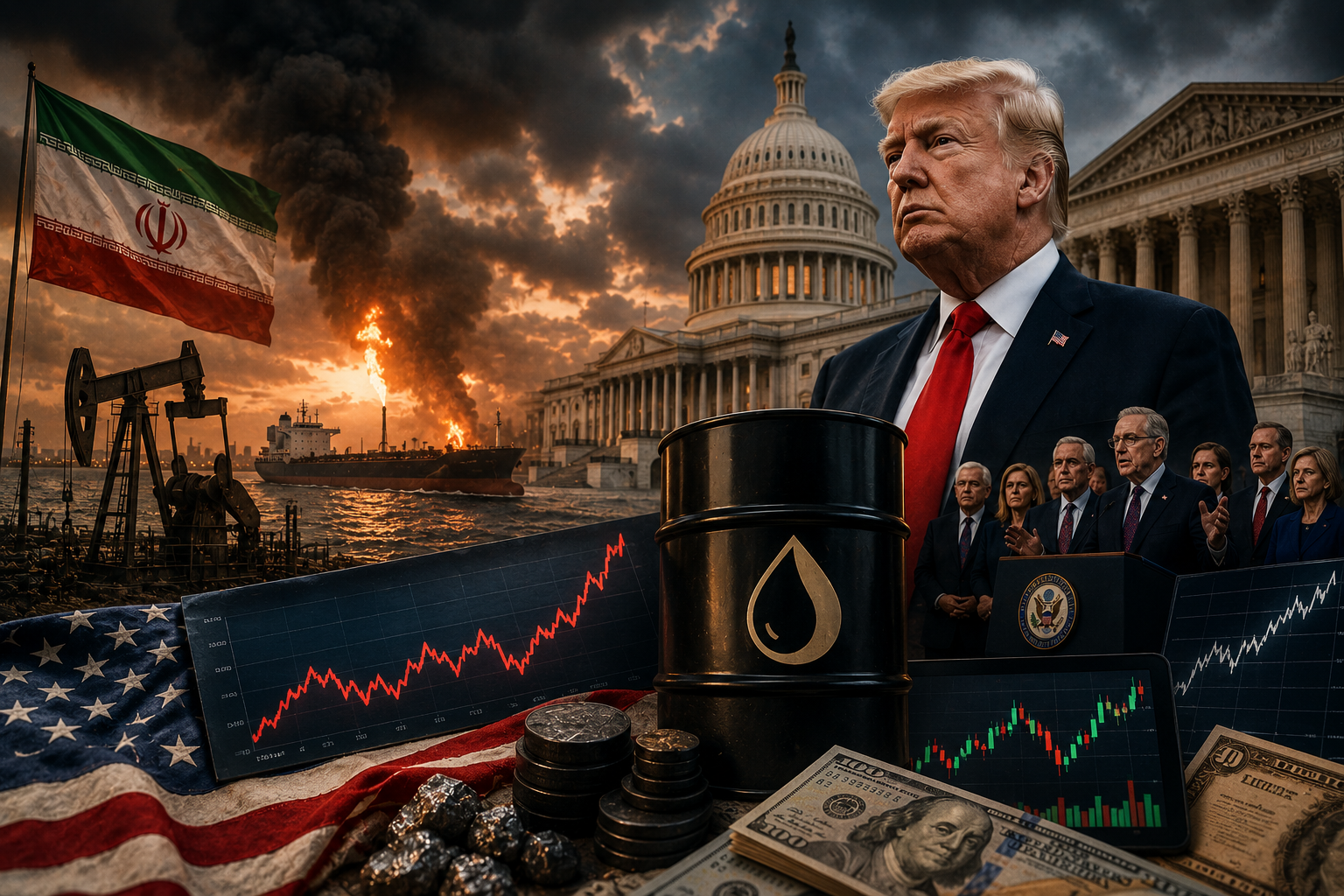
Wall Street is once again being reminded that geopolitics can move markets just as powerfully as earnings reports and Federal Reserve policy.
As lawmakers in Washington prepare for another major vote aimed at limiting President Donald Trump’s authority over the escalating Iran conflict, investors are increasingly focused on the broader economic consequences of rising Middle East tensions. Oil prices have surged above $106 per barrel, Treasury yields are climbing toward multi-year highs, and concerns are growing that a prolonged geopolitical crisis could reignite inflationary pressures just as markets were hoping for eventual interest-rate cuts.
According to reports from the Associated Press and Reuters between May 19 and May 21, 2026, bipartisan concern is mounting inside Congress over the potential economic and military fallout tied to continued confrontation with Iran. The debate is rapidly evolving beyond foreign policy and becoming a major issue for financial markets, energy prices, inflation expectations, and investor risk sentiment.
For investors, the stakes are significant.
The conflict is unfolding at a moment when markets are already navigating elevated valuations, persistent inflation concerns, and increasing uncertainty surrounding Federal Reserve policy. A sustained escalation in the Middle East could reshape sector leadership across equities, commodities, and fixed-income markets during the second half of 2026.
Geopolitical Risk Is Back at the Center of Markets
For much of the AI-driven market rally over the past two years, geopolitical risks often took a backseat to enthusiasm surrounding artificial intelligence, semiconductor demand, and technology earnings growth.
That dynamic is beginning to change.
The Iran conflict has become a growing source of anxiety for institutional investors because it directly affects one of the most sensitive components of the global economy: energy markets.
Iran remains strategically critical due to its influence over Middle Eastern oil supply routes and regional geopolitical stability. Any prolonged military escalation raises fears of supply disruptions, shipping risks, or broader regional instability that could significantly impact global crude markets.
Those concerns are already reflected in rising oil prices.
Brent crude moving above $106 per barrel is forcing investors to reconsider assumptions about inflation, economic growth, and monetary policy. Energy shocks historically ripple throughout the economy by increasing transportation costs, manufacturing expenses, and consumer prices.
That creates a difficult environment for central banks attempting to manage inflation without damaging economic growth.
For Wall Street, the timing could hardly be more sensitive.
Rising Oil Prices Are Complicating the Fed’s Path
Markets entered 2026 expecting the Federal Reserve would gradually shift toward easing monetary policy later in the year as inflation cooled and growth moderated.
The Iran conflict now threatens to disrupt that outlook.
Higher oil prices increase the risk that inflation could remain elevated longer than policymakers anticipated. This is particularly concerning because inflation had already proven more persistent than many economists expected during the previous two years.
Several inflation-sensitive areas remain under pressure:
- Energy and gasoline prices
- Transportation costs
- Industrial input costs
- Supply-chain expenses
- Consumer inflation expectations
If energy-driven inflation accelerates, the Federal Reserve may face limited flexibility to reduce interest rates.
That possibility is becoming increasingly important for investors because rising Treasury yields are already pressuring equity valuations, particularly among high-growth technology stocks.
The market is beginning to realize that geopolitical instability could indirectly tighten financial conditions even without additional Fed rate hikes.
Treasury Yields Are Sending a Warning Signal
Alongside rising oil prices, Treasury yields have surged toward levels not seen since before the financial crisis.
Bond markets increasingly reflect investor concerns surrounding:
- Persistent inflation risks
- Expanding federal deficits
- Elevated government borrowing
- Geopolitical uncertainty
- Delayed Federal Reserve easing
Higher Treasury yields directly affect stock valuations because they increase the discount rate investors apply to future corporate earnings.
This dynamic disproportionately affects growth-oriented sectors like technology and artificial intelligence, where valuations often depend heavily on future cash-flow expectations.
Companies such as NVIDIA, Microsoft, and Amazon have been central drivers of recent market gains, but higher yields could create increasing pressure on premium valuations across the broader technology sector.
As a result, markets are beginning to rotate toward sectors viewed as more resilient during inflationary or geopolitical environments.
Energy and Defense Stocks Are Benefiting
One of the clearest investment trends emerging from the Iran crisis is renewed strength in energy and defense-related equities.
Energy Companies
Higher crude prices improve revenue and earnings expectations for oil producers, refiners, and energy-service firms. Investors are increasingly positioning for the possibility that oil markets could remain structurally tight if geopolitical tensions persist.
Energy stocks had already experienced renewed momentum due to supply discipline and global underinvestment in traditional fossil fuel production. The latest developments may further strengthen the sector’s outlook.
Defense Contractors
Geopolitical instability often leads to increased defense spending expectations.
Defense and aerospace firms tied to military systems, cybersecurity, surveillance technology, missile defense, and intelligence infrastructure are drawing renewed investor attention as governments prioritize national security spending.
Companies operating in these sectors may continue benefiting if global geopolitical tensions remain elevated.
Commodities and Industrial Materials
Inflation-sensitive assets including commodities, mining firms, and industrial materials companies may also attract increased capital flows if energy prices continue rising.
Congress vs. Trump: Why the Political Battle Matters
The congressional effort to limit President Trump’s war powers adds another layer of uncertainty to the market environment.
Historically, markets dislike political unpredictability, especially when it intersects with military conflict and economic policy.
The current debate raises several investor concerns:
- Whether military escalation could intensify further
- Potential disruptions to global energy markets
- Fiscal implications of prolonged conflict
- Political instability surrounding U.S. foreign policy
- Broader effects on global investor confidence
Bipartisan involvement in the congressional push reflects growing concern inside Washington regarding the economic consequences of sustained military engagement.
For investors, the political battle matters because markets increasingly view geopolitical policy as directly linked to inflation, interest rates, and sector performance.
The AI Rally Is Facing a Macro Reality Check
The broader market environment is undergoing a subtle but important transition.
For much of the past year, investors largely focused on AI optimism and technology-driven growth narratives. Today, macroeconomic and geopolitical risks are becoming more influential in determining market direction.
This does not necessarily mean the AI boom is ending.
Instead, it suggests investors are moving into a more selective and risk-sensitive phase of the cycle.
The market is beginning to reward:
- Defensive positioning
- Cash-flow stability
- Commodity exposure
- Energy infrastructure
- Inflation resilience
- Geopolitical hedging
At the same time, speculative growth assets may face greater volatility as financial conditions tighten.
Future Trends Investors Should Watch
Several developments could significantly influence markets in the months ahead.
Oil Market Volatility
Any escalation involving Iran or disruptions to Middle Eastern energy exports could push oil prices even higher.
Federal Reserve Commentary
Upcoming inflation reports and Fed guidance will remain central market catalysts.
Treasury Yield Movements
Bond market behavior may increasingly dictate equity valuations, particularly for growth sectors.
Defense Spending Expansion
Heightened geopolitical risks could support increased U.S. and allied military spending.
Sector Rotation
Energy, commodities, defense, and utilities may continue outperforming if inflation pressures intensify.
Key Investment Insight
The escalating political battle over Iran highlights how deeply geopolitics is becoming intertwined with financial markets, inflation expectations, and Federal Reserve policy.
Investors should closely monitor energy prices, Treasury yields, and geopolitical developments, as continued escalation could create sustained volatility across global markets. Energy producers, defense contractors, commodities, and inflation-resistant sectors may continue benefiting if tensions remain elevated.
At the same time, rising yields and higher energy costs could increase pressure on high-growth equities and richly valued technology stocks that have dominated recent market gains.
As markets shift from pure AI-driven momentum toward broader macroeconomic risk management, diversification and disciplined portfolio positioning may become increasingly important for navigating the second half of 2026.
Stay ahead of the markets with more daily investor insights and breaking financial analysis at MoneyNews.Today.




