The artificial intelligence investment boom is no longer just about software models and flashy AI chatbots — it is rapidly becoming one of the largest infrastructure buildouts in modern technology history.
At the center of that transformation is Microsoft.
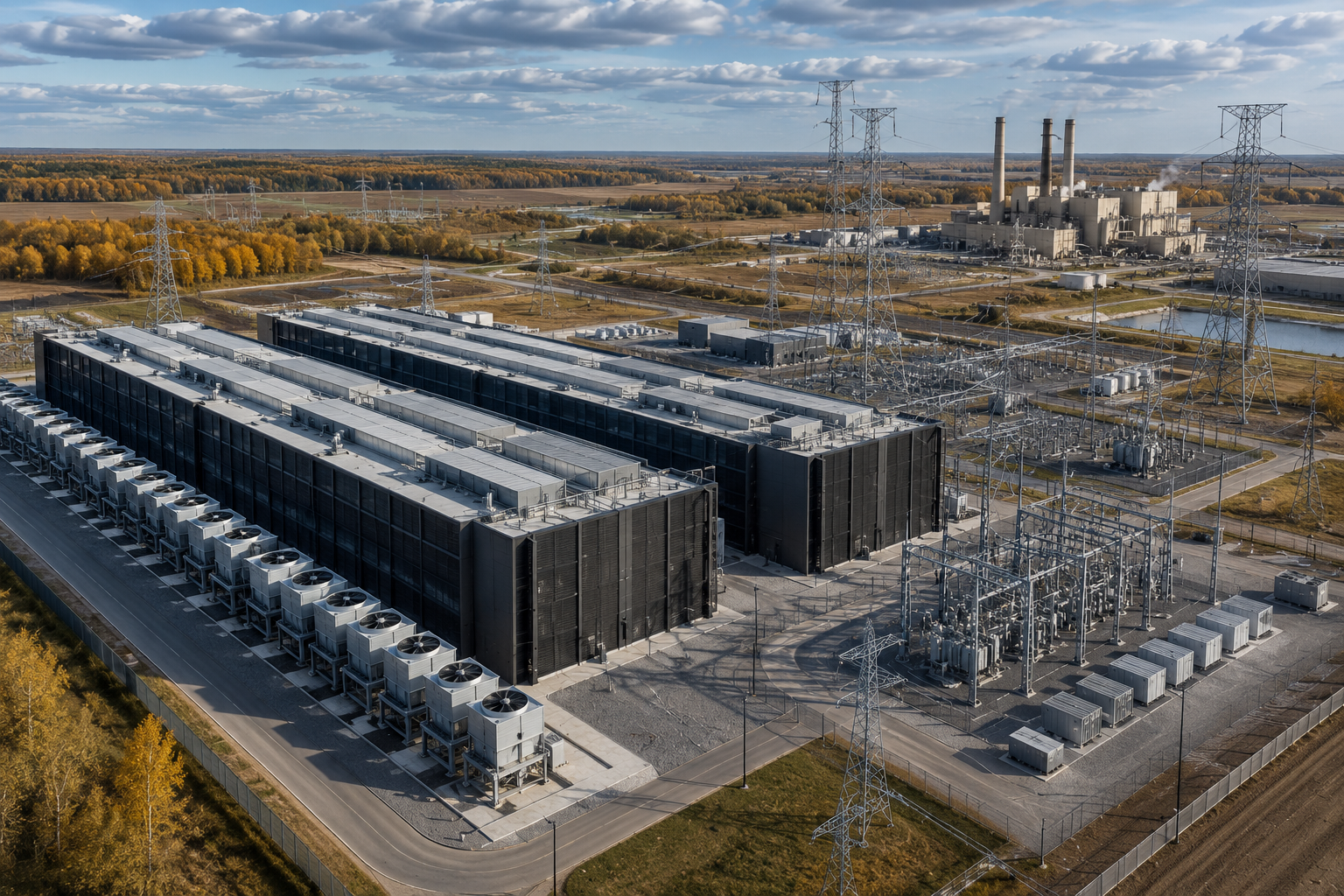
The tech giant has announced another major expansion of its global AI and cloud infrastructure strategy, including a reported A$25 billion investment initiative in Australia focused on AI-ready data centers, cloud scaling, cybersecurity expansion, and advanced computing infrastructure. The move, highlighted by reports from Tech Insider and The Guardian, reinforces a growing reality across Wall Street: hyperscalers remain deeply committed to long-term AI deployment despite soaring costs tied to semiconductors, electricity, networking equipment, and data center construction.
For investors, Microsoft’s latest infrastructure push sends a powerful signal about where the next phase of the AI economy may be headed.
The market narrative is increasingly shifting away from simply “who builds the best AI model” toward a much broader race centered on compute capacity, energy access, cloud dominance, and global AI infrastructure control.
That transition could create investment opportunities far beyond the biggest technology names currently dominating AI headlines.
Microsoft Is Betting Big on Long-Term AI Demand
Microsoft’s aggressive expansion strategy reflects extraordinary confidence in enterprise AI adoption over the coming decade.
The company has already become one of the central players in the global AI race through its partnership with OpenAI and its integration of AI capabilities across Azure cloud services, Microsoft 365, GitHub, enterprise cybersecurity tools, and productivity software ecosystems.
Now, the company appears focused on ensuring it has enough physical infrastructure to support rapidly accelerating demand.
That infrastructure includes:
- AI-optimized hyperscale data centers
- Advanced GPU clusters
- High-speed networking systems
- Enterprise cloud expansion
- Cybersecurity infrastructure
- Regional AI compute hubs
The reported Australia initiative represents one of the clearest examples yet of how hyperscalers are expanding globally to secure strategic AI capacity closer to enterprise customers and government partners.
This strategy also reflects a larger industry trend.
AI workloads require significantly more computing power than traditional cloud applications. Training and operating large AI models consume enormous amounts of energy, bandwidth, and specialized semiconductor resources. As a result, companies like Microsoft are racing to secure long-term infrastructure advantages before capacity constraints become major competitive bottlenecks.
The AI Arms Race Is Becoming an Infrastructure Competition
For much of the past two years, investor attention focused heavily on semiconductor leaders like Nvidia and advanced AI software developers.
But the market is increasingly recognizing that AI is fundamentally an infrastructure story.
The next phase of growth depends on whether hyperscalers can scale the physical systems required to power enterprise AI adoption globally.
This includes:
- Data centers
- Electrical grid capacity
- Cooling systems
- Fiber-optic networking
- Advanced semiconductors
- Cloud storage
- Power generation
The scale of investment required is enormous.
Industry analysts estimate that global AI infrastructure spending could exceed hundreds of billions of dollars annually over the next several years as cloud providers expand compute capacity to meet enterprise demand.
Microsoft’s latest investment initiative reinforces the idea that major technology firms are willing to continue spending aggressively despite concerns surrounding inflation, higher interest rates, and slowing global economic growth.
That willingness to maintain elevated capital expenditures is becoming one of the strongest bullish signals for long-term AI investors.
Why Data Center REITs and Infrastructure Firms Could Benefit
One of the biggest investment implications of Microsoft’s expansion strategy involves second-order AI beneficiaries.
While mega-cap technology companies remain dominant market leaders, the broader AI infrastructure ecosystem is attracting growing investor interest.
Data center real estate investment trusts (REITs) may be among the clearest beneficiaries.
AI data centers require specialized facilities with access to:
- High electrical capacity
- Advanced cooling systems
- Low-latency connectivity
- Scalable expansion capabilities
- Proximity to enterprise cloud demand
As hyperscalers continue expanding globally, demand for premium data center space is rising sharply.
This trend is benefiting companies involved in:
- Data center development
- Industrial power systems
- Fiber-optic infrastructure
- Semiconductor packaging
- AI networking hardware
- Cooling technology
- Energy infrastructure
Several institutional analysts have compared the current AI infrastructure cycle to earlier cloud computing booms that created massive long-term opportunities across adjacent industries.
For investors, the AI ecosystem may increasingly resemble a full industrial supply chain rather than a narrow software theme.
Power Demand Is Emerging as a Critical AI Bottleneck
One of the most important and underappreciated aspects of the AI infrastructure boom is electricity demand.
AI systems consume extraordinary amounts of power compared to traditional computing workloads. Large GPU clusters operating advanced AI models require continuous energy-intensive processing, creating new strain on electrical grids globally.
As hyperscalers expand AI-ready data center networks, power availability is becoming a major strategic consideration.
Several reports from utility operators and energy analysts suggest AI-driven electricity demand could become one of the defining infrastructure challenges of the decade.
This dynamic is beginning to reshape investment conversations around:
- Utilities
- Nuclear energy
- Renewable energy
- Grid modernization
- Natural gas infrastructure
- Industrial power equipment
Some analysts now believe energy infrastructure could become one of the most important long-term AI investment themes outside traditional technology stocks.
Microsoft itself has increasingly explored partnerships tied to sustainable energy sourcing as part of its broader AI and cloud expansion plans.
For investors, this creates a broader universe of potential AI-related opportunities beyond semiconductors and software alone.
Geopolitics and Digital Sovereignty Are Driving Regional AI Expansion
Microsoft’s global expansion strategy also highlights a growing geopolitical dimension within the AI economy.
Governments increasingly view AI infrastructure as a strategic national asset tied to economic competitiveness, cybersecurity, and technological sovereignty.
Countries across Europe, Asia-Pacific, and North America are pushing for localized cloud infrastructure and regional AI capacity to reduce dependence on foreign technology ecosystems.
Australia’s growing importance in Microsoft’s infrastructure strategy reflects this trend.
The country offers political stability, strong regulatory alignment with Western technology partners, advanced telecommunications networks, and growing enterprise demand for cloud-based AI services.
More broadly, governments worldwide are encouraging investments into domestic data centers, semiconductor manufacturing, cybersecurity systems, and sovereign AI infrastructure.
This geopolitical backdrop could continue supporting elevated AI infrastructure spending for years.
Why This Matters for Investors
The AI investment cycle is evolving into something far larger than a short-term technology rally.
Microsoft’s aggressive infrastructure expansion demonstrates that hyperscalers remain highly confident in long-term enterprise AI demand despite rising operating costs and macroeconomic uncertainty.
For investors, this has several major implications:
1. AI Spending Is Becoming Structural
Large technology companies appear committed to multi-year AI infrastructure investment cycles rather than temporary spending surges.
2. The Opportunity Set Is Broadening
Second-wave beneficiaries across data centers, networking, energy, cooling systems, and infrastructure services may experience sustained growth.
3. Enterprise Adoption Is Accelerating
AI is increasingly moving from experimental deployments into large-scale enterprise integration across industries.
4. Infrastructure Constraints Could Create Winners
Companies capable of solving bottlenecks tied to power, networking, semiconductors, and compute scaling may command premium valuations.
5. Global Competition Is Intensifying
Governments and corporations are increasingly treating AI infrastructure as a strategic economic priority.
Key Investment Insight
Microsoft’s multi-billion-dollar global AI infrastructure expansion reinforces one of the clearest themes dominating financial markets today: enterprise AI adoption remains in its early innings, and hyperscalers are preparing for sustained long-term demand growth.
For investors, the biggest opportunities may extend far beyond AI software providers alone. Data center REITs, cloud infrastructure firms, power suppliers, semiconductor manufacturers, networking hardware companies, and industrial infrastructure providers could all benefit from the next stage of global AI deployment.
As the AI economy matures, infrastructure ownership may become just as valuable as AI model leadership itself.
Stay informed on the latest AI trends, technology investment opportunities, and market-moving developments with MoneyNews.Today, your trusted source for daily financial news and investor insights.