
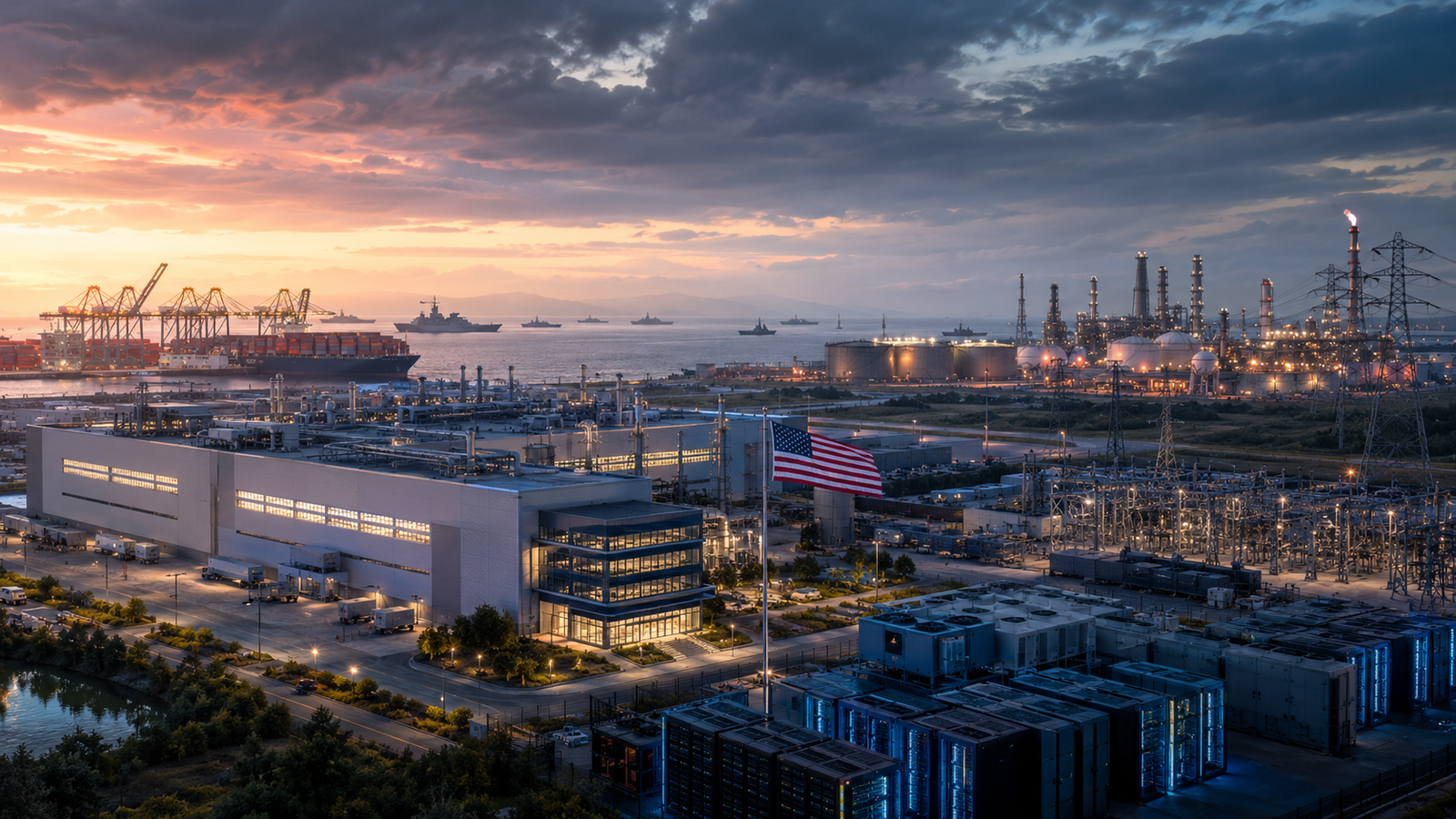
Wall Street’s rally in 2026 is no longer being driven solely by earnings growth or interest-rate expectations. Increasingly, markets are reacting to geopolitical headlines, industrial-policy announcements, and strategic competition between global powers. From semiconductor restrictions and AI infrastructure investments to Middle East tensions and energy-security concerns, politics has become deeply embedded in investment strategy.
Investors are now navigating a market environment where government policy decisions can move sectors just as powerfully as quarterly earnings reports. While enthusiasm surrounding artificial intelligence continues pushing U.S. equities toward record highs, geopolitical risks involving Iran, China, energy supply chains, and trade policy remain major sources of volatility.
Recent Reuters market coverage highlighted how investors are balancing optimism tied to AI-driven growth against concerns over geopolitical instability and rising global fragmentation. At the same time, Washington continues doubling down on domestic manufacturing incentives, semiconductor independence, and strategic supply-chain reshoring as part of a broader economic competition with China.
For investors, the message is becoming increasingly clear: geopolitics is no longer a background risk. It is now a primary market driver.
Markets Are Trading on Both AI Optimism and Geopolitical Risk
One of the defining characteristics of today’s market environment is the simultaneous coexistence of extraordinary bullishness around AI and persistent geopolitical uncertainty.
Major indexes such as the S&P 500 and Nasdaq have continued reaching new highs in 2026, largely fueled by massive capital spending tied to artificial intelligence infrastructure. Semiconductor companies, cloud providers, hyperscale data-center operators, and AI software firms remain among the market’s strongest performers.
However, beneath the rally, investors are increasingly hedging against geopolitical risks that could disrupt global trade, energy markets, and supply chains.
Recent tensions involving Iran and broader Middle East instability have renewed concerns about oil supply disruptions and shipping-route security. Meanwhile, the United States and China continue escalating strategic competition across semiconductors, AI development, advanced manufacturing, and critical mineral supply chains.
The result is a market environment where investors are aggressively pursuing growth opportunities tied to AI while simultaneously repositioning portfolios toward sectors viewed as strategically resilient.
Defense contractors, energy infrastructure companies, industrial manufacturers, uranium producers, cybersecurity firms, and domestic semiconductor suppliers have all benefited from this evolving market dynamic.
Industrial Policy Has Become a Core Economic Strategy
The United States has undergone a major shift in economic policy over the past several years. Rather than relying purely on globalization and market efficiency, policymakers are increasingly embracing industrial-policy strategies aimed at strengthening domestic production and technological leadership.
This transformation accelerated following the pandemic-era supply-chain disruptions and ongoing tensions with China.
Washington’s approach now centers around several major priorities:
- Expanding semiconductor manufacturing capacity
- Securing AI leadership
- Reshoring critical supply chains
- Reducing reliance on foreign adversaries
- Strengthening domestic energy infrastructure
- Supporting defense and cybersecurity industries
Legislation such as the CHIPS and Science Act, Inflation Reduction Act, and various defense-related funding initiatives have already directed hundreds of billions of dollars into strategic industries.
The semiconductor industry remains one of the clearest examples.
The U.S. government has aggressively incentivized domestic chip manufacturing through subsidies, tax credits, and strategic partnerships with major technology firms. Companies including Intel, Taiwan Semiconductor Manufacturing Company (TSMC), Samsung, and Micron Technology have all announced major North American expansion projects.
According to McKinsey and Deloitte analyses, the global semiconductor industry could exceed $1 trillion in annual revenue by the end of the decade, driven heavily by AI-related demand.
For investors, industrial policy is increasingly shaping where capital flows across the market.
AI Leadership Is Now a National-Security Priority
Artificial intelligence is no longer viewed solely as a commercial technology opportunity. Governments increasingly see AI as a strategic asset tied directly to economic competitiveness, military superiority, and global influence.
That shift is having enormous implications for markets.
The United States is racing to maintain leadership in AI computing infrastructure, advanced chips, cloud platforms, and foundational AI models. Restrictions on advanced semiconductor exports to China reflect growing concerns that AI dominance could determine future geopolitical power balances.
At the same time, AI-related capital spending continues exploding across the private sector.
NVIDIA Corporation, Microsoft Corporation, Alphabet Inc., Amazon.com Inc., and Meta Platforms Inc. are collectively investing hundreds of billions of dollars into data centers, AI accelerators, networking infrastructure, and power systems.
This unprecedented investment cycle is reshaping multiple sectors simultaneously:
- Semiconductors
- Industrial automation
- Utilities and power infrastructure
- Cybersecurity
- Cooling and electrical systems
- Metals and mining
- Nuclear energy
Many analysts now compare the AI infrastructure buildout to previous transformational investment cycles such as the internet boom or post-war industrial expansion.
Importantly, governments are actively supporting these investments because AI leadership is increasingly intertwined with national-security objectives.
Energy Security Returns to the Center of Market Strategy
Energy security has also reemerged as a major investment theme due to geopolitical tensions and the enormous electricity requirements tied to AI infrastructure and electrification.
Data centers supporting AI models require massive power consumption, creating growing concerns about grid reliability and long-term electricity supply. This has sparked renewed investor interest in nuclear energy, natural gas infrastructure, uranium mining, and grid modernization.
Meanwhile, geopolitical instability involving oil-producing regions continues influencing energy markets.
Middle East tensions, shipping-route security concerns, and broader global fragmentation have reinforced the importance of diversified energy supply chains. Governments are increasingly prioritizing domestic production and strategic energy resilience rather than purely low-cost sourcing.
According to the International Energy Agency (IEA), global electricity demand from AI and advanced computing infrastructure is expected to rise sharply over the next decade.
That demand surge could create major investment opportunities across:
- Nuclear power
- Natural gas infrastructure
- Utility modernization
- Grid technology
- Copper and uranium mining
- Renewable energy storage systems
For investors, energy security is no longer separate from technology investing. The two themes are increasingly interconnected.
Defense and Cybersecurity Spending Continue Rising
Another major consequence of geopolitical fragmentation is sustained growth in defense and cybersecurity spending.
Governments across North America and NATO-aligned nations are significantly increasing military budgets amid rising tensions involving China, Russia, and Middle East conflicts. Defense contractors involved in missile systems, aerospace, AI-driven warfare technologies, drones, and cybersecurity are seeing growing investor interest.
Cybersecurity, in particular, has become one of the market’s most resilient long-term themes.
State-sponsored cyberattacks, AI-powered hacking threats, and growing digital vulnerabilities are forcing governments and corporations to increase spending on digital defense infrastructure. Analysts increasingly view cybersecurity as a structural growth sector relatively insulated from broader economic slowdowns.
The convergence of AI, defense technology, and cyber warfare is creating an entirely new category of strategic investment opportunities.
Risks Investors Should Watch
Despite the strong investment momentum tied to industrial policy and geopolitical trends, risks remain significant.
Geopolitical tensions can create sharp market volatility, particularly in energy, commodities, and international trade-sensitive sectors. Escalation involving China, Taiwan, or the Middle East could rapidly disrupt supply chains and investor sentiment.
There is also growing concern about market concentration within AI-related equities. A relatively small number of mega-cap technology companies continue driving a disproportionate share of market gains.
Valuation risk remains elevated across parts of the semiconductor and AI infrastructure ecosystem.
Additionally, industrial-policy spending could face political challenges if fiscal pressures intensify or economic growth slows.
Investors should remain diversified and avoid overexposure to highly speculative momentum trades.
Key Investment Insight
The intersection of geopolitics, industrial policy, and AI infrastructure is becoming one of the defining market themes of 2026.
Investors should closely monitor:
- Semiconductor and AI infrastructure companies
- Defense and aerospace contractors
- Cybersecurity providers
- Energy infrastructure and uranium producers
- Domestic manufacturing beneficiaries
- Critical minerals and strategic-resource projects
- Government-supported industrial initiatives
The broader investment landscape is increasingly being shaped not just by consumer demand and corporate earnings, but by strategic competition between nations.
As governments continue prioritizing technological leadership, supply-chain security, and economic sovereignty, capital flows are likely to remain concentrated in sectors tied to national resilience and industrial competitiveness.
Stay with MoneyNews.Today for more daily investor insights covering geopolitics, AI infrastructure, energy security, industrial policy, and the market trends shaping the global economy.




