The artificial intelligence investment wave has become one of the most powerful forces shaping financial markets in 2026. From semiconductor manufacturers and hyperscale cloud providers to data-center developers and power-generation companies, businesses are spending billions of dollars to secure a position in what many analysts believe will be the next major technological revolution.
Now, that spending boom is influencing more than just corporate earnings and stock prices—it is increasingly shaping the debate inside the Federal Reserve and among economists attempting to forecast the future direction of the U.S. economy.
As investors await policy signals from Federal Reserve Chair Kevin Warsh and central bank officials, a growing divide has emerged. Some economists argue that AI-driven productivity gains could help control inflation and support stronger economic growth. Others warn that the unprecedented scale of AI-related capital spending could overheat parts of the economy, keeping inflation elevated and complicating future interest-rate decisions.
For investors, understanding this debate may be just as important as tracking the next breakthrough AI model or semiconductor earnings report.
AI Becomes a Macroeconomic Force
Over the past two years, artificial intelligence has evolved from a technology trend into a major economic driver. The rapid deployment of generative AI systems has sparked a race among technology giants, cloud providers, and enterprises to build the infrastructure necessary to support advanced AI workloads.
Industry leaders have committed hundreds of billions of dollars toward data centers, specialized semiconductor production, networking infrastructure, and power systems. Companies including Microsoft, Amazon, Alphabet, Meta Platforms, and numerous emerging AI firms continue expanding capital expenditures at an unprecedented pace.
According to reports from Reuters and various Wall Street analysts, AI-related investment is now large enough to influence national productivity forecasts, labor market expectations, energy demand projections, and broader economic growth estimates.
This shift has created a new challenge for economists attempting to determine how artificial intelligence will affect inflation, employment, and monetary policy.
Why Economists Are Divided
The central question is surprisingly simple: Will AI make the economy more efficient, or will AI spending create new inflationary pressures?
The optimistic camp argues that artificial intelligence could become one of the most significant productivity-enhancing technologies since the internet. By automating repetitive tasks, improving decision-making, and increasing worker efficiency, AI may allow businesses to produce more goods and services without a proportional increase in labor costs.
Historically, productivity gains have been associated with stronger economic growth and lower inflationary pressures. If AI follows a similar path, the Federal Reserve could eventually find itself in a position where economic growth accelerates while inflation remains manageable.
Several economists have compared the current AI investment cycle to previous technological transformations, including the personal computer revolution of the 1980s and the internet boom of the late 1990s.
However, another group of economists remains cautious.
Critics point to the enormous capital expenditures required to build AI infrastructure. Massive investments in data centers, semiconductors, electrical grid upgrades, and energy generation are increasing demand for labor, construction materials, industrial equipment, and power resources.
These factors could contribute to localized inflation pressures, particularly in sectors directly tied to AI expansion.
Some analysts also question whether productivity benefits will materialize quickly enough to offset the short-term inflationary impact of the spending surge.
The Energy Challenge Few Investors Are Ignoring
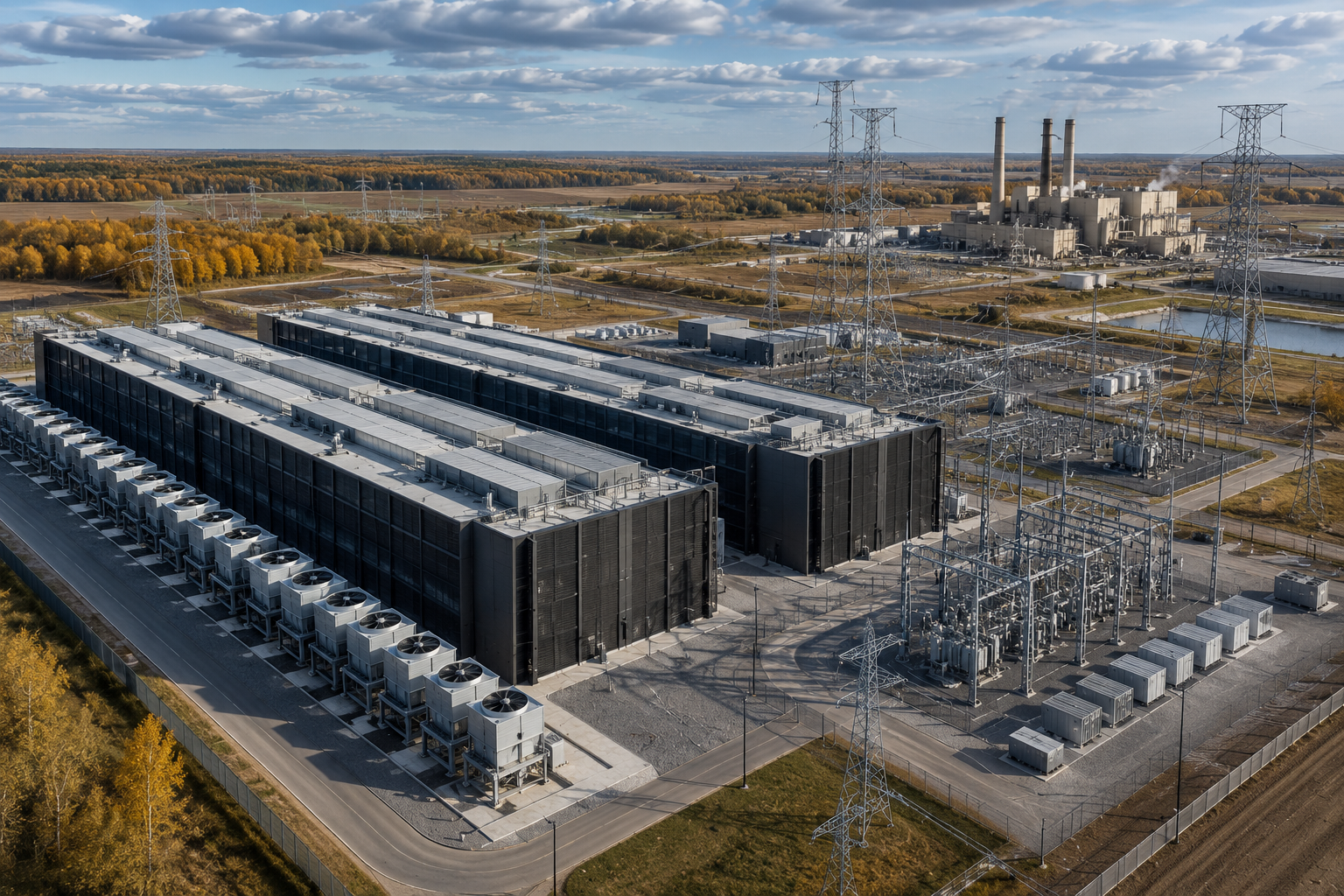
One of the most important developments emerging from the AI boom is the growing demand for electricity.
Modern AI models require immense computational resources. As companies deploy increasingly sophisticated systems, power consumption has become a critical consideration for both investors and policymakers.
Research from industry groups and utility operators suggests that data-center electricity demand could grow dramatically over the next decade. Utilities, power producers, and energy infrastructure companies are increasingly viewed as indirect beneficiaries of AI growth.
This trend is attracting investor attention toward nuclear energy projects, natural gas infrastructure, transmission networks, and renewable energy providers capable of supporting the next generation of AI facilities.
The growing relationship between AI and energy demand has also entered discussions about inflation, as higher energy costs can influence broader economic conditions.
What the Federal Reserve Is Watching
Federal Reserve officials face a unique challenge in assessing the economic impact of AI.
Traditional economic indicators often lag behind technological change. Policymakers must determine whether AI-related investment represents a temporary spending cycle or the beginning of a long-term productivity revolution.
If AI significantly boosts productivity, the economy may be able to grow faster without generating excessive inflation. Such a scenario could eventually support a more accommodative monetary policy environment.
On the other hand, if AI spending continues driving demand for labor, energy, industrial materials, and infrastructure at a pace that exceeds supply growth, inflationary pressures could remain elevated.
This uncertainty helps explain why economists have become increasingly divided in their outlooks for future Federal Reserve policy.
For investors, the implications are substantial. Interest-rate expectations continue to influence valuations across technology stocks, growth companies, bonds, cryptocurrencies, and commodities.
The AI Winners Investors Should Monitor
While the macroeconomic debate continues, several segments of the market remain positioned to benefit directly from ongoing AI investment.
Semiconductor Manufacturers
AI applications require specialized processors capable of handling complex computations. Demand for advanced chips continues to support strong growth prospects for semiconductor companies throughout the supply chain.
Data-Center Operators
The physical infrastructure supporting AI applications remains a critical investment theme. Companies developing and operating large-scale data centers are experiencing rising demand from hyperscale cloud providers and enterprise customers.
Cloud Computing Providers
Cloud platforms serve as the backbone for AI deployment. Businesses increasingly rely on cloud infrastructure to access AI tools, train models, and scale operations.
Power and Utility Companies
The connection between AI growth and electricity demand has created a compelling opportunity for utilities, independent power producers, grid operators, and energy infrastructure providers.
Industrial and Infrastructure Suppliers
Construction firms, equipment manufacturers, networking providers, and engineering companies involved in AI-related infrastructure projects may benefit from continued capital investment.
Future Trends to Watch
Several developments could determine how the AI-driven economic story unfolds over the next 12 to 24 months.
First, investors should monitor corporate capital expenditure announcements. Continued increases in AI spending would reinforce the long-term growth narrative.
Second, productivity data will become increasingly important. Evidence that AI is improving business efficiency could strengthen the argument that technological gains will offset inflation concerns.
Third, energy demand trends deserve close attention. Rising electricity consumption may create investment opportunities while also influencing inflation forecasts.
Finally, Federal Reserve commentary regarding productivity, technological innovation, and capital investment could provide important clues about how policymakers view the AI boom’s broader economic impact.
Key Investment Insight
Artificial intelligence is no longer simply a technology sector story—it has become a macroeconomic force influencing Federal Reserve policy, inflation expectations, and long-term growth forecasts.
Investors should continue focusing on the broader AI ecosystem rather than solely on software developers. Semiconductor manufacturers, data-center operators, cloud providers, utilities, power-generation companies, and infrastructure suppliers may represent some of the most significant beneficiaries of the ongoing AI investment cycle.
As economists debate whether AI will ultimately cool inflation through productivity gains or fuel economic overheating through massive capital spending, one conclusion appears increasingly clear: AI remains the dominant secular growth theme shaping markets in 2026.
Stay informed with MoneyNews.Today for daily investor insights, market-moving developments, and in-depth analysis of the trends shaping the future of global investing.