
The race for artificial intelligence supremacy, electric vehicle production, and national security dominance is no longer being fought solely in technology labs or manufacturing plants. Increasingly, it is being fought deep underground.
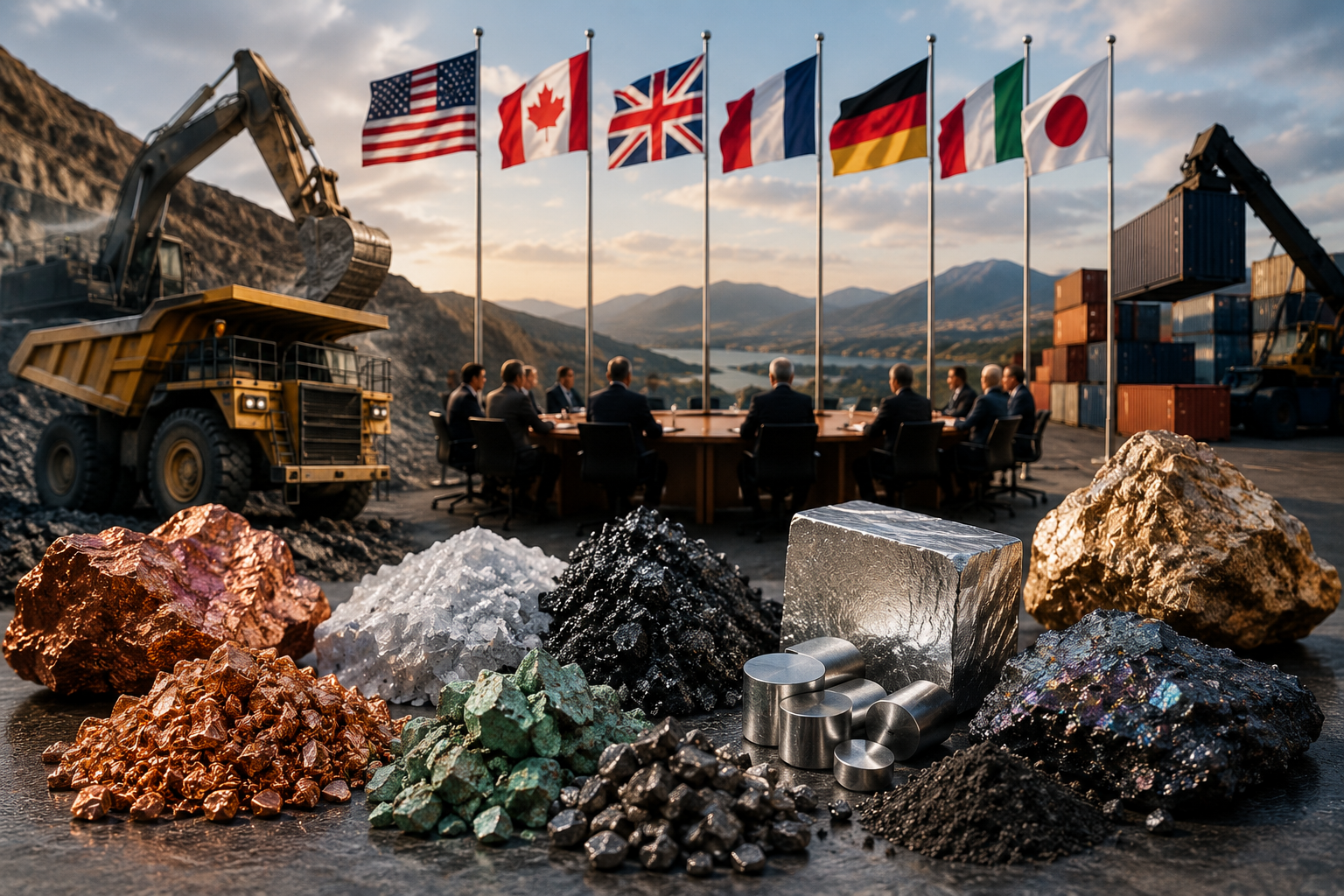
At this week’s G7 summit, critical minerals emerged as one of the most important geopolitical and economic issues facing Western nations. Leaders from the United States, Canada, the United Kingdom, France, Germany, Italy, and Japan intensified discussions aimed at reducing dependence on China for strategic raw materials essential to modern economies.
According to Reuters reporting from June 17, 2026, G7 leaders are exploring coordinated supply-chain initiatives, investment incentives, and potential purchasing agreements designed to strengthen Western access to critical minerals. The move reflects growing concerns that China’s dominance across key mineral supply chains could create economic vulnerabilities at a time when demand for these resources is accelerating.
For investors, the implications extend far beyond mining stocks. The outcome of these efforts could reshape global supply chains, influence industrial policy, and create significant opportunities across mining, energy, manufacturing, defense, and technology sectors for years to come.
The New Global Resource Race
The strategic importance of critical minerals has risen dramatically over the past decade.
Minerals such as lithium, copper, graphite, nickel, cobalt, and rare earth elements are essential components in electric vehicles, battery storage systems, renewable energy infrastructure, advanced semiconductors, defense technologies, and artificial intelligence data centers.
Demand is growing rapidly.
According to forecasts from the International Energy Agency (IEA), the global energy transition alone is expected to drive substantial increases in demand for many critical minerals over the coming decades. Electric vehicles require significantly more mineral inputs than conventional automobiles, while renewable energy systems rely heavily on copper, rare earths, and battery materials.
At the same time, the artificial intelligence boom is creating additional demand for copper-intensive electrical infrastructure, advanced electronics, and power-generation systems.
As these industries expand simultaneously, governments are increasingly viewing mineral security as a national economic priority rather than simply a commodity market issue.
Why China’s Dominance Matters
One of the primary concerns discussed at the G7 summit is China’s significant influence over critical mineral supply chains.
China remains a leading producer, processor, and refiner of many strategic materials used across global industries. In several cases, Chinese companies control substantial portions of refining and processing capacity, even when raw materials originate elsewhere.
According to data from the International Energy Agency and various government reports, China accounts for a large share of global processing capacity for lithium, cobalt, graphite, and rare earth elements.
This concentration has raised concerns among Western policymakers.
Recent trade disputes, export restrictions, and geopolitical tensions have highlighted the risks associated with relying heavily on a single country for strategically important resources.
The result is a growing push toward diversification.
Governments are seeking to develop domestic mining projects, strengthen partnerships with allied nations, and encourage private-sector investment in alternative supply chains.
For investors, these initiatives could create long-term demand support for companies operating outside of China.
Why This Matters for Investors
Critical minerals are becoming increasingly intertwined with some of the market’s most powerful investment themes.
The first is artificial intelligence.
The rapid expansion of AI infrastructure requires significant amounts of copper for power transmission, data-center construction, and electrical systems. Semiconductor manufacturing also depends on specialized materials and reliable supply chains.
The second is electrification.
Global electric vehicle adoption continues to drive demand for lithium, graphite, nickel, and cobalt. Automakers and battery manufacturers are actively seeking secure sources of supply to support long-term production goals.
The third is national security.
Defense systems, aerospace technologies, advanced communications equipment, and military hardware all rely on critical minerals. Governments are increasingly willing to provide financial support for projects that improve strategic resource security.
The combination of these trends has transformed critical minerals from a niche commodity sector into a cornerstone of modern industrial policy.
Government Support Could Accelerate Industry Growth
One of the most significant developments emerging from G7 discussions is the possibility of expanded government involvement in critical mineral supply chains.
Reuters reported that policymakers are considering coordinated purchasing programs, investment incentives, financing support, and other mechanisms designed to encourage domestic production and allied-nation cooperation.
Such initiatives could provide substantial benefits for mining companies and project developers.
Historically, large-scale resource projects often faced challenges related to financing, permitting, infrastructure development, and long project timelines. Government support may help reduce some of these obstacles while improving project economics.
Investors have already seen examples of similar strategies.
The United States has introduced various incentives through industrial policy initiatives aimed at strengthening domestic manufacturing and supply chains. Canada and Australia have also expanded efforts to support critical mineral development.
The G7’s growing focus suggests these programs may continue to expand.
The Minerals Investors Should Watch
While critical minerals encompass a broad category, several commodities appear particularly well-positioned to benefit from rising strategic importance.
Copper
Copper remains one of the most attractive long-term opportunities due to its essential role in electrification, renewable energy, data centers, and AI infrastructure. Industry analysts continue to warn of potential supply deficits as demand growth outpaces new mine development.
Lithium
Lithium remains a foundational component of electric vehicle batteries. Although prices have experienced periods of volatility, long-term demand projections remain robust.
Graphite
Graphite is a critical material used in battery anodes and has become an increasingly important focus for Western supply-chain diversification efforts.
Rare Earth Elements
Rare earth minerals are essential for advanced electronics, electric motors, wind turbines, and defense systems. Their strategic importance has increased significantly amid geopolitical tensions.
Nickel and Cobalt
Both metals play important roles in battery technology and remain key components of the broader electrification trend.
Future Trends to Watch
Several developments could shape the investment outlook for critical minerals over the next several years.
Supply-Chain Partnerships
Investors should monitor new agreements between Western governments and resource-rich nations. Strategic partnerships could create investment opportunities across multiple jurisdictions.
Project Approvals and Financing
Government-backed financing programs and streamlined permitting processes may accelerate development timelines for major mining projects.
AI Infrastructure Expansion
The continued growth of artificial intelligence infrastructure is likely to increase demand for copper, power systems, and related industrial materials.
Defense Spending
Rising geopolitical tensions and increased defense budgets could further strengthen demand for strategic minerals.
Resource Nationalism
Governments around the world are increasingly focused on controlling access to critical resources. Policy changes could influence both supply and pricing dynamics.
Key Investment Insight
The G7’s growing focus on critical minerals signals that resource security is becoming one of the defining economic and geopolitical themes of the decade.
Investors should look beyond traditional commodity cycles and recognize the structural forces driving long-term demand. Artificial intelligence, electric vehicles, renewable energy, defense modernization, and supply-chain diversification are all converging to support strategic mineral consumption.
Companies involved in lithium, copper, graphite, rare earths, nickel, cobalt, and related infrastructure could benefit from increasing government support, private-sector investment, and long-term demand growth. While commodity markets remain cyclical, the broader trend toward securing critical mineral supply chains appears increasingly durable.
For investors seeking exposure to some of the most important industrial transformations shaping the global economy, critical minerals may represent one of the most compelling long-term opportunities in today’s market.
Stay informed with MoneyNews.Today for daily investor insights, market-moving developments, and in-depth analysis of the trends reshaping global industries and investment opportunities.




