
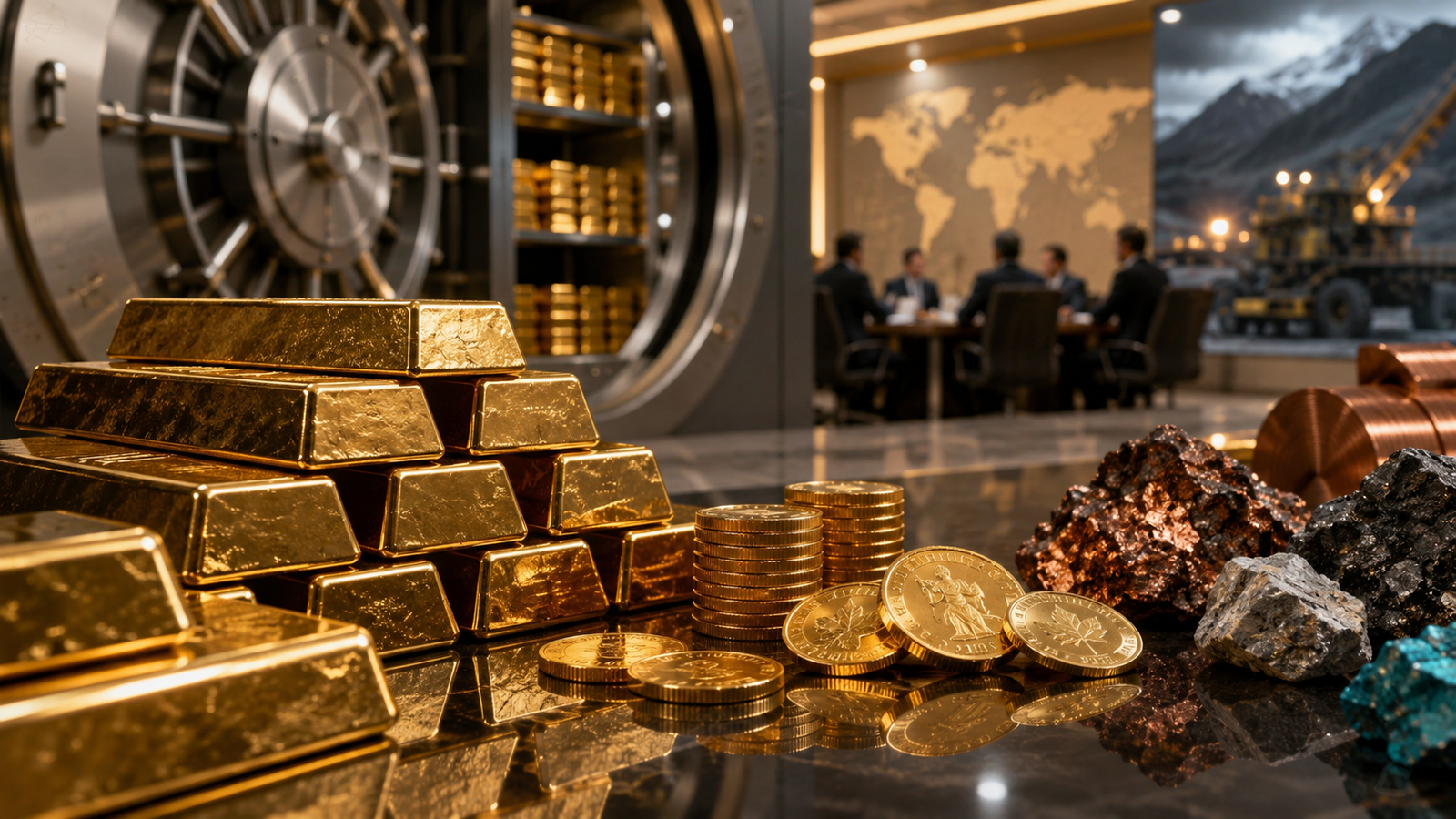
As investors navigate an increasingly complex global landscape marked by geopolitical uncertainty, shifting monetary policies, and intensifying competition for strategic resources, one asset continues to attract steady institutional demand: gold.
Central banks around the world have spent the past several years increasing their gold reserves, reinforcing the precious metal’s status as one of the most important strategic assets in the global financial system. That trend remains firmly intact in 2026. According to recent market reports and Reuters coverage, central-bank buying continues to support gold demand even as policymakers and investors assess changing economic conditions.
At the same time, discussions at the G7 summit regarding critical minerals and supply-chain security are creating renewed interest across the broader metals and mining sector. Governments are increasingly focused on securing access to strategic resources essential for electric vehicles, defense technologies, renewable energy systems, and artificial intelligence infrastructure.
Together, these developments are strengthening the investment case for both precious metals and industrial-resource producers.
For investors, the message is becoming increasingly clear: resource security has emerged as one of the defining investment themes of the decade.
Gold’s Enduring Role in a Changing World
Gold has occupied a unique position in global finance for centuries.
Unlike traditional currencies, gold is not tied to the economic performance or policy decisions of a single nation. It is widely viewed as a store of value, a reserve asset, and a hedge against economic uncertainty.
Central banks understand this better than anyone.
Over the past several years, monetary authorities across both developed and emerging markets have steadily increased gold holdings as part of broader reserve-diversification strategies. According to data from the World Gold Council, central-bank purchases have remained one of the strongest sources of structural demand for the metal.
Several factors are driving this trend.
First, geopolitical tensions have encouraged governments to diversify reserve assets and reduce dependence on traditional currency holdings.
Second, concerns about long-term inflation and sovereign debt levels continue influencing reserve-management decisions.
Third, increasing uncertainty surrounding global trade relationships has reinforced the appeal of hard assets that are not directly tied to the policies of any single government.
These factors have combined to create a durable source of demand that extends beyond traditional investment and jewelry consumption.
Why Central-Bank Buying Matters
Central-bank purchases differ significantly from other forms of gold demand.
Unlike retail investors or short-term traders, central banks typically operate with long investment horizons. Their purchases are often driven by strategic considerations rather than short-term market fluctuations.
This distinction is important for investors.
When central banks consistently accumulate gold, they create a foundational layer of demand that can help support the market through various economic cycles.
Analysts at major financial institutions including Goldman Sachs, UBS, and Bank of America have repeatedly highlighted central-bank buying as one of the key factors underpinning gold’s long-term outlook.
The trend has become particularly notable as many countries seek greater diversification within foreign exchange reserves.
While central-bank activity does not guarantee higher gold prices, it contributes to a favorable supply-demand environment that investors should not ignore.
Geopolitics Continues to Support Gold
One of the primary reasons investors remain interested in gold is its ability to perform during periods of uncertainty.
Geopolitical developments, trade disputes, regional conflicts, and policy shifts often increase demand for safe-haven assets.
Although recent diplomatic progress in several areas has improved market sentiment, broader geopolitical risks remain elevated compared with historical norms.
Investors continue monitoring developments involving global trade relationships, supply-chain realignments, energy markets, and strategic competition among major economic powers.
Gold has historically benefited during periods when uncertainty increases and investors seek portfolio diversification.
As governments continue reassessing economic and national-security priorities, demand for reserve assets may remain an important theme for financial markets.
The Critical Minerals Story Is Gaining Momentum
While gold continues attracting attention as a reserve asset, another powerful trend is emerging across the mining sector.
At this year’s G7 summit, leaders intensified discussions surrounding critical minerals and strategic-resource security.
According to Reuters, policymakers are exploring coordinated efforts to reduce dependence on China for minerals essential to modern industrial economies.
These resources include lithium, copper, graphite, nickel, cobalt, and rare earth elements—materials that play vital roles in electric vehicles, battery storage, renewable energy systems, defense technologies, semiconductors, and artificial intelligence infrastructure.
The growing focus on supply-chain resilience is transforming the investment landscape for resource companies.
Governments increasingly view access to critical minerals as an economic and national-security priority, creating opportunities for producers and developers operating within Western-aligned supply chains.
Why Copper May Be the Most Important Industrial Metal
Among all critical minerals, copper continues attracting particular attention from investors.
The metal is essential for electrification, renewable energy systems, power transmission, electric vehicles, and AI-related infrastructure.
The artificial intelligence boom has added another layer of demand.
Data centers require substantial electrical infrastructure, while expanding power-generation capacity and transmission networks depend heavily on copper.
Industry forecasts from organizations such as the International Energy Agency and major mining companies suggest that long-term copper demand could exceed available supply growth unless significant new mining capacity is developed.
This imbalance has led many analysts to view copper as one of the most strategically important commodities for the coming decade.
Why This Matters for Investors
The convergence of several powerful themes is creating opportunities across the metals and mining sector.
Central-Bank Gold Demand
Ongoing reserve accumulation provides structural support for gold and reinforces its role as a portfolio diversification tool.
AI Infrastructure Expansion
Artificial intelligence growth is driving increased demand for copper, power systems, semiconductors, and related industrial materials.
Energy Transition Investments
Electric vehicles, renewable energy projects, and battery technologies continue supporting demand for critical minerals.
Government Policy Support
Industrial-policy initiatives across North America, Europe, and allied nations may accelerate investment in strategic-resource development.
Supply-Chain Diversification
Efforts to reduce concentration risk in global mineral supply chains could benefit producers operating outside dominant processing regions.
Future Trends to Watch
Several developments could shape the metals and mining investment landscape throughout the remainder of 2026 and beyond.
Continued Central-Bank Purchases
Investors should monitor reserve-management trends and World Gold Council data for evidence of sustained institutional demand.
Federal Reserve Policy
Interest-rate expectations continue influencing gold prices, making monetary policy an important variable for precious-metal investors.
Critical Mineral Legislation
Government incentives, permitting reforms, and supply-chain initiatives could accelerate project development across key resource sectors.
AI-Driven Infrastructure Demand
The expansion of artificial intelligence infrastructure may create significant long-term demand for copper and power-related materials.
Mining Project Development
New production capacity will play an important role in determining whether future supply can keep pace with growing global demand.
Key Investment Insight
Gold’s long-term investment case remains supported by one of the most influential groups in financial markets: central banks. Continued reserve accumulation suggests that institutional confidence in gold’s role as a strategic asset remains strong despite changing economic conditions.
At the same time, investors should recognize that the broader metals and mining sector is benefiting from powerful structural trends. The intersection of artificial intelligence, electrification, renewable energy, defense modernization, and supply-chain diversification is creating sustained demand for critical minerals such as copper, lithium, graphite, nickel, cobalt, and rare earth elements.
For investors seeking exposure to long-term global growth themes, a diversified approach that includes both precious metals and strategic-resource producers may offer compelling opportunities as governments and corporations continue investing in the infrastructure of the future.
Stay informed with MoneyNews.Today for daily investor insights, market-moving developments, and expert analysis covering commodities, mining, and the trends shaping tomorrow’s global economy.




