
For investors, geopolitics is no longer a background risk—it is becoming a primary driver of markets, corporate strategy, and government policy.
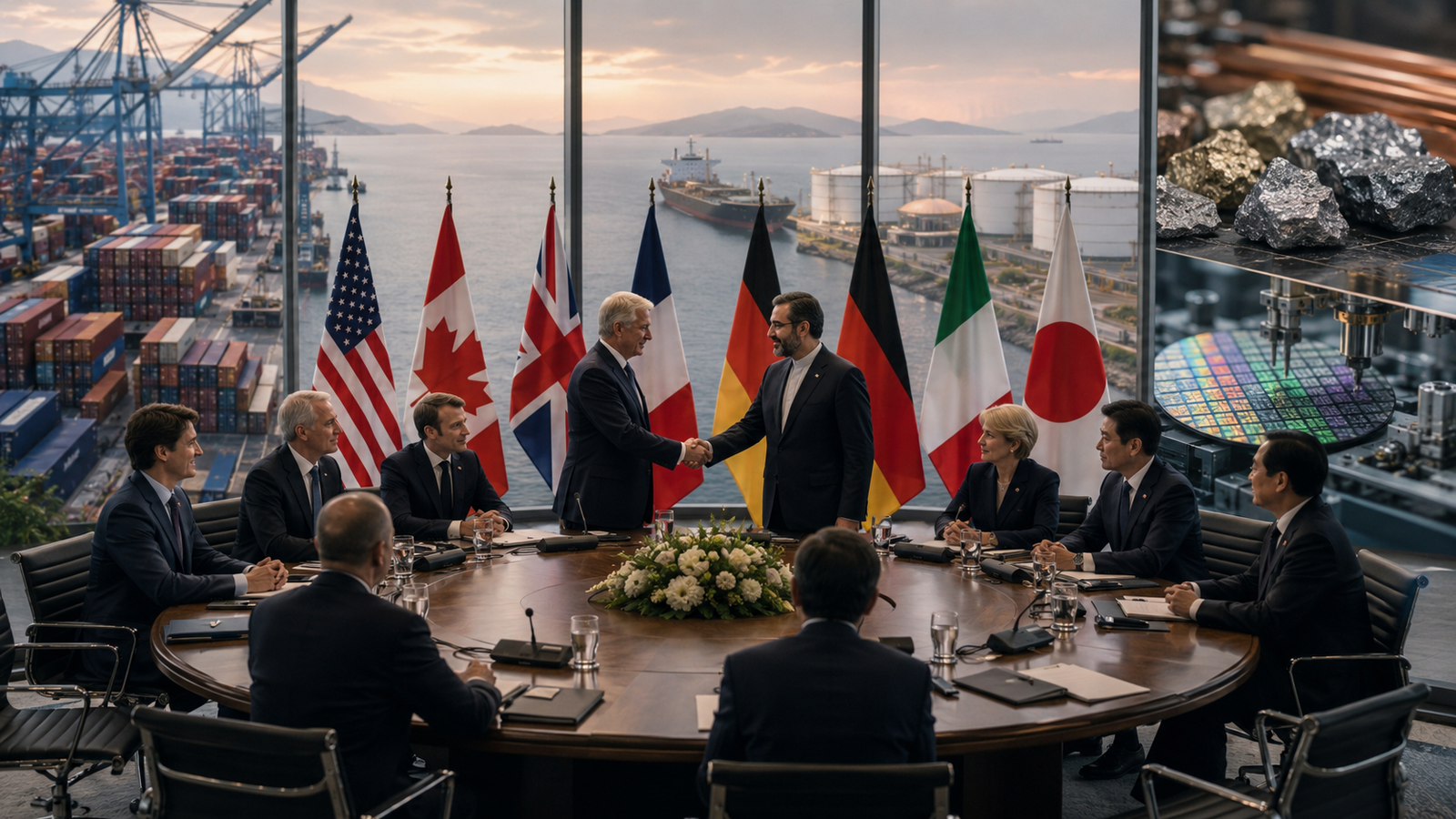
That reality was on full display at the 2026 G7 Summit, where leaders welcomed the recently announced U.S.-Iran peace agreement while simultaneously turning their attention toward another issue that could shape the global economy for years to come: reducing dependence on China for critical minerals and strategic supply chains.
According to Reuters coverage from June 17, 2026, G7 leaders used the summit to discuss resource security, industrial competitiveness, and economic resilience. While the diplomatic breakthrough with Iran helped ease concerns surrounding energy markets and regional stability, policymakers made it clear that long-term supply-chain vulnerabilities remain a major strategic concern.
For investors, the message emerging from the summit is significant. Governments are becoming increasingly active participants in shaping industries that are viewed as strategically important, including energy, mining, semiconductors, defense, artificial intelligence infrastructure, and advanced manufacturing.
The implications extend well beyond politics. They are influencing where capital flows, which industries receive support, and how companies position themselves in a rapidly evolving geopolitical environment.
A Shift From Globalization to Strategic Security
For decades, global supply chains were built primarily around efficiency.
Corporations sought the lowest-cost production locations, optimized logistics networks, and expanded international trade relationships. This model helped reduce costs and increase profitability across numerous industries.
However, recent years have exposed vulnerabilities within highly concentrated supply chains.
The pandemic, geopolitical tensions, trade disputes, semiconductor shortages, and critical mineral export restrictions have highlighted the risks of relying too heavily on a limited number of suppliers or regions.
As a result, governments are increasingly prioritizing resilience alongside efficiency.
The discussions at the G7 summit reflect this broader transformation.
Rather than focusing solely on economic growth, policymakers are increasingly evaluating supply chains through the lenses of national security, industrial competitiveness, and strategic independence.
For investors, this shift represents one of the most important structural changes occurring in the global economy.
Why the U.S.-Iran Agreement Matters
One of the most closely watched developments at the summit was international support for the U.S.-Iran peace agreement.
Energy markets have historically been highly sensitive to geopolitical developments in the Middle East. Any reduction in regional tensions can improve market stability and reduce uncertainty surrounding oil supply disruptions.
For investors, lower geopolitical risk can support broader economic confidence and reduce volatility across commodities, equities, and currencies.
The agreement also provides policymakers with greater flexibility to focus on longer-term economic priorities.
Rather than reacting to immediate geopolitical crises, governments are increasingly concentrating on strategic issues such as supply-chain security, resource access, technological leadership, and industrial competitiveness.
This shift in focus is particularly relevant for investors evaluating long-term trends.
China’s Role in Strategic Supply Chains
While the peace agreement attracted headlines, the summit’s broader economic discussions centered on China’s position within critical supply chains.
China remains a dominant force in numerous strategic industries.
According to reports from the International Energy Agency, government agencies, and industry organizations, China plays a major role in the mining, processing, refining, and manufacturing of many materials essential to modern economies.
These include rare earth elements, lithium, graphite, cobalt, battery components, solar equipment, and various advanced manufacturing inputs.
For many Western governments, reducing concentration risk has become a strategic priority.
Reuters reported that G7 leaders discussed initiatives designed to diversify supply chains, strengthen partnerships with allied nations, and encourage investment in alternative sources of critical materials.
This effort reflects growing recognition that economic security and national security are becoming increasingly interconnected.
Why This Matters for Investors
The evolving geopolitical landscape is creating new investment opportunities while also introducing new risks.
Several sectors stand out as potential beneficiaries of increased government support and strategic investment.
Critical Minerals and Mining
Governments are actively seeking secure sources of lithium, copper, graphite, rare earth elements, nickel, and cobalt.
Companies operating within Western-aligned supply chains may benefit from increased investment, financing support, and long-term purchasing agreements.
Semiconductor Manufacturing
The semiconductor industry has become a strategic priority for governments worldwide.
Advanced chips are essential for artificial intelligence, defense systems, communications infrastructure, and economic competitiveness.
Policy initiatives aimed at strengthening domestic semiconductor production could continue supporting industry growth.
Energy Infrastructure
The intersection of energy security and economic policy is becoming increasingly important.
Investments in power generation, transmission networks, energy storage, and related infrastructure are expected to remain priorities for policymakers.
Defense and Aerospace
Rising geopolitical competition continues driving defense spending across numerous countries.
Companies involved in defense technologies, cybersecurity, communications systems, and advanced manufacturing may benefit from this trend.
Artificial Intelligence Infrastructure
The race to develop and deploy AI technologies has intensified global competition for computing resources, semiconductors, data centers, and power systems.
Government support for technological leadership could create opportunities throughout the AI ecosystem.
Government Policy Is Becoming a Market Force
One of the most important takeaways from the G7 summit is the increasing role of government policy in shaping investment outcomes.
Historically, investors often focused primarily on earnings growth, interest rates, and economic indicators.
While those factors remain important, government initiatives are increasingly influencing market dynamics.
Industrial policies, infrastructure programs, tax incentives, export controls, supply-chain partnerships, and strategic investment frameworks now play a major role in determining which industries attract capital.
This trend is evident across multiple regions.
The United States, Canada, Europe, Japan, and other allied nations are pursuing policies designed to strengthen domestic production, improve resource security, and reduce strategic vulnerabilities.
Investors who understand these policy priorities may be better positioned to identify long-term opportunities.
Future Trends to Watch
Several developments could shape markets in the months and years ahead.
Supply-Chain Diversification Initiatives
Investors should monitor new agreements, partnerships, and investment programs aimed at reducing dependence on concentrated supply chains.
Critical Mineral Development
Government-backed projects and financing initiatives may accelerate resource development across North America and allied nations.
Semiconductor Expansion
Additional investments in chip manufacturing and AI infrastructure could create opportunities across the technology sector.
Energy Security Strategies
Energy infrastructure spending remains a priority for many governments and could influence investment opportunities across utilities, power generation, and industrial equipment providers.
Geopolitical Alignment
Corporate decisions regarding manufacturing locations, sourcing strategies, and international partnerships are increasingly influenced by geopolitical considerations.
Key Investment Insight
The G7 summit highlighted a powerful reality that investors can no longer ignore: geopolitics is becoming a core investment variable.
The combination of support for the U.S.-Iran peace agreement and growing concern over supply-chain concentration risks underscores how governments are reshaping economic priorities. Strategic industries such as energy, mining, semiconductors, defense, and artificial intelligence infrastructure are increasingly benefiting from policy support designed to strengthen economic resilience and national security.
Investors should pay close attention to geopolitical alignment, industrial policy, and supply-chain developments alongside traditional financial metrics. Companies operating in strategically important sectors may be positioned to benefit from long-term government investment, regulatory support, and evolving global priorities.
As the global economy enters a new era where economic security and national security are increasingly interconnected, understanding geopolitical trends may become just as important as analyzing earnings reports or interest-rate decisions.
Stay informed with MoneyNews.Today for daily investor insights, market-moving developments, and expert analysis covering the political, economic, and technological forces shaping global markets.




