
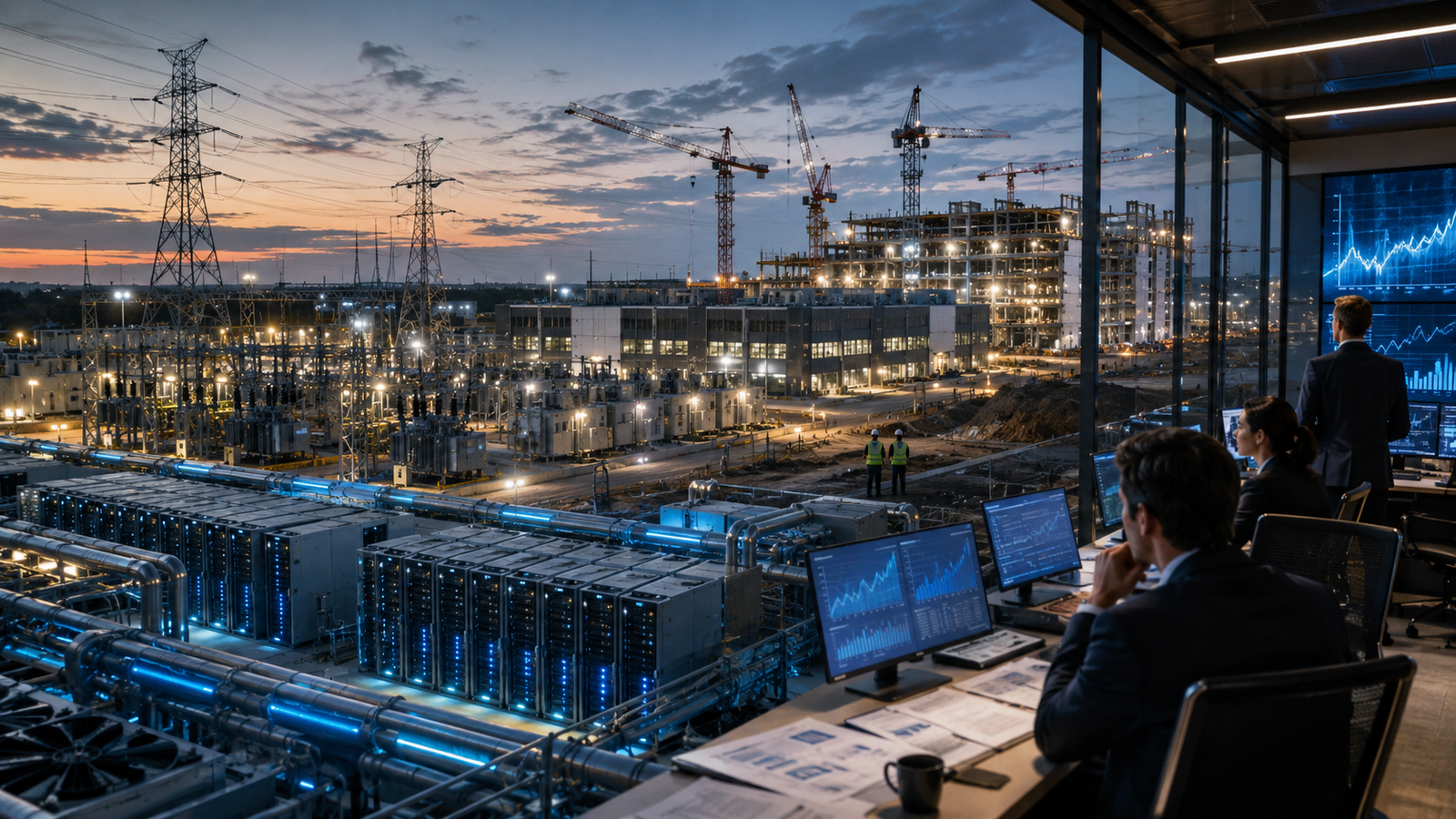
Artificial intelligence has already transformed the technology sector, fueled record-breaking gains in semiconductor stocks, and become the dominant investment theme of the decade. Now, a new phase of the AI revolution is emerging—one that extends far beyond software and algorithms. According to a Reuters report published on June 3, 2026, the scale of AI-related investment has become so large that it is beginning to influence global capital markets, government bond yields, and the allocation of investment capital worldwide.
For investors, this development signals a critical shift. The AI story is no longer just about which company builds the best chatbot or develops the most advanced large language model. It is increasingly about the massive physical infrastructure required to power the next generation of AI applications. Data centers, electricity grids, cooling systems, networking equipment, industrial construction, and specialized real estate are rapidly becoming some of the most important investment themes in global markets.
As technology giants race to build the infrastructure needed to support AI, investors are witnessing one of the largest capital spending cycles in modern economic history.
The AI Investment Wave Is Reaching Historic Levels
Over the past two years, leading technology companies have committed unprecedented amounts of capital to AI development and deployment.
Companies including Microsoft, Amazon, Alphabet, Meta Platforms, and numerous cloud and semiconductor firms have announced plans involving hundreds of billions of dollars in combined AI-related spending. These investments are directed toward building data centers, purchasing advanced chips, expanding cloud infrastructure, upgrading networks, and securing reliable energy supplies.
According to Reuters, the sheer size of these capital expenditures is beginning to affect broader financial markets. Companies are raising significant amounts of debt and equity financing to fund AI projects, creating ripple effects across bond markets and capital allocation decisions.
Historically, transformative investment cycles have reshaped economies through large-scale infrastructure development. Railroads, telecommunications networks, electrification, and the internet all required massive upfront investments before generating long-term economic benefits. Many analysts now view AI infrastructure as the next major investment cycle in that lineage.
The difference is scale. The computing power required for advanced AI systems is growing exponentially, forcing companies to build infrastructure at a pace rarely seen outside of wartime mobilization or major industrial revolutions.
Why Data Centers Have Become the New Oil Wells
At the center of the AI infrastructure boom is the modern data center.
Every AI model requires enormous computing resources for training and deployment. As demand for AI services expands across industries, technology companies must continually add server capacity to meet customer needs.
Industry estimates suggest that AI-focused data centers consume significantly more electricity than traditional cloud computing facilities. Some large AI campuses now require power comparable to that used by small cities.
As a result, data centers have become one of the most valuable assets in the AI ecosystem.
This trend has created substantial opportunities for data center operators, real estate investment trusts (REITs), and infrastructure developers. Investors are increasingly evaluating data center assets not simply as technology-related investments but as critical infrastructure supporting the digital economy.
Research from McKinsey & Company and Goldman Sachs has highlighted the growing shortage of high-quality data center capacity, particularly in major markets across North America and Europe. This supply-demand imbalance could support continued investment and expansion throughout the remainder of the decade.
Power Generation Is Emerging as a Major AI Investment Theme
Perhaps the most surprising beneficiary of the AI boom is the energy sector.
Artificial intelligence requires vast amounts of electricity. Every new data center, GPU cluster, and cloud infrastructure project adds incremental demand to already stressed power grids.
This has led investors to reexamine utilities, independent power producers, nuclear energy providers, renewable energy developers, and transmission infrastructure companies.
Several industry analysts have noted that electricity demand growth projections are being revised upward due largely to AI-related expansion. In some regions, utilities are receiving requests for power capacity that exceed previous forecasts by substantial margins.
The result is a growing recognition that AI may become one of the most significant drivers of electricity demand in decades.
For investors, this expands the AI investment opportunity well beyond software companies and semiconductor manufacturers. Power generation and energy infrastructure may become equally important beneficiaries of long-term AI adoption.
The Hidden Winners: Cooling Systems and Industrial Construction
While much attention has focused on AI chips and cloud providers, some of the most overlooked opportunities may exist in supporting industries.
AI servers generate tremendous amounts of heat, creating increasing demand for advanced cooling technologies. Liquid cooling systems, thermal management solutions, and specialized HVAC equipment are becoming essential components of next-generation data centers.
Similarly, industrial construction firms are benefiting from the rapid pace of AI infrastructure development.
Building modern AI facilities requires expertise in electrical engineering, large-scale construction management, energy integration, and advanced networking systems. Companies operating in these areas are seeing growing demand as technology firms accelerate expansion plans.
These “picks and shovels” businesses often receive less media attention than high-profile AI software companies, yet they may offer exposure to the same secular growth trend with different risk profiles.
Why Capital Markets Are Paying Attention
The impact of AI investment is no longer confined to corporate earnings reports.
Reuters reported that the financing requirements associated with AI infrastructure are beginning to influence broader capital markets. Large debt issuances, equity offerings, and infrastructure financing deals are becoming increasingly common as companies seek funding for AI-related projects.
Some analysts believe AI-driven investment demand could contribute to upward pressure on bond yields by increasing competition for capital.
At the same time, institutional investors are allocating larger portions of portfolios toward infrastructure assets tied to AI growth. Pension funds, sovereign wealth funds, private equity firms, and infrastructure-focused investors are actively pursuing opportunities in energy, digital infrastructure, and data center development.
This represents a significant evolution in how investors approach AI. Rather than focusing solely on software revenues and chip sales, market participants are increasingly evaluating the broader economic ecosystem required to support AI adoption.
Future Trends to Watch
Several developments could determine the next phase of the AI infrastructure investment cycle.
First, energy availability will likely become a critical factor. Regions capable of providing abundant and reliable electricity may attract a disproportionate share of future AI infrastructure investments.
Second, networking and connectivity requirements will continue growing as AI applications become more complex. Companies providing fiber networks, advanced switching equipment, and communications infrastructure could benefit from sustained demand.
Third, government policies may play an increasingly important role. National AI strategies, infrastructure incentives, and energy regulations could influence where future projects are developed and which sectors benefit most.
Finally, investors should monitor whether current levels of AI spending generate sufficient returns. While the long-term potential remains significant, markets will increasingly demand evidence that infrastructure investments translate into sustainable revenue growth and profitability.
Why This Matters for Investors
The AI revolution is entering a new chapter.
While software platforms and semiconductor companies remain central to the investment narrative, the supporting infrastructure ecosystem is becoming equally important. The companies building data centers, generating electricity, manufacturing cooling systems, constructing facilities, and providing network connectivity are increasingly positioned to benefit from long-term AI adoption.
Importantly, many of these businesses may offer investors diversification within the AI theme. Rather than relying exclusively on high-growth technology stocks, investors can gain exposure to AI through infrastructure assets, industrial companies, utilities, and real estate investments.
As capital flows continue toward AI development, these sectors may emerge as some of the most significant beneficiaries of the next decade’s digital transformation.
Key Investment Insight
Investors should look beyond AI software and focus on the broader infrastructure ecosystem enabling artificial intelligence. Data center REITs, power generation companies, utilities, industrial construction firms, cooling technology providers, and networking equipment manufacturers may represent some of the most compelling long-term opportunities tied to AI growth.
The AI boom is no longer just a technology story—it is becoming an infrastructure story, a capital markets story, and potentially one of the largest investment cycles of the modern era.
Stay informed with MoneyNews.Today for daily investor insights, market-moving developments, and in-depth analysis of the trends shaping the future of global finance.




