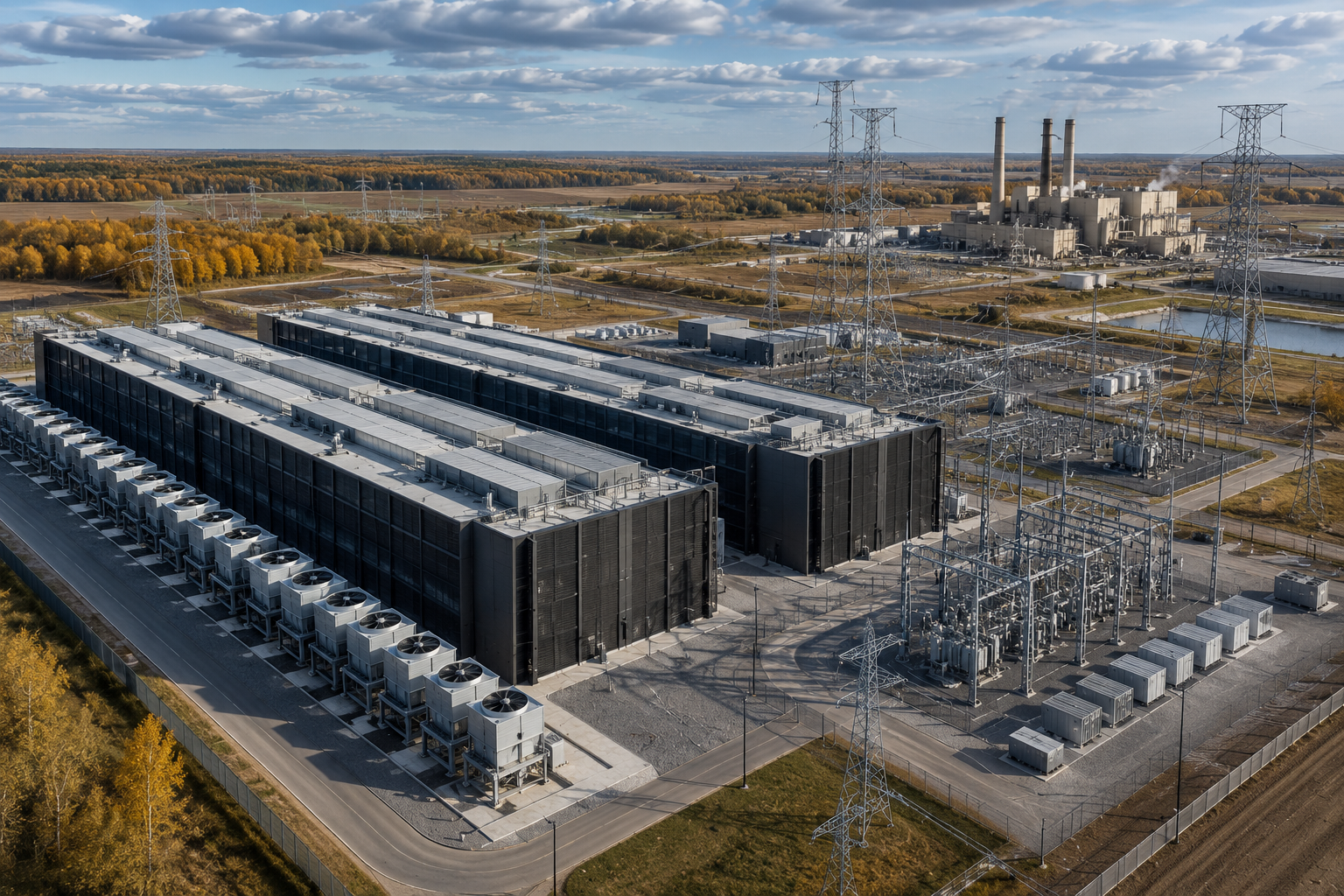
Just days after a sharp selloff erased more than $1 trillion in market value from technology stocks, the artificial intelligence infrastructure trade is showing renewed strength. Investors who questioned whether AI-related spending had reached unsustainable levels received a powerful reminder this week that the industry’s growth story remains firmly intact.
Strong forecasts from Micron Technology and Qualcomm have helped restore confidence across the semiconductor sector, offering fresh evidence that demand for AI infrastructure continues to accelerate despite concerns about valuations, interest rates, and broader market volatility.
For investors, the latest developments reinforce a critical theme that has driven markets over the past several years: the AI investment cycle remains one of the most important structural growth opportunities in the global economy.
Semiconductor Selloff Meets a Reality Check
Earlier this week, technology stocks came under significant pressure as investors reassessed whether the massive wave of spending on AI infrastructure could continue supporting elevated valuations across the semiconductor industry.
The selloff reflected growing concerns that data-center investments by major technology companies might begin slowing after years of unprecedented expansion. Questions surrounding the sustainability of AI-related capital expenditures became a major talking point across financial media, social platforms, and Wall Street research reports.
However, those concerns were challenged by new forecasts from two key players in the semiconductor ecosystem.
According to Reuters reporting on June 25, Micron disclosed approximately $22 billion in customer commitments for its memory products, while Qualcomm projected roughly $15 billion in future data-center revenue opportunities. The announcements provided investors with concrete evidence that enterprise and hyperscale demand remains robust.
Rather than signaling a slowdown, the data suggests that AI infrastructure spending may still be in its early stages.
Why Micron’s Numbers Matter
Micron has emerged as one of the most important beneficiaries of the AI boom because memory has become a critical component of modern AI systems.
Large language models, generative AI applications, and advanced data-center workloads require significantly greater memory capacity than traditional computing environments. High-bandwidth memory (HBM), in particular, has become an essential technology powering advanced AI accelerators used by companies such as Nvidia.
The company’s disclosure of roughly $22 billion in customer commitments sends a powerful message to investors.
It indicates that major technology firms are not only maintaining AI infrastructure spending but are making long-term purchasing commitments to secure future supply.
This is particularly significant because memory products have historically been cyclical. Long-term commitments suggest customers anticipate sustained demand growth rather than short-term deployment needs.
Industry analysts have repeatedly pointed to memory as one of the clearest indicators of AI infrastructure demand because it sits at the center of nearly every advanced computing architecture.
For investors, Micron’s guidance serves as a valuable data point supporting the broader AI growth narrative.
Qualcomm Signals a Larger AI Opportunity
While Micron’s results reinforced confidence in AI memory demand, Qualcomm’s outlook highlighted another important trend emerging across the technology sector.
Traditionally associated with mobile processors and wireless communications, Qualcomm has increasingly expanded its presence in AI-related markets.
The company’s projection of approximately $15 billion in future data-center revenue demonstrates how AI is creating opportunities beyond traditional chip manufacturers.
As enterprises deploy more AI workloads and cloud providers continue expanding infrastructure, companies throughout the semiconductor value chain stand to benefit.
This includes:
- AI accelerator manufacturers
- Networking equipment providers
- Memory suppliers
- Data-center infrastructure firms
- Advanced packaging specialists
- Power and cooling technology companies
The growing diversity of beneficiaries suggests the AI investment cycle is broadening rather than narrowing.
That development is particularly important for investors seeking exposure beyond the largest technology names.
The Hyperscaler Spending Question
One of the most closely watched issues among investors is whether major hyperscale cloud providers will continue increasing AI-related capital expenditures.
Companies such as Microsoft, Amazon, Alphabet, and Meta have collectively committed hundreds of billions of dollars toward expanding AI capabilities.
These investments include:
- Data-center construction
- AI chip procurement
- Networking infrastructure
- Energy capacity expansion
- Cloud computing resources
Recent earnings reports have shown that these companies remain committed to aggressive AI spending plans.
The latest signals from Micron and Qualcomm suggest that procurement activity remains strong, providing additional evidence that hyperscaler demand has not meaningfully slowed.
This matters because hyperscalers effectively serve as the foundation of the current AI investment cycle. Their spending decisions influence demand throughout the semiconductor and technology ecosystem.
As long as cloud providers continue expanding AI infrastructure, many suppliers are likely to experience sustained revenue growth.
What Wall Street Is Watching Next
Despite the renewed optimism, investors should recognize that the AI trade remains highly sensitive to earnings reports and forward guidance.
Markets are increasingly demanding proof that AI investments are translating into real revenue, profit growth, and long-term business value.
The next major catalyst will likely come from upcoming earnings releases across the semiconductor industry.
Investors will be closely monitoring:
- AI-related revenue growth
- Data-center demand trends
- Capital expenditure forecasts
- Customer commitment levels
- Supply-chain constraints
- Profit margin expansion
Strong results could further strengthen confidence in the AI infrastructure narrative, while disappointing forecasts may reignite concerns about valuation risks.
According to research from major investment banks including Goldman Sachs and Morgan Stanley, AI-related capital expenditures are expected to remain elevated throughout the remainder of the decade as enterprises increasingly integrate AI into core operations.
Consulting firms such as McKinsey have also projected that generative AI could contribute trillions of dollars in economic value globally over the coming years, supporting long-term demand for computing infrastructure.
Key Investment Insight
The most important takeaway for investors is that the AI infrastructure cycle continues to demonstrate remarkable resilience.
While short-term volatility is likely to remain a defining feature of the sector, the underlying demand signals remain compelling.
Rather than focusing solely on headline AI companies, investors may benefit from monitoring the broader ecosystem supporting AI deployment.
Areas worth watching include:
- Memory manufacturers
- Semiconductor equipment providers
- Data-center operators
- Networking infrastructure companies
- Power and energy suppliers
- Advanced packaging and manufacturing firms
The latest announcements from Micron and Qualcomm suggest that AI spending remains a strategic priority for customers, even amid concerns about economic growth and market valuations.
If these trends continue, the AI infrastructure trade could remain one of the most significant investment themes of 2026 and beyond.
Investors looking to navigate the rapidly evolving AI landscape should continue monitoring earnings reports, customer commitments, and infrastructure spending trends. Stay informed with MoneyNews.Today for daily market insights, breaking investment news, and in-depth analysis of the trends shaping tomorrow’s financial opportunities.