
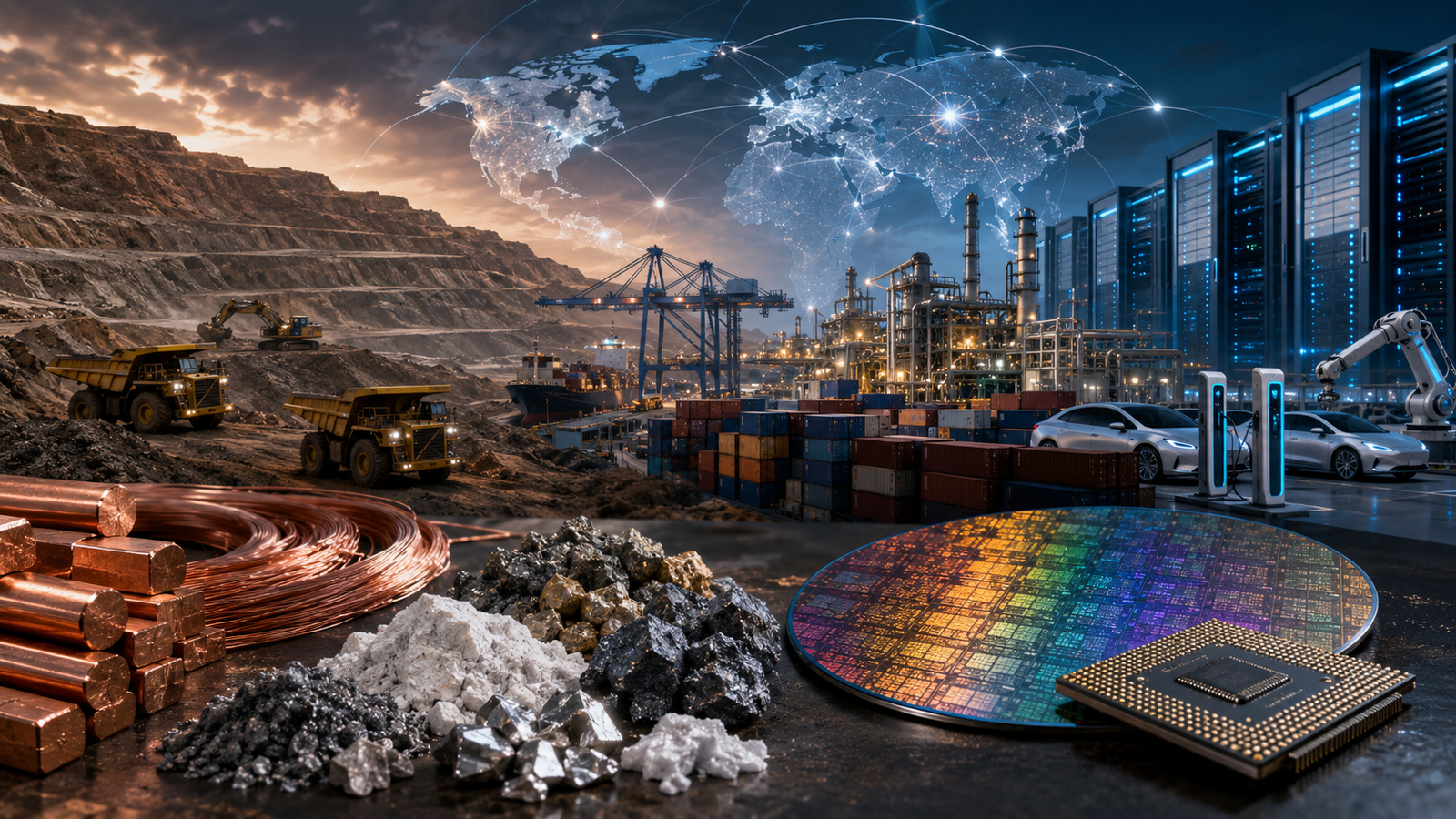
The global race for artificial intelligence dominance, electric vehicles, advanced defense systems, and semiconductor manufacturing is increasingly being fought far from Silicon Valley or Wall Street.
Instead, the next major geopolitical and investment battleground may lie underground.
From copper mines in North America to rare earth processing facilities in China, governments and investors are rapidly realizing that critical minerals are no longer simply commodities — they are strategic national-security assets capable of shaping the future balance of economic and technological power.
This week, renewed attention focused on China’s ongoing restrictions surrounding rare earth exports and growing concerns over potential U.S. tariffs tied to copper and other strategic metals. According to Reuters commodity analysis and White House policy commentary, Western governments are accelerating efforts to secure domestic supply chains for minerals essential to artificial intelligence infrastructure, semiconductors, defense systems, renewable energy, and electric vehicles.
The implications for investors are becoming increasingly significant.
What was once considered a cyclical commodity sector is rapidly evolving into one of the most important long-term geopolitical investment themes in global markets.
Why Critical Minerals Matter More Than Ever
Modern economies depend heavily on a relatively small group of minerals that power advanced technologies and industrial systems.
Copper is essential for electrical grids, AI data centers, electric vehicles, renewable energy systems, and telecommunications infrastructure. Rare earth elements are crucial for semiconductors, military electronics, wind turbines, and advanced magnets used in everything from fighter jets to smartphones.
Lithium, uranium, nickel, cobalt, and graphite have also become increasingly important as electrification, AI infrastructure, and energy-transition investments accelerate globally.
The challenge is that supply chains for many of these minerals remain highly concentrated.
China currently dominates large portions of the rare earth processing industry and maintains substantial influence across several global mineral supply chains. According to data from the International Energy Agency and U.S. Geological Survey, China controls significant refining and processing capacity for rare earths and several battery-related materials.
That dominance has become a growing concern for Western governments.
As geopolitical tensions between the United States and China intensify, policymakers increasingly fear that supply-chain vulnerabilities could threaten national security, economic stability, and long-term industrial competitiveness.
The result is a rapidly expanding global effort to diversify mineral supply chains and reduce strategic dependence on China.
China’s Rare Earth Restrictions Intensify Global Concerns
China’s ongoing export restrictions and tightening oversight of rare earth supply chains have amplified urgency across Western economies.
Rare earth elements are critical components in:
- Advanced semiconductors
- Electric vehicles
- AI hardware
- Missile guidance systems
- Aerospace technologies
- Wind turbines
- Defense electronics
Any disruption in supply can create ripple effects across multiple industries simultaneously.
Reuters coverage this week highlighted growing concerns among manufacturers and policymakers as China continues using export controls and strategic resource policies as leverage within broader geopolitical competition.
For investors, these developments reinforce the reality that commodity markets are becoming deeply intertwined with geopolitics.
Supply-chain disruptions, tariffs, export controls, and industrial policy decisions are now influencing pricing dynamics as much as traditional factors like production costs and economic growth.
This shift is reshaping how institutional investors evaluate mining and commodity-related investments.
Copper Is Emerging as One of the Most Strategic Commodities
While rare earths attract significant political attention, copper may ultimately become one of the most important strategic metals of the next decade.
Copper demand is surging due to several overlapping trends:
- AI data-center expansion
- Electric vehicle growth
- Grid modernization
- Renewable energy infrastructure
- Industrial electrification
- Defense manufacturing
According to BloombergNEF and Goldman Sachs estimates, global copper demand could rise dramatically over the next several years as electrification accelerates worldwide.
At the same time, supply growth remains constrained by:
- Permitting challenges
- Environmental regulations
- Political instability
- Declining ore grades
- Limited new project development
Reuters recently reported that copper markets are increasingly bracing for potential U.S. tariff actions tied to strategic supply-chain protection policies.
Such measures could further tighten global supply conditions while increasing incentives for domestic mining and refining investments across North America.
For investors, copper is increasingly viewed not simply as an industrial metal, but as a long-term infrastructure and AI-growth play.
AI Infrastructure Is Quietly Fueling Commodity Demand
Artificial intelligence may be one of the biggest hidden drivers behind the growing importance of critical minerals.
The rapid expansion of AI infrastructure requires enormous amounts of:
- Electricity
- Data-center construction
- Semiconductor manufacturing
- Advanced cooling systems
- Networking infrastructure
- Industrial metals
AI data centers alone require substantial copper wiring, power systems, and electrical infrastructure. Semiconductor fabrication also depends heavily on specialized minerals and advanced materials.
As AI adoption accelerates globally, mineral demand tied to computing infrastructure is expected to rise significantly.
According to McKinsey and Morgan Stanley research, the AI boom could create secondary investment opportunities across:
- Copper producers
- Uranium miners
- Electrical infrastructure companies
- Industrial equipment suppliers
- Grid modernization firms
- Rare earth processors
This broader industrial impact is helping attract institutional capital into mining and commodity sectors that were previously overlooked during years of technology-driven market leadership.
North America Is Accelerating Domestic Mining Development
The United States and Canada are responding aggressively to supply-chain concerns.
Recent White House summit discussions and industrial-policy initiatives emphasized the strategic importance of domestic critical-mineral production. Governments are increasingly supporting mining projects, refining capacity, battery supply chains, and infrastructure development tied to strategic commodities.
Canada, in particular, is emerging as a major beneficiary due to its significant reserves of:
- Copper
- Uranium
- Nickel
- Lithium
- Rare earth elements
Meanwhile, the United States continues prioritizing domestic mining, semiconductor production, and advanced manufacturing initiatives through industrial-policy legislation and strategic partnerships.
This policy environment could create long-term tailwinds for North American mining companies and infrastructure developers.
Institutional investors are increasingly seeking exposure to companies positioned within secure Western supply chains as geopolitical fragmentation accelerates.
Future Trends Investors Should Watch
Several major trends could continue reshaping the critical-minerals investment landscape:
U.S.-China Geopolitical Competition
Trade tensions and export controls may continue increasing volatility across commodity markets.
AI Infrastructure Expansion
AI-related electricity and infrastructure demand could significantly boost long-term copper and uranium consumption.
Domestic Mining Incentives
Government subsidies, permitting reforms, and industrial-policy initiatives may accelerate North American project development.
Defense and Aerospace Demand
Military modernization efforts are increasing demand for rare earths and advanced industrial materials.
Energy Transition Investments
Electric vehicles, renewable energy systems, and grid upgrades continue supporting structural demand growth for strategic minerals.
Key Investment Insight
Critical minerals are rapidly becoming one of the defining geopolitical and investment themes of the decade.
As governments compete for AI leadership, semiconductor independence, energy security, and defense modernization, strategic commodities such as copper, rare earths, uranium, lithium, and nickel are increasingly viewed as national-security assets rather than ordinary industrial materials.
For investors, this creates potential long-term opportunities across mining, refining, energy infrastructure, industrial equipment, and supply-chain security sectors.
North American mining projects, domestic refining capabilities, and companies positioned within secure Western supply chains may continue attracting institutional capital as geopolitical fragmentation intensifies.
At the same time, investors should remain mindful of commodity-price volatility, permitting risks, environmental challenges, and geopolitical uncertainty that can significantly impact mining-sector valuations.
The global economy’s future increasingly depends on securing the raw materials powering artificial intelligence, electrification, defense systems, and advanced manufacturing.
And the battle for those resources is only beginning.
Stay with MoneyNews.Today for more daily investor insights covering critical minerals, AI infrastructure, global markets, geopolitics, commodities, and the economic trends shaping the future of investing.




