A new industrial revolution is quietly unfolding across global markets — and investors are rapidly repositioning portfolios to capture the next wave of growth.
On May 7, 2026, Reuters reported that Germany’s Aumovio is exploring expansion into defense and robotics sectors while Poland’s electric vehicle company EMP signed a major partnership with Foxconn to build a large-scale EV manufacturing hub. The developments reflect a much larger global trend reshaping capital markets: governments and corporations are accelerating investment into strategic industrial technologies tied to automation, defense systems, artificial intelligence, robotics, and electric vehicle infrastructure.
The shift is happening fast.
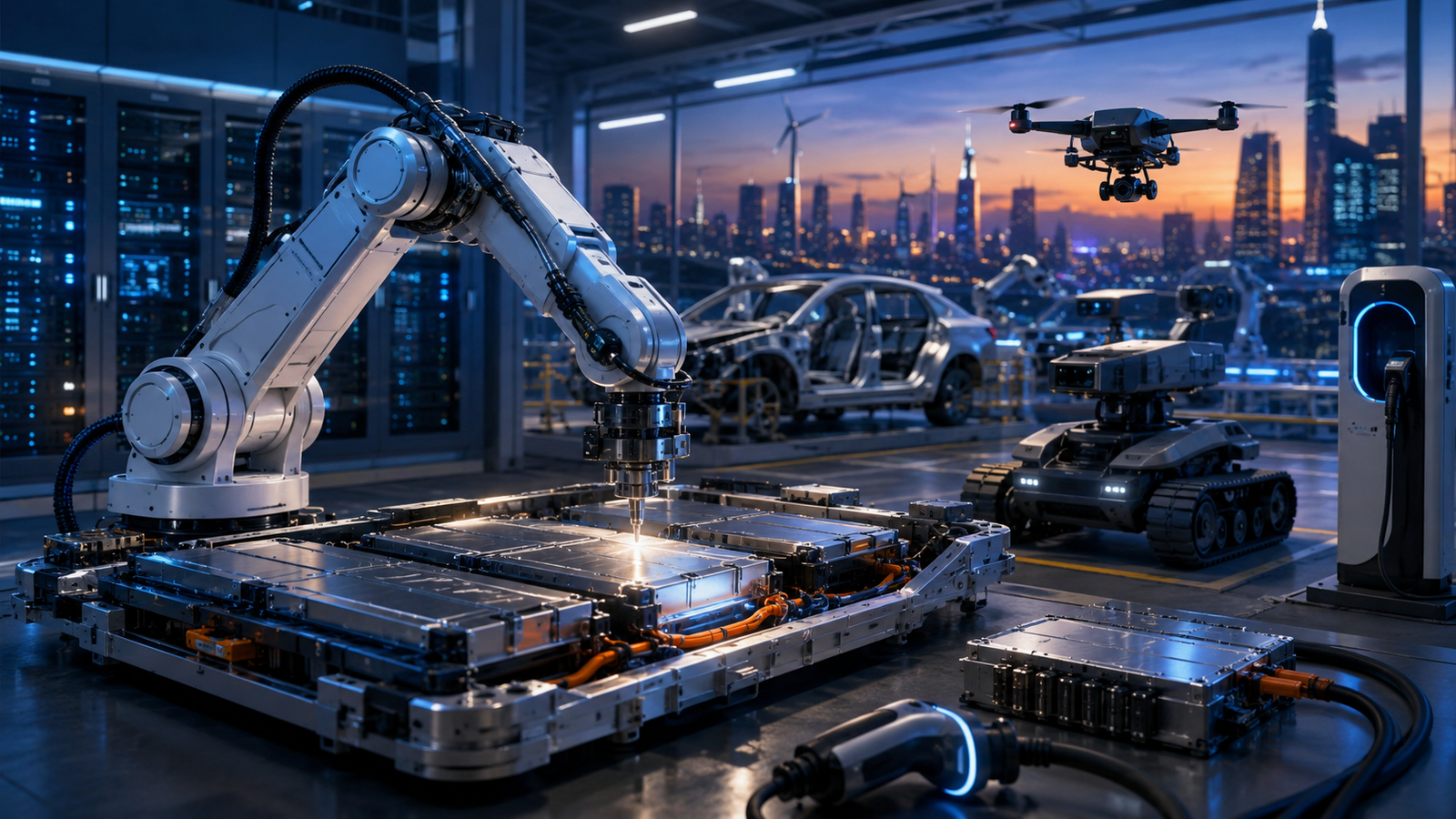
After years dominated by software and internet-driven growth stories, institutional investors are increasingly rotating toward what many analysts now call the “physical AI economy” — industries that combine artificial intelligence with manufacturing, industrial automation, supply chains, transportation systems, and national security infrastructure.
For investors, this transition could become one of the most important long-term opportunities of the decade.
Industrial Policy Is Becoming a Major Market Driver
One of the biggest changes reshaping global markets is the return of industrial policy.
Governments worldwide are aggressively investing in strategic industries tied to economic security, technological competitiveness, and supply-chain independence. The United States, Europe, China, Japan, and several emerging economies are all deploying subsidies, tax incentives, and infrastructure programs aimed at strengthening domestic manufacturing and reducing dependence on foreign supply chains.
This environment is creating major investment opportunities across sectors previously viewed as traditional industrial businesses.
Defense manufacturing, robotics, semiconductor-enabled automation, battery systems, and electric vehicle infrastructure are now attracting enormous institutional capital as policymakers prioritize industrial resilience.
Reuters’ report regarding Germany’s Aumovio reflects this shift directly.
The company’s exploration of defense and robotics expansion highlights how industrial firms are adapting to rising geopolitical tensions, military modernization efforts, and growing demand for automation technologies.
Meanwhile, Poland’s EV partnership with Foxconn underscores how countries are competing to establish themselves as major hubs for electric vehicle production and advanced manufacturing.
For investors, these developments suggest that industrial growth is no longer being driven solely by cyclical economic recovery. Instead, it is increasingly supported by long-term structural policy trends.
Defense Technology Is Entering a New Growth Cycle
Defense spending has become one of the fastest-growing areas of global industrial investment.
Geopolitical tensions involving NATO, Russia, China, and the Middle East have pushed governments to modernize military systems and expand defense budgets. However, the new generation of defense spending is heavily focused on advanced technologies rather than traditional hardware alone.
Artificial intelligence, robotics, autonomous systems, drones, cybersecurity, satellite systems, and advanced communications infrastructure are becoming central components of modern defense strategies.
According to estimates from SIPRI and NATO policy reports, global military spending has continued rising sharply over the past several years, with increasing allocations directed toward AI-enabled systems and autonomous defense technologies.
This trend is creating opportunities not only for traditional defense contractors but also for technology and industrial firms capable of supplying advanced infrastructure.
Investors are increasingly watching companies involved in:
- Autonomous robotics
- AI-enabled surveillance systems
- Semiconductor-based defense hardware
- Cybersecurity infrastructure
- Military drone systems
- Advanced industrial manufacturing
The overlap between defense technology and commercial AI infrastructure is also becoming increasingly important.
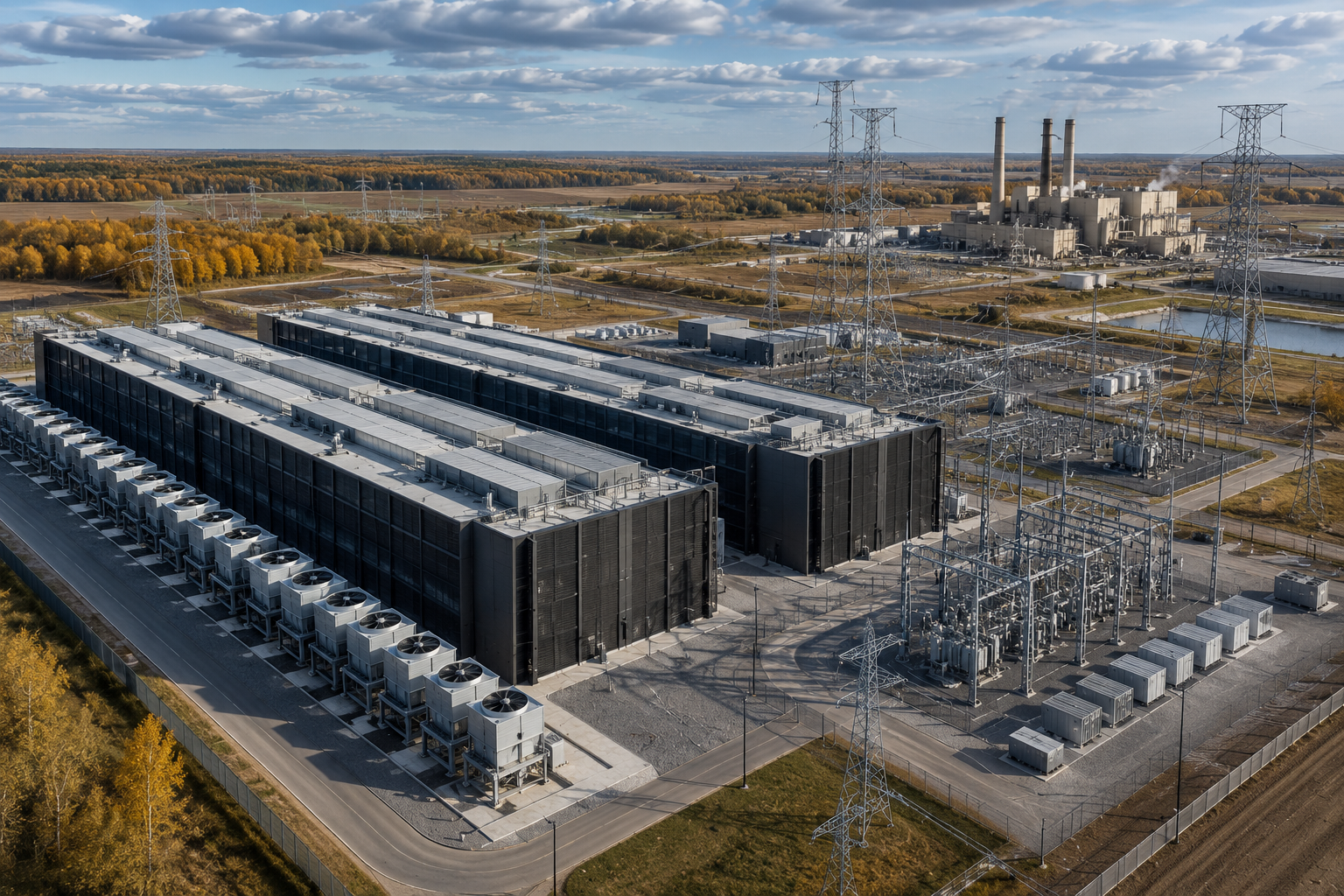
Many of the same semiconductor, networking, and computing technologies powering AI data centers are now critical to defense modernization initiatives globally.
Robotics and Automation Are Moving Into the Mainstream
Robotics and industrial automation are also emerging as major investment themes.
The combination of labor shortages, rising wages, geopolitical uncertainty, and AI-driven productivity gains is accelerating demand for automation systems across manufacturing, logistics, transportation, and industrial operations.
Companies are investing heavily in robotics not simply to reduce costs, but to improve supply-chain resilience and increase production efficiency.
According to McKinsey research, automation technologies could contribute trillions of dollars to the global economy over the next decade as industries adopt AI-powered robotics systems at scale.
Factories are becoming increasingly digitized.
Warehouses now rely on automated sorting systems, autonomous vehicles, robotic arms, and machine-learning software to improve operational efficiency. AI-enabled predictive maintenance systems are helping manufacturers reduce downtime and optimize production.
This transition is fueling demand across several interconnected sectors:
- Industrial semiconductors
- Sensors and machine vision systems
- AI software platforms
- Networking infrastructure
- Advanced manufacturing equipment
- Cloud-connected industrial systems
Institutional investors are responding by increasing exposure to automation-focused industrial firms and robotics infrastructure providers.
The broader implication is significant: AI is no longer confined to software applications or cloud computing. It is now reshaping the physical economy itself.
EV Infrastructure Is Expanding Beyond Consumer Vehicles
Electric vehicle growth remains another major pillar of the industrial transformation.
While EV adoption initially centered around consumer demand and environmental trends, the market is increasingly evolving into a much broader infrastructure story involving batteries, manufacturing systems, power grids, charging networks, and supply-chain logistics.
The Poland-EMP-Foxconn partnership highlights how countries are racing to attract EV manufacturing capacity and become critical players in the future automotive supply chain.
Foxconn’s involvement is especially notable because it reflects growing convergence between electronics manufacturing and vehicle production. Modern EVs increasingly resemble advanced computing platforms requiring sophisticated semiconductors, software systems, and battery technologies.
According to BloombergNEF forecasts, global EV sales are expected to continue growing rapidly throughout the decade, supported by falling battery costs, government incentives, and expanding charging infrastructure.
That growth is creating opportunities across:
- Battery manufacturing
- Semiconductor suppliers
- Industrial automation firms
- Energy storage systems
- Grid infrastructure companies
- Charging network operators
- Critical mineral producers
Investors are increasingly recognizing that the EV supply chain extends far beyond automakers themselves.
Why AI Is Driving the Entire Industrial Transformation
At the center of all these trends is artificial intelligence.
AI is increasingly becoming the operating system behind industrial modernization. From autonomous robotics and predictive maintenance to defense systems and smart factories, AI-enabled infrastructure is reshaping how physical industries operate.
This is one reason why industrial technology stocks have become increasingly attractive to institutional investors.
Unlike purely consumer-focused AI applications, industrial AI often produces measurable productivity gains, cost savings, and operational efficiencies — making it highly valuable for large enterprises and governments.
According to Goldman Sachs and Morgan Stanley analysts, industrial AI adoption could become one of the largest long-term productivity drivers in the global economy.
This may explain why capital is increasingly flowing into companies tied to industrial automation, robotics infrastructure, and advanced manufacturing systems.
Risks Investors Should Monitor
Despite the bullish outlook, several risks remain important.
Global industrial investment cycles can be highly sensitive to interest rates, economic growth conditions, and geopolitical instability. Rising borrowing costs or weakening economic activity could slow infrastructure spending and industrial expansion.
Supply-chain challenges also remain significant, particularly in semiconductors, batteries, and critical minerals.
Competition is intensifying as governments and corporations globally race to secure leadership in strategic industrial sectors. Companies unable to scale efficiently or maintain technological advantages may struggle in an increasingly competitive environment.
Investors should also recognize that many industrial technology stocks have already experienced strong rallies, potentially increasing valuation risks.
Future Trends Investors Should Watch
Several major themes are likely to define the next phase of industrial growth:
1. AI-Powered Manufacturing Expansion
Factories and logistics systems are expected to become increasingly automated and AI-driven.
2. Defense-Tech Investment Growth
Governments worldwide are likely to continue increasing spending on AI-enabled military infrastructure and autonomous systems.
3. EV Supply-Chain Localization
Countries are accelerating efforts to establish domestic EV manufacturing ecosystems and battery production capacity.
4. Industrial Semiconductor Demand
Industrial robotics and smart manufacturing systems require advanced chips and networking technologies.
5. Infrastructure Electrification
Power grids, battery systems, and energy infrastructure are becoming increasingly important as AI and EV adoption expand.
Key Investment Insight
The next phase of global industrial growth is increasingly centered around automation, robotics, AI-enabled manufacturing, defense technology, and electric vehicle infrastructure.
This shift is creating opportunities far beyond traditional technology stocks.
Industrial AI providers, robotics manufacturers, defense-tech firms, semiconductor suppliers, battery companies, and advanced infrastructure operators are all emerging as potential beneficiaries of long-term structural investment trends.
For investors, understanding how artificial intelligence is transforming the physical economy may become just as important as tracking software innovation itself.
As governments and corporations continue accelerating strategic industrial investment, the companies building the next generation of automated infrastructure could become some of the market’s most important long-term winners.
Stay informed on the biggest industrial, technology, and investment trends with MoneyNews.Today, your trusted source for daily investor insights and financial analysis.