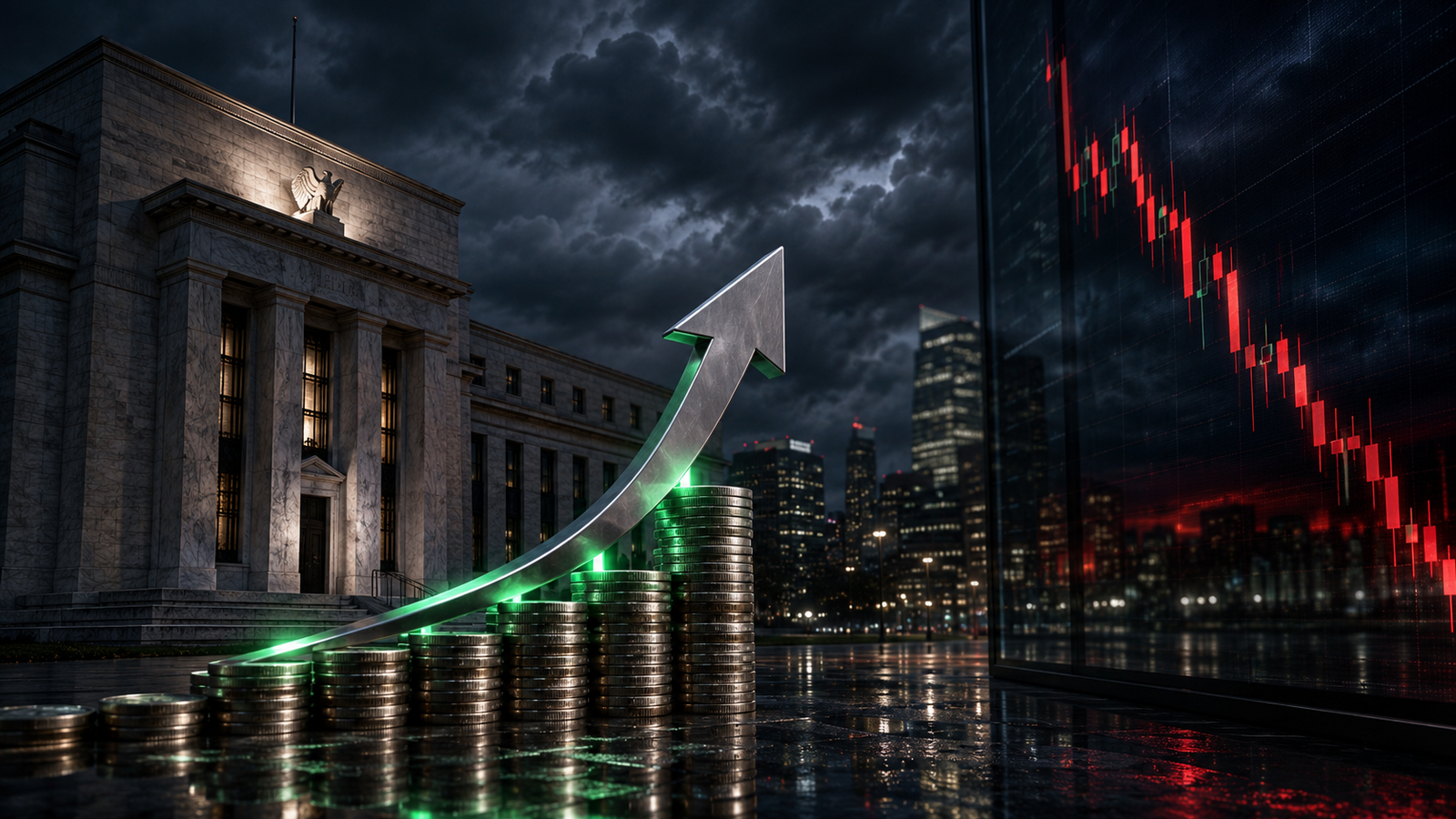
For much of the past year, investors have focused on artificial intelligence, earnings growth, and economic resilience as the primary drivers of market performance. Now, another force is rapidly reclaiming center stage: the Federal Reserve.
Markets were jolted this week as expectations for additional U.S. interest rate hikes intensified, pushing the U.S. dollar to a 13-month high and triggering renewed pressure across growth stocks, cryptocurrencies, commodities, and other risk assets. Investors who had hoped the Fed was nearing the end of its tightening cycle are now reassessing that assumption, creating a sharp shift in market sentiment.
According to Reuters and broader market data, traders have significantly increased expectations for potential rate hikes in both July and September as inflation concerns persist and economic activity remains stronger than anticipated. The result has been a surge in Treasury yields, a stronger dollar, and heightened volatility across global financial markets.
For investors, the message is becoming increasingly clear: the biggest market risk may no longer be corporate earnings—it may be the cost of money itself.
Why the Market Is Suddenly Focused on the Fed Again
The Federal Reserve’s influence extends far beyond interest rates.
Its policy decisions affect borrowing costs, consumer spending, business investment, corporate profits, asset valuations, and ultimately the direction of financial markets.
For much of 2025 and early 2026, investors believed inflation was gradually moving toward the Fed’s target, creating expectations that policymakers would eventually begin easing monetary policy. Those expectations helped fuel strong rallies in technology stocks, growth companies, and speculative assets.
However, recent economic data has complicated that narrative.
Inflation has remained more persistent than many economists expected, while labor market conditions have continued to demonstrate resilience. Strong consumer spending and steady economic growth have reduced the urgency for policymakers to cut rates.
As a result, investors are increasingly preparing for a “higher-for-longer” rate environment.
That shift has become one of the most important themes driving global markets.
The Dollar’s Surge Signals a Major Market Repricing
One of the clearest signs of changing expectations can be seen in the U.S. dollar.
The dollar recently climbed to its highest level in approximately 13 months as global investors sought higher yields and greater safety amid rising uncertainty.
A stronger dollar has broad implications for financial markets.
For multinational corporations, currency strength can reduce the value of overseas earnings when converted back into dollars. For commodities, a stronger dollar often creates downward pressure on prices because many commodities are priced in U.S. currency.
Emerging markets can also face challenges when the dollar strengthens, as higher borrowing costs and capital outflows can place pressure on local economies and currencies.
The dollar’s rise therefore serves as more than just a currency story—it reflects a broader reassessment of global financial conditions.
Why Growth Stocks Are Feeling the Pressure
The technology sector and other high-growth industries have been among the biggest beneficiaries of investor optimism over the past year.
Many of these companies command premium valuations because investors expect substantial future earnings growth. However, those future earnings become less valuable when interest rates rise.
This relationship is one of the key reasons growth stocks tend to be highly sensitive to monetary policy.
Higher interest rates increase the discount rate used to value future cash flows, reducing the present value of those earnings.
As Treasury yields move higher, investors often become less willing to pay elevated multiples for growth-oriented companies.
This dynamic has contributed to recent volatility in technology stocks, particularly among companies tied to artificial intelligence and other high-growth themes.
The shift does not necessarily mean the long-term growth story is broken. Rather, it suggests that valuations are becoming more dependent on execution and profitability rather than investor enthusiasm alone.
The Ripple Effects Across Asset Classes
The impact of rising rate expectations extends far beyond equities.
Cryptocurrency Markets
Bitcoin and other digital assets have faced renewed pressure as investors move toward higher-yielding alternatives. Historically, cryptocurrencies have performed best during periods of abundant liquidity and lower interest rates.
Precious Metals
Gold prices have weakened as rising yields increase the opportunity cost of holding non-income-producing assets.
Corporate Bonds
Higher rates can increase borrowing costs for businesses, particularly companies with significant debt burdens.
Real Estate
Commercial and residential real estate sectors often face challenges when financing costs rise, potentially affecting valuations and investment activity.
These interconnected effects demonstrate why Federal Reserve policy remains one of the most influential forces in global finance.
Why Financials and Defensive Sectors Could Benefit
While higher rates create challenges for some industries, they can create opportunities for others.
Financial institutions, including banks and insurance companies, often benefit from higher interest rates because they can earn greater spreads on lending activities and investment portfolios.
Similarly, defensive sectors such as healthcare, consumer staples, and utilities may attract investor interest during periods of uncertainty.
These industries generally offer more stable earnings profiles and may be less vulnerable to economic slowdowns than cyclical growth sectors.
Investors seeking to navigate a higher-rate environment may increasingly rotate toward businesses with strong balance sheets, reliable cash flows, and pricing power.
What Wall Street Is Watching Next
Several upcoming events could determine whether market volatility continues or stabilizes.
Inflation Data
Upcoming inflation reports will be closely monitored for signs that price pressures are easing or accelerating.
Federal Reserve Communications
Comments from Fed officials may provide insight into how policymakers view the current economic environment.
Labor Market Trends
Employment data remains one of the most important indicators influencing monetary policy decisions.
Corporate Earnings
While rates have become the dominant concern, earnings guidance will still play a critical role in shaping investor expectations.
Together, these factors will help determine whether markets continue pricing in additional rate hikes or begin anticipating a more balanced policy outlook.
Future Trends to Watch
Several long-term themes are emerging from the current environment.
Quality Over Speculation
Investors are increasingly prioritizing companies with strong fundamentals and sustainable cash flows.
Dividend Growth
Income-generating investments may become more attractive if market volatility persists.
Balance Sheet Strength
Companies with low debt levels and significant cash reserves could outperform in a higher-rate environment.
Sector Rotation
Financials, healthcare, industrials, and select defensive sectors may continue attracting investor capital while highly valued growth stocks face greater scrutiny.
Key Investment Insight
(Investor Takeaway)
The market’s biggest challenge is no longer determining whether companies can grow—it is determining whether those growth expectations can withstand higher interest rates.
Investors should pay close attention to businesses with strong balance sheets, recurring cash flows, and pricing power. Financial institutions, defensive sectors, and cash-rich companies may be positioned to outperform if the Federal Reserve maintains a higher-for-longer policy stance.
Meanwhile, high-multiple growth stocks could remain vulnerable to valuation pressure unless earnings growth continues exceeding expectations.
The coming months may not be defined by earnings surprises alone. Instead, they may be defined by how successfully investors adapt to a world where interest rates remain elevated and capital is no longer as cheap as it once was.
Stay with MoneyNews.Today for daily investor insights, market-moving analysis, and the stories shaping the future of global markets.