
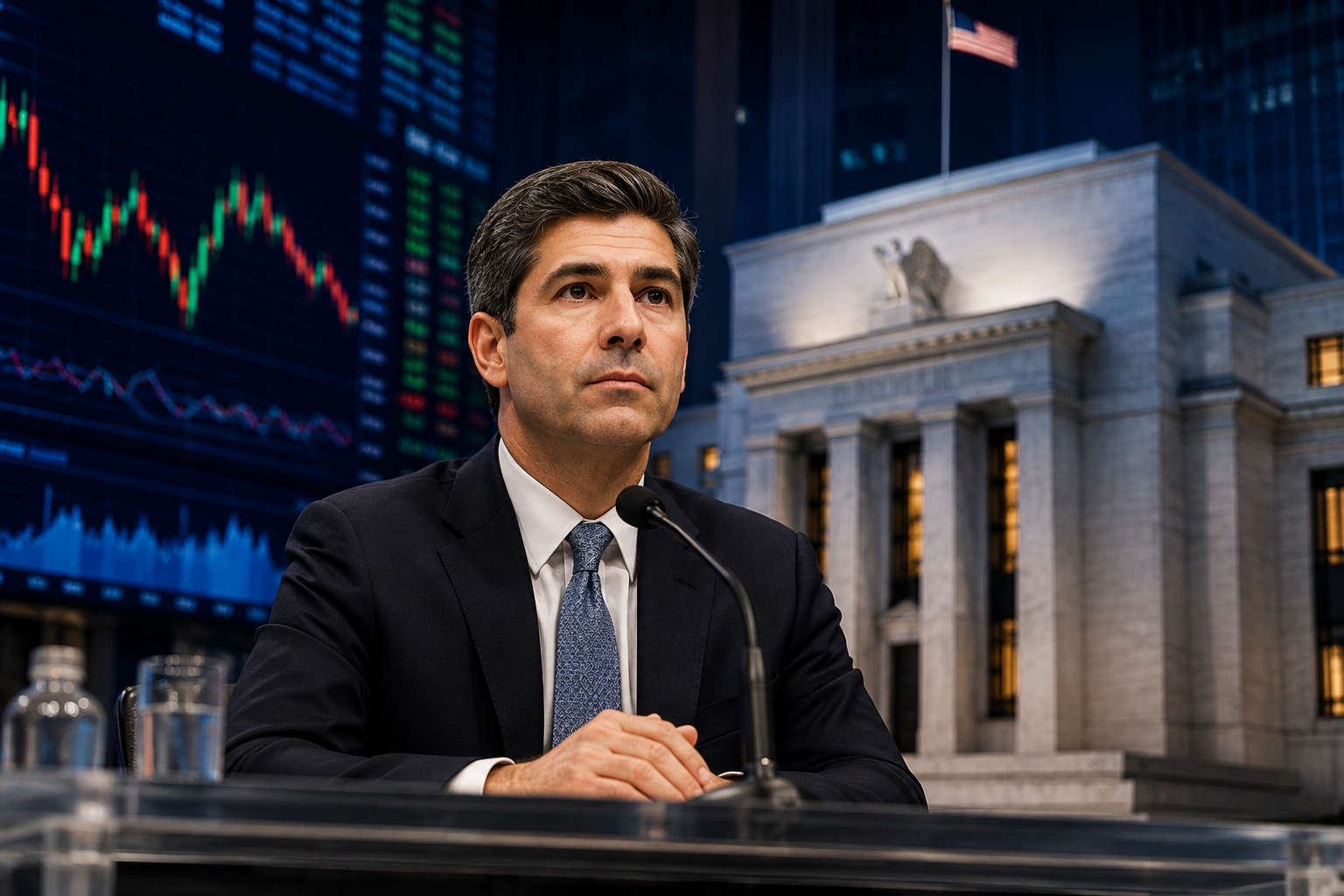
Financial markets are entering one of the most consequential moments of 2026 as the Federal Reserve begins its June policy meeting under newly appointed Chair Kevin Warsh. While investors overwhelmingly expect policymakers to leave interest rates unchanged, the real focus is not on the rate decision itself—it is on what comes next.
Across Wall Street, trading desks, institutional investors, and corporate executives are closely analyzing every signal emerging from the Fed. The stakes are unusually high. A subtle shift in the central bank’s language regarding inflation, economic growth, or future policy direction could reverberate across equities, bonds, commodities, and cryptocurrencies simultaneously.
After years of navigating inflation shocks, banking-sector stresses, geopolitical disruptions, and shifting monetary policies, investors now face a new variable: understanding how Kevin Warsh intends to lead the world’s most influential central bank.
The June meeting is shaping up as one of the most important macroeconomic events of the year—and perhaps the defining market catalyst of the summer.
A Leadership Transition That Matters
Leadership changes at the Federal Reserve are rare events with far-reaching implications.
Although the institution operates through consensus among voting members of the Federal Open Market Committee (FOMC), the Chair plays a critical role in shaping policy priorities, communication strategies, and market expectations.
Historically, financial markets have reacted strongly when new Fed leaders introduced changes in policy frameworks or communication styles. Investors still study the legacies of former Chairs such as Paul Volcker, Alan Greenspan, Ben Bernanke, Janet Yellen, and Jerome Powell because each influenced how markets interpreted economic risks and monetary policy decisions.
Kevin Warsh enters the role at a particularly challenging moment.
Inflation has moderated significantly from its post-pandemic highs, but it remains a central concern for policymakers. Economic growth has proven more resilient than many economists anticipated, while labor markets continue showing strength. At the same time, investors are eager to understand whether future rate cuts remain possible and how aggressively the Fed intends to pursue its inflation objectives.
The answers to those questions could shape market performance for months to come.
Why Markets Care About Every Word
The Federal Reserve’s influence extends far beyond short-term interest rates.
Its policies directly affect borrowing costs, consumer spending, business investment, corporate earnings, and financial-market liquidity. As a result, investors often pay as much attention to Fed communications as they do to actual policy decisions.
This meeting is particularly important because it offers the first comprehensive opportunity for markets to evaluate Warsh’s approach as Chair.
According to Reuters and broader market commentary, investors are watching for clues regarding three key areas:
- Inflation tolerance
- Future rate-cut expectations
- Communication strategy
Even if rates remain unchanged, any indication that the Fed is willing to tolerate slightly higher inflation could be interpreted as supportive for risk assets.
Conversely, signals suggesting a more aggressive anti-inflation stance could lead investors to reassess expectations for monetary easing.
In today’s highly interconnected financial system, a single sentence from a Fed Chair can trigger significant moves across global markets.
The Inflation Question Remains Central
Inflation remains the most important issue confronting policymakers.
Over the past several years, inflation became one of the dominant economic challenges facing households, businesses, and governments. While price pressures have eased considerably compared with peak levels, achieving the Federal Reserve’s long-term inflation target remains a work in progress.
The market’s primary concern is whether Warsh will maintain the central bank’s existing approach or pursue adjustments to how inflation risks are managed.
Investors are particularly interested in understanding whether policymakers believe inflation has been sufficiently contained or whether additional caution is warranted.
A more flexible approach could increase confidence that monetary policy will become less restrictive over time. Such an outcome would generally be viewed positively by equities and other risk assets.
However, if the Fed emphasizes persistent inflation risks, markets could interpret the message as a sign that higher interest rates may remain in place longer than previously expected.
That distinction could have significant implications for portfolio positioning.
Impact on Stocks
Equity markets are especially sensitive to changes in monetary policy expectations.
Interest rates influence stock valuations by affecting discount rates, borrowing costs, and economic growth prospects. Lower expected rates generally support higher valuations, particularly among growth-oriented sectors such as technology and artificial intelligence.
Recent market gains have been driven in part by optimism that inflation is gradually moving under control and that economic growth remains resilient.
If Warsh reinforces that narrative, investors may become more comfortable maintaining exposure to equities.
Technology companies, semiconductor firms, industrial stocks, and other economically sensitive sectors could benefit if investors interpret the Fed’s outlook as supportive of continued expansion.
On the other hand, unexpected hawkish signals could increase volatility and place pressure on high-growth sectors that rely heavily on future earnings expectations.
Impact on Bonds
The bond market may be even more sensitive than equities to changes in Fed messaging.
Treasury yields reflect investor expectations regarding inflation, growth, and future interest rates. As a result, even modest changes in central bank communication can produce meaningful moves in bond prices.
A dovish tone from Warsh could push yields lower as investors anticipate easier monetary policy in the future.
A more hawkish stance could have the opposite effect, leading to higher yields and tighter financial conditions.
Institutional investors will be closely monitoring Treasury markets for signals regarding how professional investors interpret the Fed’s message.
Gold and Cryptocurrency Reactions
Gold and cryptocurrencies have increasingly become important components of macroeconomic portfolios.
Gold is often viewed as a hedge against inflation and monetary instability, while Bitcoin and other digital assets have emerged as alternative stores of value for many investors.
Both asset classes are highly sensitive to expectations regarding real interest rates and monetary policy.
If markets perceive that the Fed is becoming more tolerant of inflation, demand for gold and cryptocurrencies could increase.
Conversely, stronger anti-inflation messaging could strengthen the U.S. dollar and reduce the relative appeal of alternative assets.
Recent gains in Bitcoin and continued interest in precious metals suggest investors are already positioning for multiple potential outcomes.
Why This Matters for Investors
The June Fed meeting represents more than a routine policy event.
It marks the beginning of a new chapter in U.S. monetary policy leadership and could provide critical insights into how the Federal Reserve intends to navigate the next phase of the economic cycle.
Market participants are not simply evaluating a rate decision. They are attempting to understand the philosophy, priorities, and communication style of the new Chair.
That information could influence investment decisions across virtually every asset class.
Whether investors hold stocks, bonds, commodities, cryptocurrencies, or diversified portfolios, the outcome of this meeting is likely to shape market sentiment in the weeks ahead.
Future Trends to Watch
Several developments will be particularly important following the meeting.
Inflation Data
Future consumer and producer price reports will help determine whether the Fed’s outlook remains justified.
Labor Market Conditions
Employment growth and wage trends will continue influencing policy decisions.
Treasury Yield Movements
Bond-market reactions may provide early signals regarding investor expectations.
Equity Sector Leadership
Technology, semiconductors, industrials, and financials could respond differently depending on the Fed’s message.
Cryptocurrency and Gold Performance
Alternative assets may offer valuable insight into how markets interpret inflation risks and monetary policy expectations.
Key Investment Insight
The most important takeaway for investors is that this meeting is fundamentally about communication rather than interest rates.
Markets already expect policymakers to leave rates unchanged. What matters now is how Kevin Warsh frames the economic outlook and whether he signals any changes in the Federal Reserve’s approach to inflation and monetary policy.
Any indication that the Fed is willing to tolerate slightly higher inflation, adjust its communication framework, or become more flexible regarding future policy decisions could impact equities, bonds, gold, and cryptocurrencies simultaneously.
For investors, maintaining a close watch on Fed messaging may be just as important as monitoring economic data itself. The tone established during Warsh’s first meeting as Chair could shape market expectations for the remainder of 2026 and beyond.
Stay informed with MoneyNews.Today for daily investor insights, market-moving developments, and in-depth analysis of the economic and political trends influencing global financial markets.




