
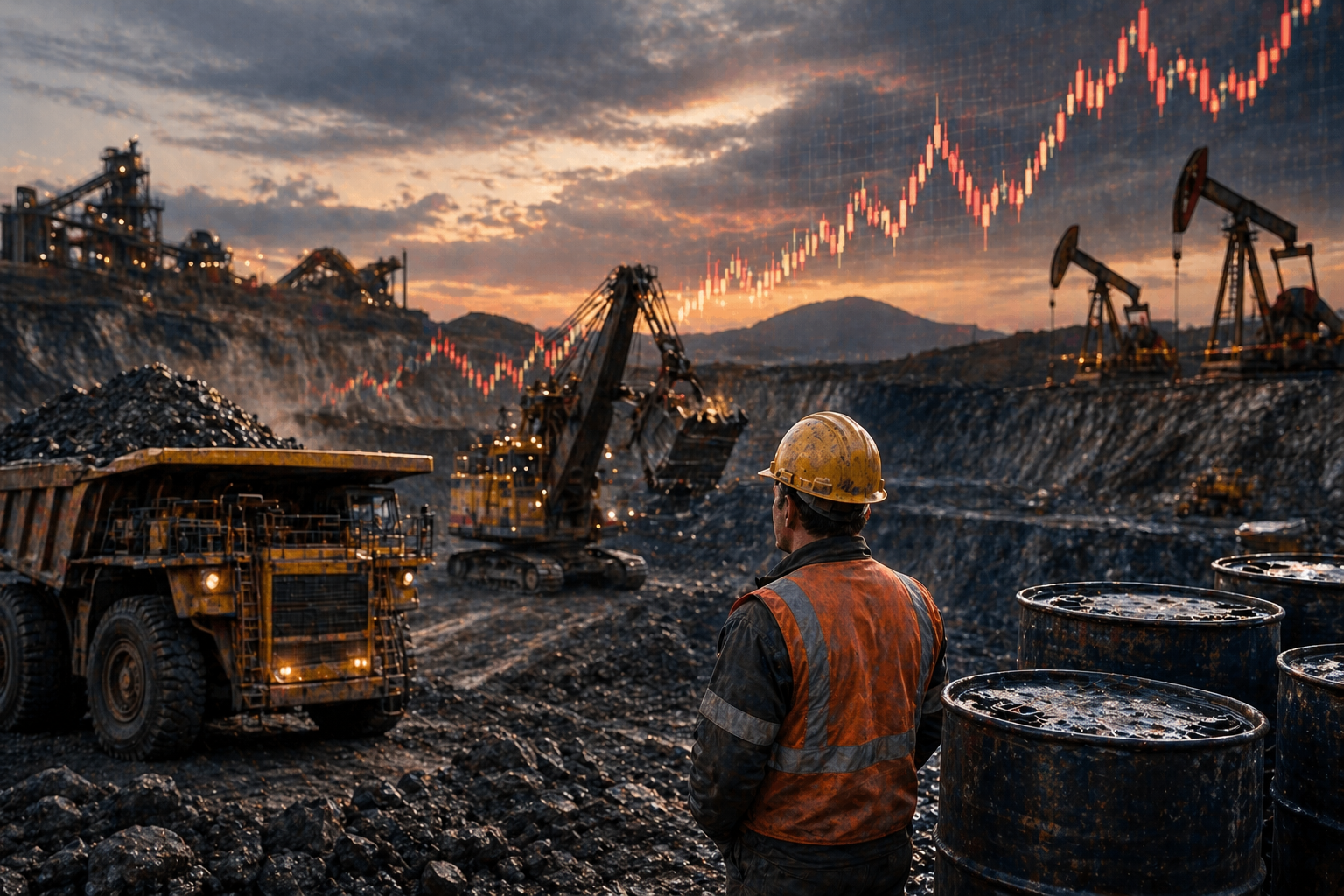
Energy shocks are once again reshaping the global mining landscape.
On April 28, 2026, rising geopolitical tensions between the United States and Iran triggered a fresh surge in oil prices, sending ripple effects through energy-intensive industries—most notably metals and mining. According to market coverage from Reuters, the spike in energy costs is beginning to materially impact operating margins across major mining jurisdictions, including Canada, Australia, and parts of Latin America.
For investors, this is not just a commodity story. It is a cost structure story—one that could redefine profitability across the mining sector in the months ahead.
Energy Prices Become the New Mining Headwind
Mining is one of the most energy-dependent industries in the global economy. From extraction and hauling to refining and processing, energy costs account for a significant portion of total operating expenses.
With crude oil prices rising due to geopolitical tensions in the Middle East, particularly the escalating U.S.–Iran situation, mining companies are now facing renewed margin pressure.
Energy market disruptions have already begun to affect:
- Diesel costs for heavy machinery
- Electricity pricing for processing facilities
- Transportation and logistics expenses
- Smelting and refining operations
These pressures are especially acute for companies without long-term energy contracts or integrated power solutions.
Why This Matters for Investors
The mining sector is highly sensitive to input cost fluctuations. While commodity prices such as copper, gold, and lithium remain important revenue drivers, profitability is increasingly being shaped by the cost side of the equation.
Key implications:
1. Margin Compression Risk
Even if commodity prices remain stable, rising energy costs can significantly erode profit margins.
2. Operational Inefficiencies Exposed
High-cost producers are most vulnerable in volatile energy environments, as they lack pricing flexibility.
3. Shift in Competitive Advantage
Companies with access to low-cost or self-generated energy are gaining a structural edge.
This shift is forcing investors to reassess how mining companies are valued—not just based on production volumes, but on cost resilience.
The Geopolitical Link: Oil as a Mining Sector Driver
The recent surge in energy prices is directly tied to geopolitical instability, particularly tensions involving the United States and Iran.
As highlighted in reporting from Reuters (April 28, 2026), oil markets reacted sharply to conflict-related developments, reinforcing energy’s role as a global risk barometer.
For mining companies, the impact is indirect but powerful:
- Higher oil prices → increased diesel and transport costs
- Higher electricity prices → more expensive processing operations
- Supply chain disruptions → logistical inefficiencies
This creates a cascading effect that ultimately feeds into earnings reports.
Regional Impact: Who Is Most Exposed?
Not all mining operations are equally affected.
🔻 High Exposure Regions:
- Remote mining operations relying on diesel generators
- Emerging market producers with limited energy hedging
- Open-pit mining operations with heavy fuel consumption
🔹 Lower Exposure Regions:
- Mines with renewable energy integration
- Operations with long-term fixed electricity contracts
- Vertically integrated mining firms with in-house energy production
Countries like Canada and Australia are increasingly seeing miners invest in energy security infrastructure to mitigate volatility.
Industry Response: Securing Energy Stability
Mining companies are now actively adjusting strategies to manage rising energy risk.
Key responses include:
🔋 Long-term Power Contracts
Firms are locking in electricity pricing to reduce exposure to short-term spikes.
🌱 Renewable Energy Integration
Solar, wind, and hydro investments are accelerating, particularly in regions with high energy volatility.
🏭 Vertical Integration
Some miners are exploring direct ownership of energy assets to stabilize costs.
⚙️ Efficiency Upgrades
Automation and electrification of mining equipment are being prioritized to reduce fuel dependency.
According to industry commentary referenced by Moody’s, energy cost volatility is becoming a key credit risk factor in mining sector evaluations.
Commodity Prices vs. Cost Pressures
A critical dynamic is emerging: commodity prices remain relatively supportive, but cost inflation is accelerating.
This creates a divergence between:
- Revenue drivers (commodity prices)
- Profit drivers (energy and operating costs)
Even in a stable or rising commodity environment, miners may struggle to maintain earnings growth if energy costs continue to rise.
This is particularly important for metals such as:
- Copper (industrial demand tied to electrification)
- Gold (safe-haven demand, relatively stable production cost sensitivity)
- Lithium (energy-intensive processing)
Investor Sentiment: Selectivity Is Increasing
Market participants are becoming more selective within the mining sector.
What investors are prioritizing:
- Low-cost producers with strong margins
- Companies with renewable energy exposure
- Firms with vertically integrated supply chains
- Operators with diversified geographic energy sources
At the same time, high-cost producers are facing valuation pressure as energy volatility increases earnings uncertainty.
Analysts cited by Bloomberg suggest that energy sensitivity is becoming one of the most important differentiators in mining equity performance.
Future Trends to Watch
The intersection of energy markets and mining operations is expected to intensify.
🔹 Energy Security Becomes a Core Strategy
Mining firms will increasingly treat energy sourcing as a strategic priority rather than an operational cost.
🔹 Acceleration of Green Mining Initiatives
Sustainability goals will align with cost-saving measures, accelerating renewable adoption.
🔹 Increased M&A Activity
Stronger players may acquire smaller, high-cost competitors struggling with margin pressure.
🔹 Regional Winners and Losers Emerge
Geography will play a larger role in determining profitability due to energy pricing disparities.
Key Investment Insight
Energy costs are no longer a secondary concern for miners—they are a core profit driver.
👉 Investors should favor low-cost producers and vertically integrated mining companies that can control or stabilize their energy inputs.
Key strategies to consider:
- Focus on miners with renewable or fixed-cost energy exposure
- Avoid high-cost producers heavily exposed to diesel or spot electricity pricing
- Watch for companies investing in energy independence
- Prioritize firms with strong balance sheets to weather volatility
In this environment, cost discipline is as important as commodity exposure.
A Structural Shift in Mining Economics
The mining sector is entering a new phase where energy volatility is becoming just as important as commodity cycles.
The recent spike in oil prices—driven by geopolitical tensions—has highlighted a structural vulnerability that many companies can no longer ignore.
For investors, this is a reminder that in resource markets, profitability is not just about what you extract—it is about what it costs to extract it.
Stay informed on global commodities, energy markets, and sector shifts with MoneyNews.Today, your trusted source for daily investor insights and actionable financial analysis.




