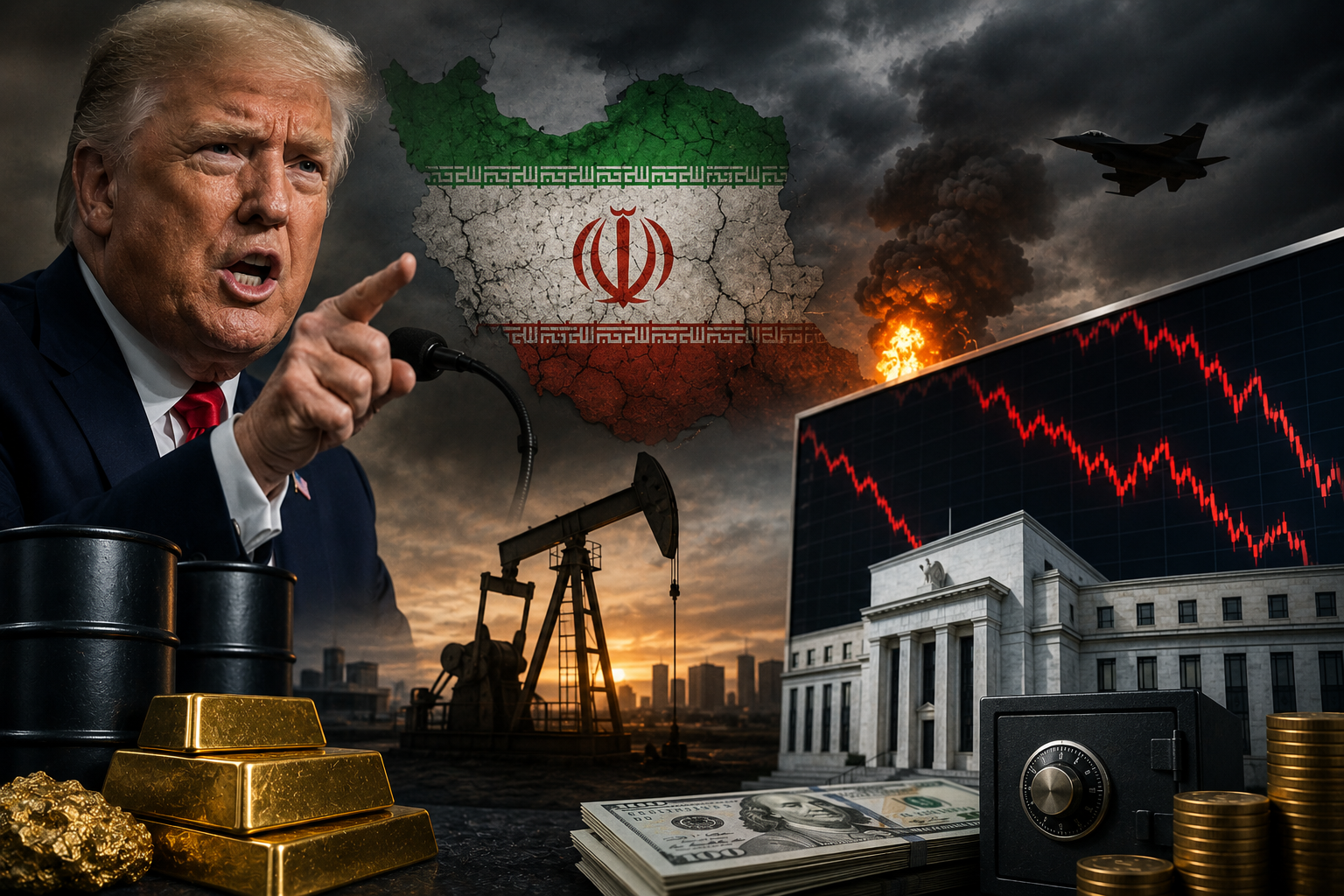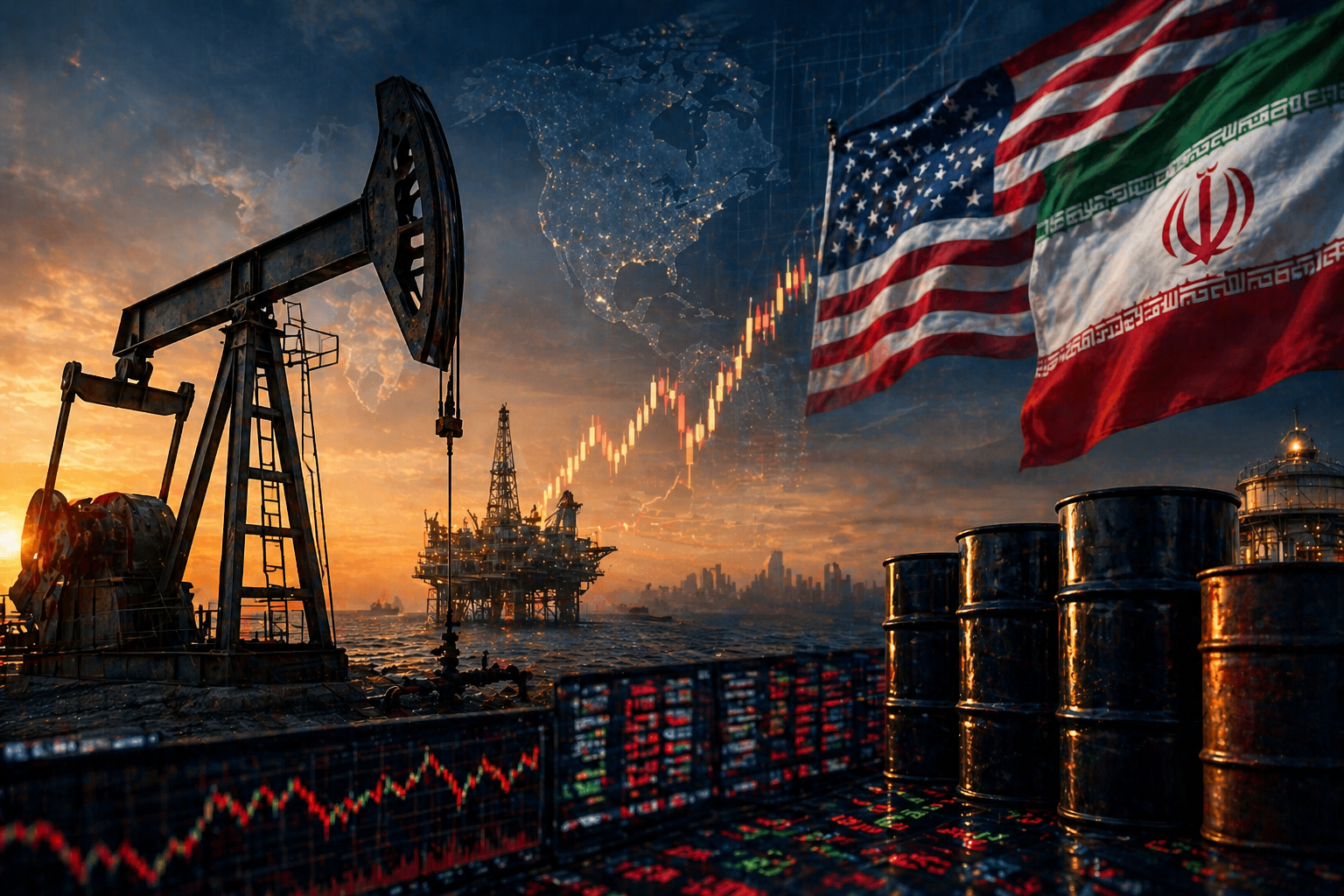
Markets were already on edge heading into a critical week of central bank decisions and earnings reports—but a sharp escalation in geopolitical tensions between the United States and Iran has added a new and powerful variable to the equation.
On April 28, 2026, oil prices surged as headlines signaled rising instability in the Middle East, immediately rippling across global financial markets. Equities wavered, commodities diverged, and currency markets reflected a renewed demand for safety. What began as a geopolitical flashpoint has quickly evolved into a primary driver of short-term market direction.
For investors, this is a reminder of a fundamental truth: when geopolitics intensifies, markets don’t just react—they reprice risk.
Oil as the Market’s First Signal
The most immediate and visible impact of the U.S.–Iran tensions has been in energy markets.
Crude oil prices moved sharply higher following reports from Reuters and coverage by The Guardian (April 28, 2026), reflecting fears of potential supply disruptions in a region that remains critical to global energy flows.
The Middle East accounts for a significant share of the world’s oil production and export capacity. Any threat—real or perceived—to supply routes such as the Strait of Hormuz can trigger immediate price reactions.
Why Oil Moves First
Oil acts as a real-time barometer of geopolitical risk for three key reasons:
- Supply Sensitivity: Even minor disruptions can have outsized effects on pricing
- Global Dependence: Energy demand remains inelastic in the short term
- Financialization: Oil is heavily traded by institutional investors responding to macro signals
As prices rise, the implications extend far beyond the energy sector.
The Ripple Effect Across Global Markets
The surge in oil prices is not occurring in isolation—it is triggering a chain reaction across asset classes.
📉 Equities: Pressure on Risk Assets
Higher oil prices increase input costs for businesses, particularly in transportation, manufacturing, and consumer sectors. This raises concerns about margin compression and slower economic growth.
U.S. and Canadian equity markets have shown signs of hesitation, with investors recalibrating expectations amid rising uncertainty.
🪙 Commodities: Divergence Intensifies
While energy commodities are rallying, metals and other industrial resources are showing mixed performance. This reflects a shift in capital allocation toward sectors directly benefiting from geopolitical tension.
💱 Currency Markets: Flight to Safety
Safe-haven currencies and assets are gaining traction as investors seek protection from volatility. This includes stronger demand for the U.S. dollar and traditional hedges.
According to market observations reported by Reuters, currency fluctuations are increasingly tied to geopolitical developments, reinforcing the interconnected nature of today’s financial system.
Why This Matters for Investors
The current environment represents a shift in market leadership.
For much of the past year, investor focus has centered on themes such as artificial intelligence, earnings growth, and monetary policy. While these factors remain important, geopolitical risk is now moving to the forefront.
Key implications:
1. Oil Prices as a Leading Indicator
Energy markets are setting the tone for broader risk sentiment. Sustained increases in oil prices could signal prolonged volatility.
2. Inflation Concerns Resurface
Higher energy costs feed directly into inflation, potentially complicating policy decisions by the Federal Reserve and other central banks.
3. Sector Rotation Accelerates
Capital is shifting toward energy and defensive sectors, while cyclical and growth-oriented stocks face pressure.
What the Data and Analysts Are Indicating
The market response to geopolitical developments is being closely tracked by major financial institutions and research firms.
- Analysts cited by Bloomberg note that oil price volatility is becoming a dominant factor in equity market performance.
- Commentary from International Energy Agency highlights that global oil supply remains vulnerable to disruptions, particularly in politically sensitive regions.
- Reporting from Reuters emphasizes that investors are increasingly factoring geopolitical scenarios into pricing models, rather than treating them as temporary shocks.
This evolving approach reflects a broader recognition that geopolitical risks are not just episodic—they are structural.
The Federal Reserve Complication
One of the most critical aspects of the current situation is its interaction with monetary policy.
The Federal Reserve is already navigating a complex economic landscape, balancing inflation control with growth concerns. A sustained rise in oil prices adds another layer of difficulty.
Potential outcomes:
- Higher Inflation: Energy-driven price increases could delay rate cuts
- Policy Uncertainty: The Fed may adopt a more cautious stance
- Market Volatility: Mixed signals from policymakers could amplify swings across asset classes
This intersection of geopolitics and monetary policy is particularly important for investors to monitor in the coming days.
Future Trends to Watch
As the situation evolves, several key trends are likely to shape market direction:
🔹 Oil Price Trajectory
The sustainability of the current rally will depend on whether tensions escalate further or stabilize.
🔹 Geopolitical Developments
Diplomatic actions, military movements, and policy statements will all influence market sentiment.
🔹 Sector Performance Divergence
Energy stocks may continue to outperform, while sectors sensitive to input costs could lag.
🔹 Global Economic Impact
Prolonged tension could affect trade flows, supply chains, and overall economic growth.
Key Investment Insight
Geopolitics has reasserted itself as a primary market driver—and oil is the clearest signal.
👉 Investors should closely monitor oil prices and geopolitical headlines, as they are likely to dictate short-term market direction.
In this environment, consider the following strategies:
- Increase Exposure to Energy: Companies benefiting from higher oil prices may offer near-term upside
- Hedge Against Inflation: Assets that perform well in inflationary environments can provide balance
- Stay Defensive: Maintain exposure to sectors with stable demand and pricing power
- Be Tactical: Short-term volatility creates both risks and opportunities
Above all, flexibility is key. Markets are reacting in real time to developments that are inherently unpredictable.
Navigating a Geopolitically Driven Market
The resurgence of geopolitical risk marks a turning point in market dynamics. While innovation-driven themes like AI and long-term growth narratives remain intact, the immediate focus has shifted to stability, security, and resource availability.
For investors, this requires a broader perspective—one that integrates macroeconomics, geopolitics, and sector-specific trends into a cohesive strategy.
As global markets adjust to this new reality, staying informed is not just an advantage—it’s a necessity.
Stay ahead of the curve with MoneyNews.Today, your trusted source for timely, insightful analysis of the forces shaping today’s financial markets.