
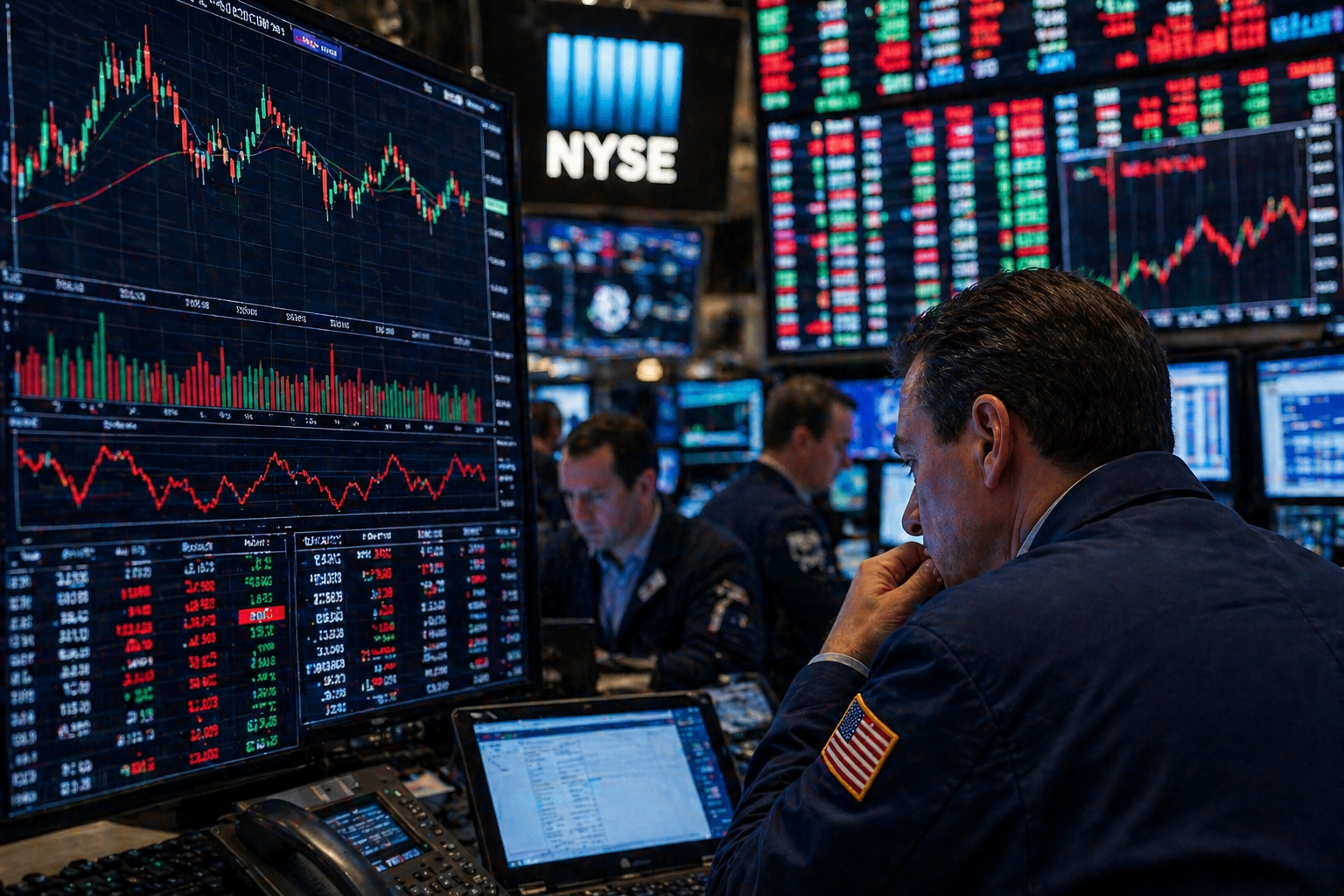
Markets don’t always move on news—sometimes they pause before it. That’s exactly where U.S. equities find themselves on April 28, 2026.
After pushing toward recent highs, major indices are now trading sideways, caught between optimism around corporate earnings and uncertainty surrounding macroeconomic policy. Investors are holding their positions, not because conviction is strong—but because the next move could be decisive.
According to live market coverage from Reuters (April 28, 2026), U.S. stocks are stuck in a narrow range as market participants await two major catalysts: the upcoming decision from the Federal Reserve and a wave of earnings reports from large-cap technology companies.
For investors, this is more than a pause—it’s a setup.
A Market in Waiting: Why Equities Are Stalling
The current sideways movement in equities reflects a classic “holding pattern” environment—where uncertainty outweighs conviction.
On one side, markets are supported by resilient corporate earnings and continued strength in key sectors like technology. On the other, macro risks—ranging from inflation concerns to geopolitical tensions—are limiting upside momentum.
This push-and-pull dynamic is keeping indices such as the S&P 500 and Nasdaq in check, as investors wait for clearer signals before committing capital.
What’s Driving the Caution?
- Monetary Policy Uncertainty: Investors are unsure how aggressively the Federal Reserve will act
- Earnings Expectations: High valuations mean companies must deliver strong results to justify prices
- Geopolitical Risks: Global tensions are adding volatility to commodities and currencies
The result is a market that is neither bullish nor bearish—but highly sensitive to incoming data.
The Federal Reserve: The Primary Catalyst
At the center of market attention is the upcoming decision from the Federal Reserve.
Interest rates remain the single most important variable influencing asset prices today. Even small changes in policy language or forward guidance can trigger significant market reactions.
Why the Fed Matters Now More Than Ever
- Valuation Sensitivity: Higher rates compress equity valuations, particularly for growth stocks
- Liquidity Conditions: Monetary policy directly impacts the availability of capital
- Investor Sentiment: Clear guidance can either stabilize markets—or introduce new uncertainty
Recent analysis from Bloomberg suggests that markets are pricing in a cautious stance from the Fed, but remain vulnerable to surprises.
For investors, the key question is not just what the Fed does—but how it communicates its outlook.
Big Tech Earnings: The Second Major Driver
Alongside the Fed decision, earnings from major technology companies are expected to play a critical role in shaping market direction.
Over the past year, Big Tech has been the primary engine of market gains, driven largely by enthusiasm around artificial intelligence and strong profit margins.
However, expectations are now elevated.
Companies like Apple, Microsoft, and Nvidia are under pressure to demonstrate:
- Continued revenue growth
- Clear monetization of AI investments
- устойчивость margins in a higher-cost environment
The Risk: High Expectations
When expectations are high, even strong results may not be enough to drive stock gains. Conversely, any disappointment could trigger sharp sell-offs.
This asymmetry is contributing to the current cautious positioning across markets.
Why This Matters for Investors
The convergence of Fed policy and earnings season creates a high-stakes environment.
Key implications:
1. Increased Volatility Ahead
Markets are likely to react sharply to both Fed announcements and earnings surprises.
2. Narrow Leadership Could Broaden—or Break
If Big Tech delivers strong results, leadership may expand. If not, broader market कमजोरी could emerge.
3. Timing Becomes Critical
In a catalyst-driven market, entry and exit timing can significantly impact returns.
What the Data and Analysts Are Indicating
Current market positioning reflects a mix of optimism and caution.
- Data tracked by Reuters shows limited directional movement in major indices despite ongoing news flow.
- Analysts cited by Bloomberg highlight that investor positioning is neutral, with many funds reducing risk ahead of key events.
- Research from Goldman Sachs indicates that earnings growth remains a critical driver, but macro conditions are increasingly influencing valuation multiples.
Together, these insights point to a market that is data-dependent and event-driven.
Sector Dynamics: Where Opportunities and Risks Are Emerging
Even in a sideways market, sector-level movements reveal important trends.
🔹 Technology
Still the dominant sector, but increasingly sensitive to both earnings results and interest rate expectations.
🔹 Energy
Benefiting from elevated oil prices tied to geopolitical tensions, providing a hedge against broader market weakness.
🔹 Defensive Sectors
Utilities, healthcare, and consumer staples are attracting interest as investors seek stability.
🔹 Cyclical Stocks
Facing pressure due to concerns about economic slowdown and higher input costs.
This divergence highlights the importance of selective positioning rather than broad market exposure.
Future Trends to Watch
As markets move through this critical period, several trends will shape the next phase:
🔹 Fed Communication Strategy
Clarity—or lack thereof—will determine market confidence.
🔹 AI Monetization in Earnings
Investors will closely watch how companies translate AI investments into revenue.
🔹 Geopolitical Developments
Ongoing tensions could continue to impact commodities and inflation expectations.
🔹 Market Breadth
A broader rally would signal strength, while continued concentration in a few stocks may indicate fragility.
Key Investment Insight
Markets are not directionless—they are waiting.
👉 Investors should prepare for volatility spikes tied to Federal Reserve signals and earnings surprises.
In this environment, consider the following strategies:
- Stay Balanced: Avoid overexposure to any single sector ahead of key events
- Focus on Quality: Companies with strong fundamentals are better positioned to withstand volatility
- Be Tactical: Use market swings as opportunities rather than reacting emotionally
- Monitor Catalysts Closely: Timing around Fed announcements and earnings releases is critical
The next move in markets is likely to be decisive—and preparation will be key.
Navigating a Catalyst-Driven Market
The current market environment is defined not by trends, but by triggers. Investors are navigating a landscape where a single headline—from the Federal Reserve or a major earnings report—can shift sentiment instantly.
This requires a disciplined approach, combining macro awareness with company-level analysis.
As the market stands on the edge of its next move, staying informed is more important than ever.
Follow MoneyNews.Today for daily, actionable insights that help you understand not just what is happening in the markets—but why it matters and how to act on it.




