The artificial intelligence boom has fueled one of the most powerful rallies in modern market history, but investors are now approaching a critical moment that could determine whether the momentum continues or begins to cool. All eyes on Wall Street are fixed on upcoming earnings from NVIDIA, the semiconductor giant that has become the centerpiece of the global AI trade.
Over the past two years, Nvidia has transformed from a leading graphics-chip manufacturer into arguably the most important company in the AI ecosystem. Its high-performance GPUs now power the massive AI models developed by tech giants including Microsoft, Amazon, Meta, and Alphabet.
But the stakes surrounding this earnings report extend far beyond one company’s quarterly performance. Investors increasingly view Nvidia’s guidance as a direct signal for the sustainability of AI infrastructure spending across the entire technology sector. With Treasury yields climbing, inflation concerns resurfacing, and valuations stretched across semiconductor stocks, the market is searching for evidence that the AI investment cycle still has room to run.
According to recent reporting from Reuters and MarketWatch, chip stocks rebounded ahead of the earnings release as investors positioned for another potentially strong quarter. However, analysts are also warning that expectations may now be extraordinarily high, raising the possibility of increased volatility regardless of the results.
Why Nvidia Has Become the Center of the AI Economy
Few companies in history have experienced the kind of market expansion Nvidia has seen during the AI revolution. Since generative AI exploded into the mainstream following the launch of advanced large language models, demand for AI-focused GPUs has surged to unprecedented levels.
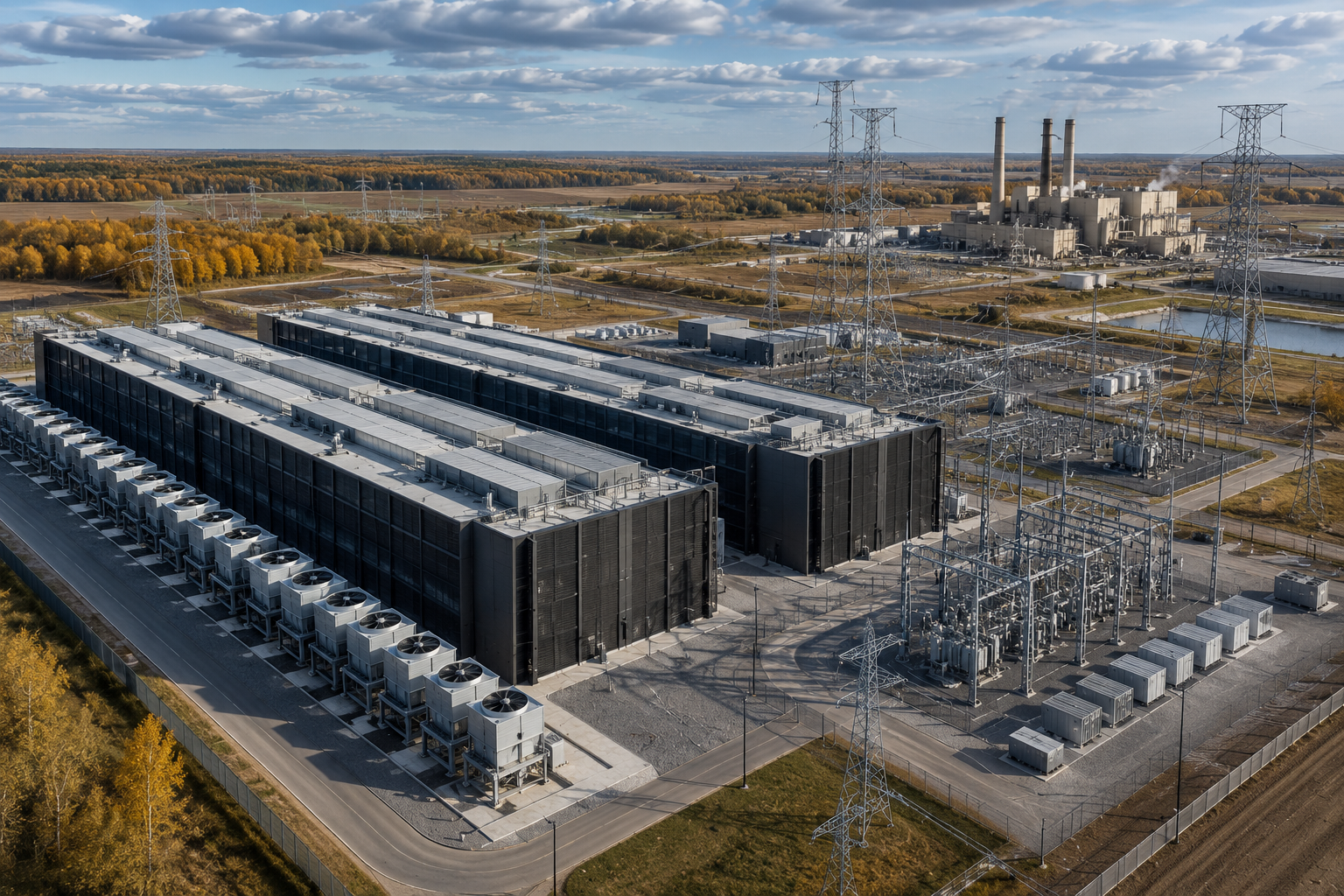
The company’s H100 and Blackwell AI chips have effectively become the “picks and shovels” of the modern AI gold rush. Major hyperscalers are spending billions of dollars annually to build AI infrastructure capable of training and deploying increasingly sophisticated models.
This spending wave has dramatically reshaped capital allocation strategies throughout the technology industry. Instead of focusing purely on software expansion, companies are now aggressively investing in data centers, advanced networking equipment, cloud infrastructure, and AI accelerators.
According to estimates from Goldman Sachs and McKinsey, global AI infrastructure spending could exceed trillions of dollars over the next decade as enterprises race to integrate AI into their operations. Nvidia remains one of the largest direct beneficiaries of this trend.
That dominance explains why Nvidia earnings have evolved into a broader market event. Investors are not simply evaluating one company’s revenue growth — they are assessing the health of the entire AI ecosystem.
Wall Street’s Biggest Question: Can AI Spending Continue?
The central issue facing investors is no longer whether AI will reshape the economy. Markets have largely accepted that outcome. Instead, the debate now revolves around whether the pace of AI spending can remain sustainable in a more challenging macroeconomic environment.
Higher Treasury yields have emerged as one of the market’s biggest concerns in recent weeks. Rising yields typically pressure high-growth technology stocks because future earnings become less valuable when discounted at higher interest rates.
That dynamic has created growing tension between AI enthusiasm and broader economic realities.
Large technology firms are currently spending enormous sums to secure AI dominance. Microsoft continues expanding its AI infrastructure through partnerships and cloud investments, while Amazon is aggressively scaling AI capabilities across AWS. Meta has also significantly increased capital expenditures tied to AI data centers and compute power.
While investors initially rewarded these expenditures, questions are beginning to emerge about long-term returns on investment.
Analysts cited by Reuters note that Wall Street now wants evidence that hyperscaler AI spending will translate into durable revenue growth rather than simply becoming an expensive arms race among technology giants.
This is precisely why Nvidia’s guidance matters so much.
If Nvidia signals continued explosive demand for AI chips and infrastructure, markets may interpret that as confirmation that the AI boom remains in its early stages. However, any indication of slowing orders, weaker pricing power, or customer spending moderation could trigger a reassessment across the broader semiconductor sector.
Rising Competition Could Shape the Next Phase of AI
Another emerging theme investors are closely monitoring is competitive pressure within the AI semiconductor industry.
Although Nvidia currently dominates the AI GPU market, competitors are accelerating efforts to reduce dependence on the company’s hardware ecosystem. Advanced Micro Devices continues expanding its AI chip portfolio, while Intel is attempting to regain relevance in data-center infrastructure.
At the same time, hyperscalers themselves are increasingly developing custom AI chips. Google’s Tensor Processing Units (TPUs), Amazon’s Trainium chips, and Microsoft-backed AI accelerators represent a growing push toward vertical integration.
Reuters recently reported that U.S. national laboratories are also testing alternative AI chip providers as organizations seek greater diversification beyond Nvidia’s ecosystem.
For investors, this creates both opportunity and risk.
Nvidia remains exceptionally well positioned due to its software advantages, developer ecosystem, and production scale. However, the long-term AI market may evolve into a more competitive landscape than current valuations imply.
That possibility is particularly important given Nvidia’s extraordinary stock performance over the past several years. High expectations leave little margin for disappointment.
The Bond Market Is Becoming a Key Risk for AI Stocks
One of the most important macroeconomic developments investors should monitor is the relationship between bond yields and AI equity valuations.
Technology stocks have historically benefited from lower interest-rate environments because future growth expectations carry greater value when borrowing costs remain low. However, the recent rise in Treasury yields is creating new pressure on growth-oriented sectors.
The AI trade has so far remained remarkably resilient despite higher yields, largely because investors continue viewing artificial intelligence as a transformational economic force comparable to the internet revolution.
Still, some market strategists are warning that the AI sector could become vulnerable if inflation remains elevated or if the Federal Reserve maintains restrictive monetary policy longer than expected.
Higher financing costs may eventually force companies to reevaluate aggressive AI capital expenditures, particularly if monetization timelines prove slower than anticipated.
This risk is especially relevant for companies spending tens of billions annually on AI infrastructure without immediate profit expansion.
For now, investors appear willing to tolerate those costs because AI remains the market’s dominant growth narrative. Nvidia’s earnings could reinforce or challenge that confidence.
Key Investment Insight
For investors, Nvidia’s earnings represent far more than a single quarterly report — they are effectively a stress test for the entire AI investment thesis.
If results and guidance exceed expectations, AI-related equities could continue leading markets higher, particularly semiconductor manufacturers, cloud infrastructure providers, networking firms, and data-center operators.
However, investors should also prepare for increased volatility. Valuations across portions of the AI sector have become historically elevated, making the market increasingly sensitive to even minor disappointments.
The broader takeaway is that AI remains one of the most powerful long-term investment themes in global markets, but the next phase of the rally may become more selective. Companies demonstrating tangible revenue growth, scalable infrastructure advantages, and sustainable AI monetization are likely to outperform speculative names driven primarily by hype.
Investors should continue watching three critical signals closely:
- AI infrastructure spending trends among hyperscalers
- Treasury yield movements and Federal Reserve policy expectations
- Competitive developments within the semiconductor industry
These factors will likely determine whether the AI boom enters another expansion phase or transitions into a more valuation-sensitive market environment.
As the market waits for Nvidia’s next move, one thing is increasingly clear: the future direction of AI stocks — and potentially the broader technology sector — may hinge on the signals delivered in this earnings report.
Stay ahead of the markets with more daily investor insights and breaking financial coverage from MoneyNews.Today.