
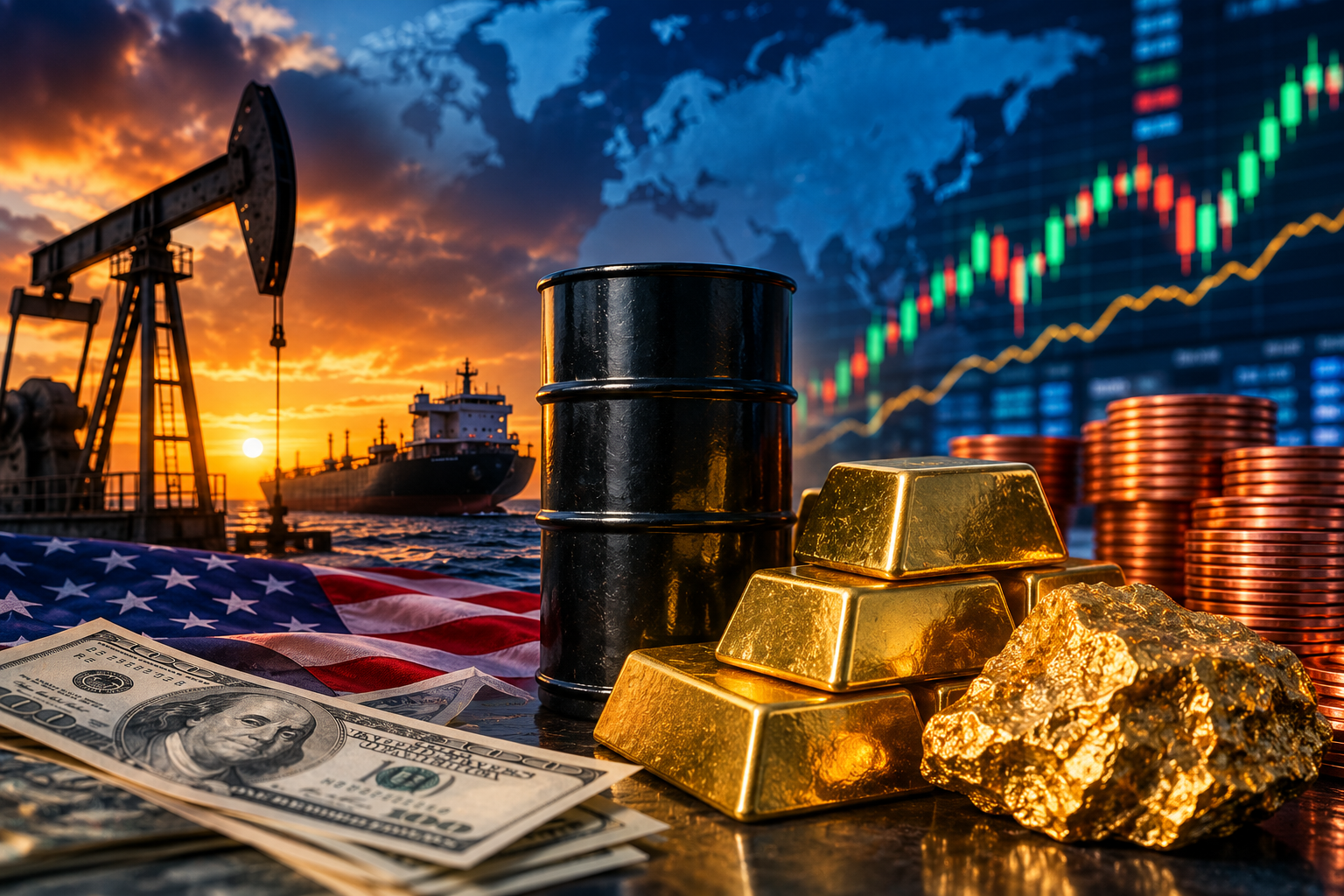
Global markets were reminded once again that geopolitics can reshape investment strategies overnight. Renewed fighting in the Middle East and fresh U.S. sanctions targeting Iranian oil exports sent crude prices sharply higher on Wednesday, reigniting inflation concerns just as investors had become increasingly optimistic about the prospect of lower interest rates later this year.
The sudden jump in oil prices quickly rippled through global financial markets. Energy stocks outperformed, gold rallied as investors sought traditional safe-haven assets, and broader equity markets came under pressure as traders reassessed the potential impact of higher fuel costs on inflation and economic growth.
For investors, the latest developments extend well beyond oil. The energy shock has once again placed commodities at the center of market attention, with gold, copper, uranium, and mining companies becoming increasingly important pieces of the global investment landscape.
Geopolitical Tensions Put Energy Markets Back in Focus
Oil markets have experienced heightened volatility throughout 2026, but Wednesday’s move reflected a significant escalation in geopolitical risk.
Renewed military conflict in the Middle East combined with additional U.S. sanctions targeting Iranian crude exports raised concerns about future global oil supplies. Although major producers continue to monitor production levels, the possibility of supply disruptions immediately pushed Brent and West Texas Intermediate (WTI) crude prices higher.
Energy markets have historically reacted quickly to geopolitical developments because even modest supply disruptions can significantly influence global pricing.
The Middle East remains responsible for a substantial share of worldwide oil production, making the region one of the most closely watched geopolitical hotspots for commodity investors.
As uncertainty increased, financial markets responded accordingly.
Oil prices climbed.
Gold attracted renewed buying.
Government bond markets reflected changing inflation expectations.
Meanwhile, investors rotated toward sectors traditionally viewed as beneficiaries of rising commodity prices.
Why Higher Oil Prices Matter Beyond the Energy Sector
While higher crude prices directly benefit many oil producers, their broader impact reaches nearly every corner of the global economy.
Energy costs influence transportation, manufacturing, agriculture, logistics, aviation, and consumer spending. Rising fuel prices can increase production costs for businesses while reducing household purchasing power.
For central banks, including the U.S. Federal Reserve, persistent increases in oil prices create another challenge in the ongoing fight against inflation.
Should energy prices remain elevated over an extended period, inflation could prove more difficult to contain, potentially delaying future interest-rate cuts.
This possibility is particularly important for equity investors.
Technology shares, growth companies, and other interest-rate-sensitive sectors generally perform best when borrowing costs decline. If inflation remains elevated due to higher energy prices, financial conditions may remain tighter for longer than markets currently anticipate.
That shift explains why commodity markets have once again become one of Wall Street’s primary macroeconomic indicators.
Gold Reclaims Its Role as a Safe-Haven Asset
As oil climbed, gold also strengthened.
The precious metal has long served as one of the world’s preferred safe-haven investments during periods of geopolitical uncertainty, financial instability, and inflation concerns.
Unlike many financial assets, gold is not directly tied to corporate earnings or economic growth. Instead, it often benefits when investors seek capital preservation amid heightened uncertainty.
The latest rally reflected that traditional relationship.
Investors increased allocations to gold as geopolitical tensions intensified and concerns about future inflation resurfaced.
In addition to physical gold demand, many investors gained exposure through gold-backed exchange-traded funds (ETFs), mining companies, and precious metals funds.
Gold mining companies could benefit from rising bullion prices if production costs remain relatively stable, potentially improving operating margins and free cash flow.
However, investors should also recognize that gold prices remain highly sensitive to interest-rate expectations and movements in the U.S. dollar.
Energy Producers May Be Among the Biggest Winners
The energy sector has emerged as one of the immediate beneficiaries of higher crude prices.
Oil producers generally generate stronger cash flows when benchmark crude prices rise, particularly companies with low production costs and disciplined capital spending programs.
Over recent years, many North American energy producers have shifted away from aggressive production growth toward shareholder-friendly capital allocation strategies, emphasizing dividends, share repurchases, and balance-sheet strength.
As a result, higher oil prices often translate into stronger shareholder returns rather than simply increased drilling activity.
Should geopolitical tensions persist, investors may continue rotating into integrated energy companies, exploration and production firms, pipeline operators, and oilfield service providers.
However, volatility remains a defining characteristic of commodity markets.
Any diplomatic progress or unexpected supply increases could quickly reverse recent gains.
Copper and Uranium Remain Long-Term Strategic Opportunities
Although oil and gold dominated headlines, industrial metals continue offering compelling long-term investment opportunities.
Copper remains one of the world’s most strategically important commodities.
Demand continues expanding as artificial intelligence infrastructure, electric vehicles, renewable energy projects, and grid modernization require enormous quantities of electrical wiring and transmission equipment.
Large-scale AI data centers alone require extensive copper usage for power distribution, cooling systems, networking infrastructure, and electrical components.
Meanwhile, uranium continues attracting investor interest as governments increasingly prioritize energy security, emissions reduction, and reliable electricity generation.
Growing investment in nuclear power—including small modular reactors (SMRs)—has strengthened long-term demand expectations for uranium producers.
Unlike oil, whose price movements often reflect short-term geopolitical events, copper and uranium benefit from structural investment trends expected to unfold over many years.
This distinction makes them attractive considerations for investors seeking exposure to long-term industrial growth rather than temporary market disruptions.
Why This Matters for Investors
The latest market reaction highlights an increasingly interconnected investment landscape.
A geopolitical event affecting energy markets can rapidly influence inflation expectations, central bank policy, equity valuations, commodity prices, and investor sentiment.
Several indicators deserve close attention in the weeks ahead:
Oil Prices: Continued gains could sustain inflation pressures while supporting energy-sector earnings.
Gold Prices: Safe-haven demand may remain elevated if geopolitical uncertainty persists.
Federal Reserve Communications: Policymakers will likely assess whether higher energy costs pose renewed inflation risks.
Copper Demand: Continued AI infrastructure investment could strengthen long-term consumption.
Uranium Markets: Expanding nuclear investment remains supportive of future demand growth.
Together, these variables will help shape broader market performance during the second half of 2026.
Key Investment Insight
Commodity markets have once again become one of the most influential drivers of global investment sentiment.
While higher oil prices may create challenges for inflation-sensitive sectors, they simultaneously present opportunities across energy producers, gold miners, and select commodity-focused companies.
Investors should distinguish between short-term geopolitical volatility and longer-term structural investment themes.
Oil and gold may continue responding to geopolitical headlines, while copper and uranium remain supported by powerful secular trends including artificial intelligence infrastructure, electrification, energy transition, and expanding global electricity demand.
Maintaining diversified exposure across these commodity themes may help investors navigate an increasingly uncertain macroeconomic environment while positioning portfolios for long-term growth opportunities.
As global markets continue responding to rapidly changing geopolitical and economic developments, staying informed is essential. Follow MoneyNews.Today for daily investor news, commodity market analysis, and expert insights covering the trends shaping global financial markets.




