
The global artificial intelligence race is entering a new phase — and investors are beginning to realize it is no longer just about chips, cloud infrastructure, or who can build the most powerful large language model.
Now, financial markets themselves may become the next battlefield.
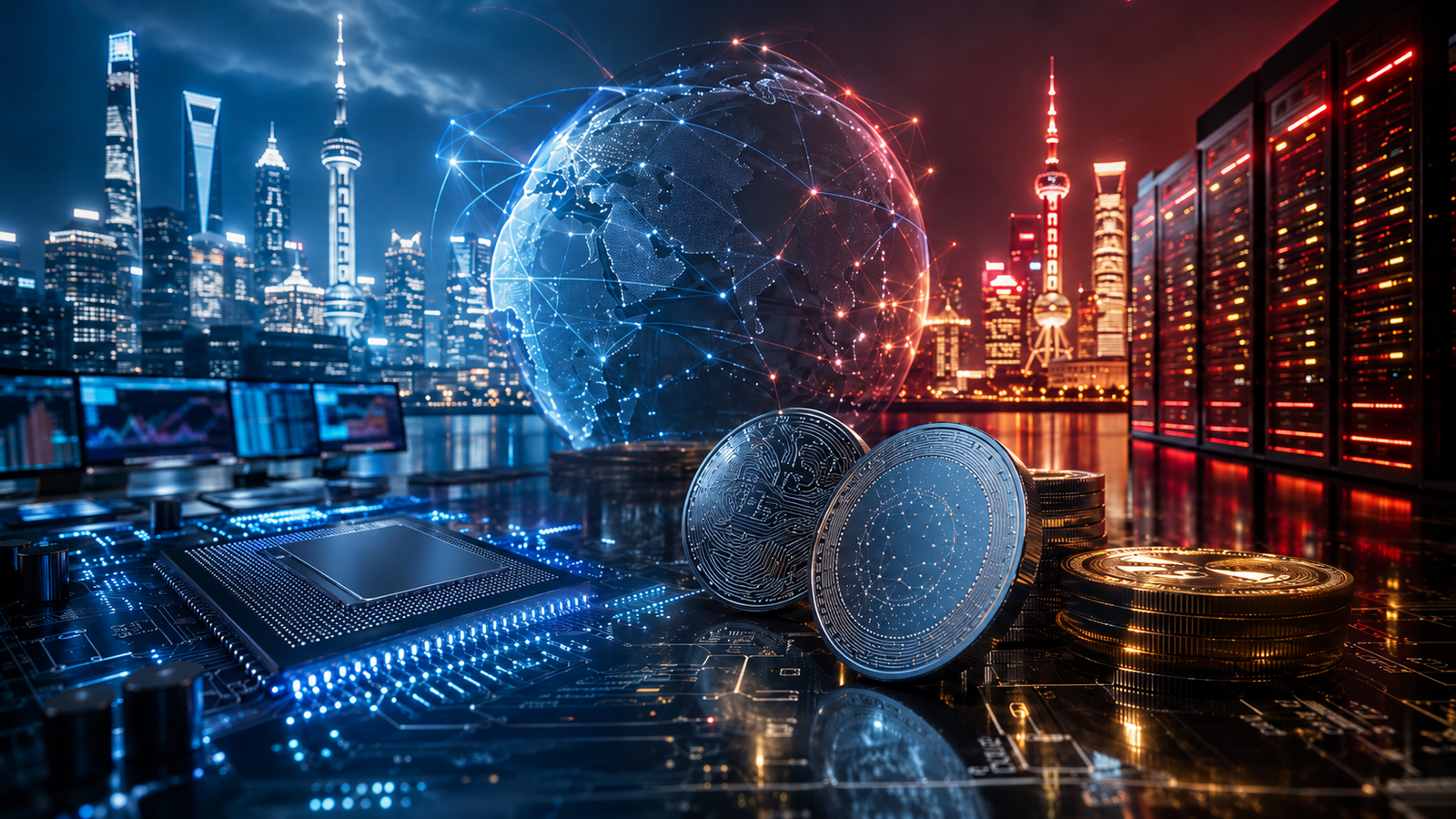
Reports from Reuters this week revealed that China is exploring the development of an AI token futures market designed to finance domestic artificial intelligence initiatives and accelerate capital formation for Chinese AI companies. While details remain limited, the initiative signals Beijing’s growing determination to create alternative financing mechanisms capable of competing with the massive capital inflows currently benefiting U.S. AI leaders such as OpenAI, Microsoft, Nvidia, Alphabet, and Amazon.
The development arrives at a time when global AI spending is already reshaping equity markets, venture capital flows, semiconductor demand, and national industrial policies. Investors increasingly view artificial intelligence not simply as a technology trend, but as a geopolitical and economic competition capable of determining long-term global market leadership.
And now, China appears to be preparing to bring financial engineering directly into the AI race.
A New Front in the Global AI Competition
According to Reuters, Chinese policymakers and financial institutions are exploring frameworks tied to AI-linked digital financial products that could help direct capital toward domestic artificial intelligence development. The discussions reportedly include AI-related tokenized assets and futures structures aimed at supporting national AI champions and strategic technology projects.
The initiative reflects China’s broader effort to reduce dependence on Western capital markets and U.S.-controlled semiconductor ecosystems while simultaneously accelerating domestic innovation.
The timing is significant.
Over the past 18 months, U.S. technology companies have poured hundreds of billions of dollars into AI infrastructure. Microsoft continues expanding its partnership with OpenAI while aggressively building new AI cloud capacity. Nvidia has become the dominant supplier of AI accelerators powering data centers globally. Alphabet, Amazon, Meta, and Oracle are also rapidly increasing AI-related spending as competition intensifies.
According to Bloomberg Intelligence estimates, global generative AI spending could surpass $1.3 trillion over the next decade, while McKinsey has projected AI could contribute between $2.6 trillion and $4.4 trillion annually to the global economy.
China clearly does not intend to remain on the sidelines of that opportunity.
Why Investors Are Paying Attention
The concept of AI-linked financial products may sound speculative at first glance, but investors understand the deeper implication: China is attempting to create a parallel capital ecosystem designed specifically to support strategic AI development.
That matters because artificial intelligence has become one of the most capital-intensive industries in modern history.
Training advanced models requires enormous computing resources, semiconductor access, electricity consumption, and cloud infrastructure. AI data-center construction alone is now driving surging demand for power generation, cooling systems, networking equipment, and rare-earth materials.
Reuters recently reported that major technology companies are committing billions of dollars toward AI infrastructure expansion, while energy utilities across North America are struggling to keep pace with rapidly rising electricity demand from AI facilities.
If China succeeds in creating new financing mechanisms tied to AI development, global competition could accelerate dramatically across several sectors:
- Semiconductors
- Cloud computing
- AI infrastructure
- Energy systems
- Cybersecurity
- Rare-earth supply chains
- Advanced networking equipment
For investors, this potentially creates both extraordinary opportunities and growing geopolitical risks.
The Semiconductor Stakes Continue Rising
No sector may be more exposed to the escalating AI rivalry than semiconductors.
Nvidia remains one of the biggest beneficiaries of the AI boom, with demand for its GPUs continuing to outpace supply. Advanced Micro Devices, Broadcom, Taiwan Semiconductor Manufacturing Company, and other chipmakers are also benefiting from accelerating AI infrastructure spending.
However, China’s push to finance domestic AI growth raises questions about future supply-chain fragmentation and potential government intervention.
Washington has already implemented multiple rounds of export restrictions limiting China’s access to advanced AI chips. U.S. policymakers increasingly view semiconductor leadership as a national security priority, while Beijing continues investing heavily in domestic alternatives.
According to analysts cited by Reuters and Financial Times, the AI chip market may increasingly split into parallel ecosystems — one centered around U.S. technology standards and another tied to Chinese domestic infrastructure.
That fragmentation could reshape global investment strategies over the next several years.
Investors may need to evaluate not only technological leadership, but also geopolitical exposure, regulatory risks, and supply-chain dependencies.
AI Is Becoming a National Security Asset
The emergence of AI token financing also reinforces a broader trend investors cannot ignore: artificial intelligence is becoming deeply integrated into national security and industrial policy.
Governments worldwide are increasingly treating AI infrastructure similarly to energy infrastructure or defense manufacturing.
The United States continues expanding industrial-policy initiatives tied to semiconductors, AI research, and domestic manufacturing through programs linked to the CHIPS Act and federal AI investments. Meanwhile, China is aggressively supporting domestic technology champions amid rising tensions with Washington.
Canada, Europe, Japan, and Middle Eastern sovereign wealth funds are also increasing AI-related investments as nations compete for strategic positioning in the next technological era.
This growing state involvement could create several long-term investment themes:
AI Infrastructure Expansion
Data centers, fiber networking, cooling technologies, and power-generation systems are becoming essential components of the AI economy.
Critical Minerals and Rare Earths
AI hardware production depends heavily on copper, lithium, rare earths, and specialized semiconductor materials.
Energy Demand Growth
AI facilities require enormous electricity consumption, creating potential tailwinds for utilities, nuclear energy developers, and renewable infrastructure providers.
Cybersecurity and AI Governance
As AI adoption expands, governments and corporations are expected to increase spending on cybersecurity, data protection, and AI regulation frameworks.
Future Trends Investors Should Watch
The next stage of the AI boom may become significantly more globalized — and more politically fragmented.
Several key developments could shape market direction moving forward:
Expansion of Alternative AI Financing Models
China’s AI token futures initiative could inspire similar financial products globally, particularly in regions seeking to accelerate AI investment without relying entirely on traditional equity markets.
Intensifying U.S.-China Technology Restrictions
Export controls, tariffs, and investment restrictions may continue expanding as both nations prioritize strategic AI leadership.
Increased Institutional AI Spending
Large pension funds, sovereign wealth funds, and private-equity firms are likely to increase direct exposure to AI infrastructure and strategic technology assets.
AI-Driven Commodity Demand
Copper, uranium, natural gas, and electricity infrastructure could emerge as major secondary beneficiaries of long-term AI growth.
Key Investment Insight
Investors should recognize that the AI race is evolving beyond software and becoming a full-scale competition involving capital markets, industrial policy, energy infrastructure, and geopolitical influence.
While U.S. AI leaders such as Nvidia, Microsoft, and OpenAI-linked ecosystems continue benefiting from strong Western investment momentum, China’s efforts to create alternative financing systems could introduce new volatility and competitive pressures across global technology markets.
The companies best positioned to succeed may ultimately be those with diversified supply chains, strong geopolitical positioning, scalable infrastructure, and the ability to navigate an increasingly fragmented global technology environment.
For long-term investors, AI remains one of the most transformative growth opportunities of the decade — but the geopolitical dimension of that opportunity is becoming impossible to ignore.
Stay with MoneyNews.Today for more daily investor insights covering AI, technology, global markets, geopolitics, and emerging investment trends shaping the future of finance.




