
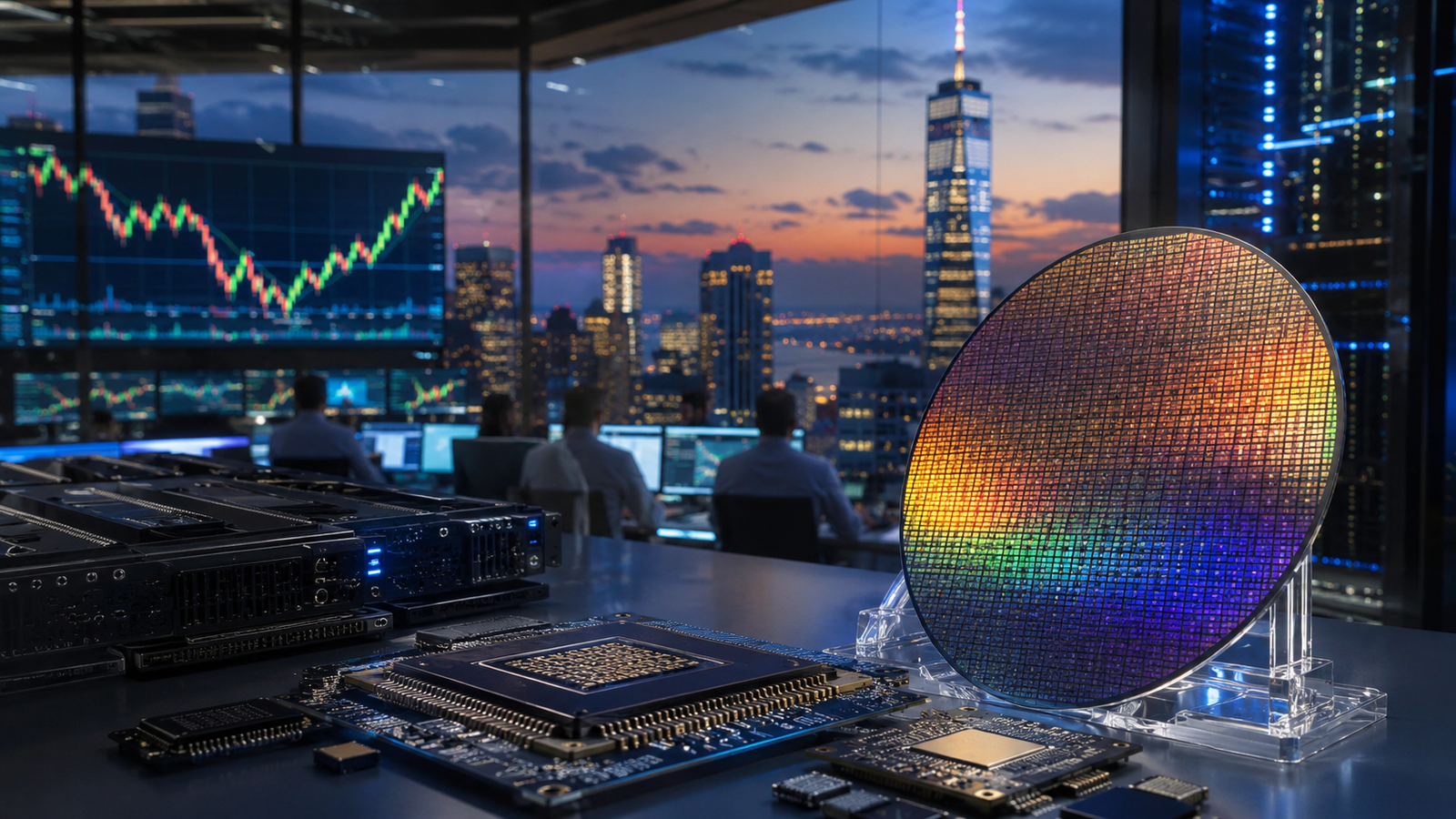
Just days after a sharp selloff rattled investors and erased hundreds of billions of dollars in market value from technology stocks, Wall Street is showing signs of renewed confidence.
U.S. stock futures and global equity markets moved higher on June 9 as investors rushed back into semiconductor and artificial intelligence-related stocks. Companies at the center of the AI boom—including Nvidia, Broadcom, Micron Technology, and other chipmakers—led the recovery as traders viewed the recent decline as a buying opportunity rather than the start of a broader market downturn.
At the same time, easing tensions in the Middle East helped improve risk sentiment across global markets, reducing concerns about energy price shocks and geopolitical uncertainty. According to Reuters, investors welcomed signs of stabilization following recent volatility, triggering a rebound across technology-heavy indices.
Yet beneath the optimism lies a more complex reality. While AI continues to drive market leadership, rising Treasury yields and growing concerns about Federal Reserve policy could create challenges for high-growth stocks that have benefited enormously from investor enthusiasm.
For investors, the latest market rebound offers both opportunity and a reminder that the next phase of the AI-driven bull market may be more volatile than the last.
AI Continues to Dominate Market Leadership
The most important story in global markets remains artificial intelligence.
Since the emergence of generative AI technologies, investors have poured capital into companies supplying the hardware, software, and infrastructure required to support the AI revolution. Semiconductor manufacturers have been among the biggest beneficiaries, as demand for advanced chips continues to outpace supply.
Nvidia has become the face of the AI investment boom, but it is far from alone. Broadcom, Micron Technology, Advanced Micro Devices, Taiwan Semiconductor Manufacturing, and numerous data-center suppliers have also benefited from unprecedented spending on AI infrastructure.
The recent rebound demonstrates that investor conviction surrounding AI remains strong.
Even after last week’s selloff, many institutional investors viewed lower prices as an opportunity to increase exposure to companies positioned at the center of long-term AI growth trends.
Analysts at major investment banks continue to forecast substantial increases in AI-related spending over the coming years, driven by corporate adoption, government initiatives, cloud computing expansion, and rising demand for computing power.
As a result, AI remains the primary force shaping market leadership in 2026.
Why Semiconductor Stocks Recovered So Quickly
The speed of the rebound highlights an important shift in investor behavior.
During previous technology corrections, market participants often waited for clearer signs of stabilization before re-entering positions. In the current environment, many investors appear willing to buy AI-related stocks aggressively following pullbacks.
Several factors help explain this trend.
First, earnings growth among leading semiconductor companies remains exceptionally strong. AI infrastructure spending continues to support demand for advanced processors, memory chips, networking equipment, and data-center technologies.
Second, long-term growth projections remain compelling.
Industry research from firms such as McKinsey, Gartner, and IDC suggests that global AI spending could reach trillions of dollars over the next decade. Supporting that growth will require massive investments in semiconductors, cloud infrastructure, networking systems, and power generation.
Third, many investors fear missing the next leg of the AI rally.
The extraordinary gains generated by AI-related stocks over the past several years have reinforced the belief that major pullbacks may represent buying opportunities rather than reasons to exit positions.
This mentality has created a powerful “buy-the-dip” culture within the technology sector.
Geopolitical Relief Helps Support Risk Assets
The rebound in stock markets was not driven solely by technology.
Investor sentiment also improved as geopolitical concerns eased.
Recent tensions in the Middle East had raised fears of disruptions to global energy supplies, higher oil prices, and increased market volatility. Such developments often weigh on growth stocks because they can contribute to inflationary pressures and reduce investor appetite for risk.
As concerns moderated, investors became more comfortable returning to higher-growth sectors.
Lower geopolitical risk can have significant implications for equity markets because it helps stabilize expectations regarding inflation, economic growth, and corporate profitability.
The reduction in uncertainty provided an additional tailwind for technology and semiconductor shares already benefiting from AI-driven optimism.
The Treasury Yield Challenge
Despite the rebound, investors should not ignore one of the market’s most important risks: rising Treasury yields.
Bond yields have climbed as economic data continues to show resilience in the U.S. economy. Strong employment figures, healthy consumer spending, and persistent inflation pressures have led investors to reduce expectations for aggressive Federal Reserve rate cuts.
Higher yields matter because they directly affect stock valuations.
Growth companies generate much of their expected value from future earnings. When interest rates rise, the present value of those future cash flows declines, potentially reducing the valuation investors are willing to pay.
This dynamic is particularly relevant for technology stocks, many of which currently trade at elevated multiples due to strong growth expectations.
The challenge for investors is balancing the enormous potential of AI-driven growth against the possibility of tighter monetary conditions.
If Treasury yields continue climbing, volatility could return even if the fundamental outlook for AI remains positive.
Why the Federal Reserve Still Matters
For much of the past year, AI has overshadowed nearly every other market narrative.
However, Federal Reserve policy remains one of the most influential factors affecting asset prices.
Markets are increasingly debating whether inflation will remain elevated for longer than expected. If inflation proves sticky, policymakers may keep interest rates higher for an extended period or delay future rate cuts.
Such a scenario could affect everything from corporate borrowing costs to consumer spending and investment activity.
Historically, technology stocks have performed best when economic growth is strong and interest rates are stable or declining.
The current environment presents a unique combination of factors: powerful AI-driven growth opportunities alongside monetary policy uncertainty.
Investors should monitor inflation reports, labor market data, Federal Reserve communications, and Treasury market movements as closely as they watch AI developments.
Future Trends to Watch
Several themes are likely to shape market performance during the second half of 2026.
AI Infrastructure Expansion
Data-center construction, semiconductor manufacturing, and cloud computing investment continue accelerating worldwide. This remains one of the strongest long-term growth themes in global markets.
Corporate AI Adoption
Businesses across healthcare, finance, manufacturing, retail, and logistics are increasing AI spending. Revenue growth generated from real-world adoption will become increasingly important.
Treasury Yield Movements
Rising bond yields could create additional volatility for high-growth technology stocks.
Federal Reserve Policy
Investors should closely monitor whether policymakers signal a more hawkish or dovish stance in response to economic data.
Global Geopolitical Stability
Energy prices, trade policies, and international tensions remain important variables affecting market sentiment.
Key Investment Insight
The latest rebound in semiconductor and AI-related stocks reinforces a critical reality for investors: artificial intelligence remains the dominant market theme of 2026. Strong demand for computing power, data-center infrastructure, and advanced semiconductors continues to support earnings growth across the technology sector.
However, investors should avoid focusing solely on AI narratives. Rising Treasury yields and uncertainty surrounding Federal Reserve policy could create valuation pressures for some of the market’s most popular growth stocks.
A balanced approach may be the most effective strategy. Companies benefiting from long-term AI adoption trends remain attractive, but diversification across technology infrastructure, cybersecurity, industrial automation, power generation, and quality growth sectors can help manage risk.
The market’s recent recovery suggests investors remain optimistic about the future of artificial intelligence. The next challenge will be determining whether earnings growth can continue to justify increasingly ambitious valuations.
Stay informed with MoneyNews.Today for daily investor insights, market-moving developments, and in-depth analysis of the trends shaping Wall Street, global markets, and the future of investing.




