
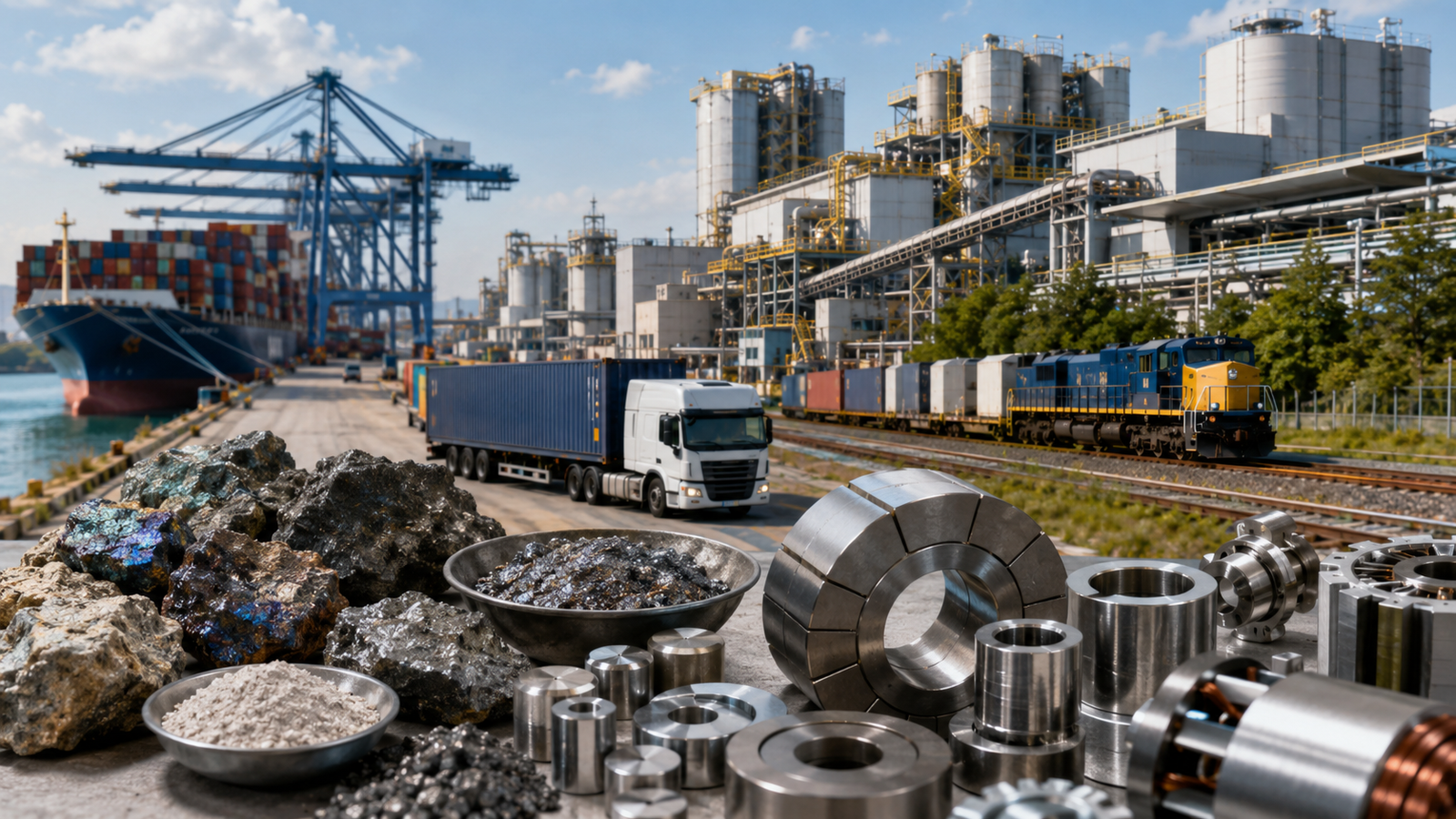
A quiet but powerful shift is unfolding in global commodity markets, and it could become one of the most important long-term investment themes of the decade.
As governments and corporations race to secure supplies of critical minerals needed for artificial intelligence, electric vehicles, defense systems, renewable energy infrastructure, and advanced manufacturing, dependence on China is increasingly viewed as a strategic risk. The latest sign of this transformation came when rare-earth developer Viridis Mining announced it would prioritize supply agreements with U.S. and European customers while avoiding Chinese buyers, according to Reuters reporting on May 28–29, 2026.
The move highlights a broader geopolitical and economic trend that investors can no longer afford to ignore. Western nations are accelerating efforts to build alternative supply chains for rare earths and other critical minerals, creating significant opportunities across the mining, processing, refining, and industrial sectors.
For investors, the story extends far beyond a single mining company. It represents a structural shift in global resource markets that could influence investment flows, government policy, and industrial strategy for years to come.
Why Critical Minerals Have Become a Strategic Priority
Rare earth elements may not receive the same public attention as oil or gold, but they have become indispensable to modern economies.
These minerals are essential components in:
- Electric vehicle motors
- Wind turbines
- Advanced military systems
- Semiconductors
- Smartphones and consumer electronics
- Artificial intelligence infrastructure
- Aerospace technologies
- Industrial automation systems
The challenge for Western economies is that a substantial portion of the world’s rare-earth mining, processing, and refining capacity remains concentrated in China.
Over the past decade, policymakers in the United States, Canada, Europe, Australia, and Japan have become increasingly concerned about this dependency.
Recent geopolitical tensions have only intensified those concerns.
As a result, governments are actively supporting efforts to diversify supply chains and establish alternative sources of critical minerals.
Viridis Mining’s decision reflects this growing demand from Western buyers seeking long-term supply security rather than reliance on traditional sourcing channels.
The Supply Chain Battle Behind the AI Revolution
While artificial intelligence has dominated investment headlines, many investors overlook the physical resources required to support the technology revolution.
AI data centers, semiconductor manufacturing facilities, advanced computing systems, and renewable-energy-powered infrastructure all rely on critical minerals.
The same technologies driving demand for AI processors are also increasing demand for copper, rare earths, lithium, graphite, nickel, and other strategic materials.
According to research from the International Energy Agency (IEA), demand for critical minerals linked to clean energy and advanced technologies is expected to grow substantially over the coming decade.
The AI boom adds another layer to this demand equation.
Massive investments in data centers, electrical infrastructure, networking systems, and semiconductor production require enormous quantities of metals and minerals.
As investors search for the next wave of AI beneficiaries, many analysts increasingly view critical minerals as one of the most overlooked opportunities.
Why This Matters for Investors
The growing push to build non-China supply chains is creating a powerful investment theme that extends across multiple sectors.
Government Support Is Increasing
One of the most important aspects of the critical-minerals story is the level of government involvement.
The United States, Canada, Australia, and the European Union have all introduced programs designed to encourage domestic mining, refining, and processing.
These initiatives include:
- Tax incentives
- Project financing
- Strategic partnerships
- Fast-tracked permitting
- Defense-related procurement agreements
Government support can significantly reduce project risk while improving long-term economic viability.
For investors, policy backing often serves as an important catalyst for industry growth.
Supply Security Has Become a Premium Asset
Historically, mining investments were often driven primarily by commodity prices.
Today, supply security has become almost as important as the underlying resource itself.
Automakers, technology companies, defense contractors, and industrial manufacturers increasingly prioritize reliable access to strategic materials.
This shift is creating opportunities for companies capable of supplying critical minerals outside traditional supply chains.
Viridis Mining’s strategy reflects a broader trend in which Western buyers are willing to prioritize supply reliability and geopolitical stability.
Long-Term Demand Drivers Remain Strong
Several major trends continue supporting demand growth:
- Artificial intelligence infrastructure expansion
- Electric vehicle adoption
- Renewable energy development
- Grid modernization projects
- Defense spending increases
- Semiconductor manufacturing growth
Each of these sectors relies heavily on critical minerals.
As governments and corporations invest in these areas, demand for strategic resources is likely to remain robust.
Beyond Rare Earths: The Broader Critical-Minerals Opportunity
Although rare earth elements are attracting significant attention, investors should recognize that the opportunity extends far beyond a single commodity category.
Copper
Copper remains one of the most important materials for electrification and AI infrastructure.
Data centers, power grids, electric vehicles, and renewable energy systems all require substantial amounts of copper.
Many analysts view copper as one of the strongest long-term commodity themes.
Lithium
Lithium continues to play a central role in battery production and energy storage technologies.
Although lithium prices have experienced volatility, long-term demand forecasts remain supported by electrification trends.
Graphite
Graphite is a critical component in lithium-ion batteries and advanced energy storage systems.
Western governments are increasingly prioritizing domestic graphite supply chains.
Nickel and Cobalt
These materials remain important for battery technologies and industrial applications.
Supply diversification efforts continue attracting investor interest.
Mineral Processing and Refining
Mining often receives the most attention, but processing and refining may represent equally attractive opportunities.
Many Western nations are investing heavily in domestic processing capabilities to reduce dependence on foreign suppliers.
Future Trends to Watch
Several developments could shape the next phase of the critical-minerals investment cycle.
Additional Government Incentives
Further support from North American and European governments could accelerate project development and infrastructure investment.
Strategic Corporate Partnerships
Automakers, technology companies, and defense contractors are increasingly entering long-term supply agreements with mining firms.
These partnerships can improve project economics and reduce financing risks.
Processing Capacity Expansion
Building domestic processing and refining infrastructure remains a major priority.
Investors should monitor developments in downstream supply-chain projects.
Rising Geopolitical Competition
Competition among major global powers is likely to keep critical minerals at the center of economic and industrial policy discussions.
This could support continued investment across the sector.
Key Investment Insight
The decision by Viridis Mining to prioritize Western customers highlights a much larger transformation occurring across global commodity markets.
Rare earths and other critical minerals are no longer viewed solely as industrial commodities. They have become strategic assets linked to national security, technological competitiveness, energy transition goals, and economic resilience.
For investors, this creates opportunities that extend far beyond individual mining companies.
Rare earths, copper, lithium, graphite, nickel, mineral processing, refining infrastructure, and critical-material supply chains are increasingly positioned at the intersection of some of the world’s most powerful long-term trends.
As governments and corporations continue reducing dependence on concentrated supply sources, companies capable of supporting alternative critical-mineral supply chains may emerge as some of the biggest beneficiaries of the next decade’s industrial transformation.
Stay informed with MoneyNews.Today for daily investor-focused analysis, market intelligence, and coverage of the trends shaping the future of global investing.




