
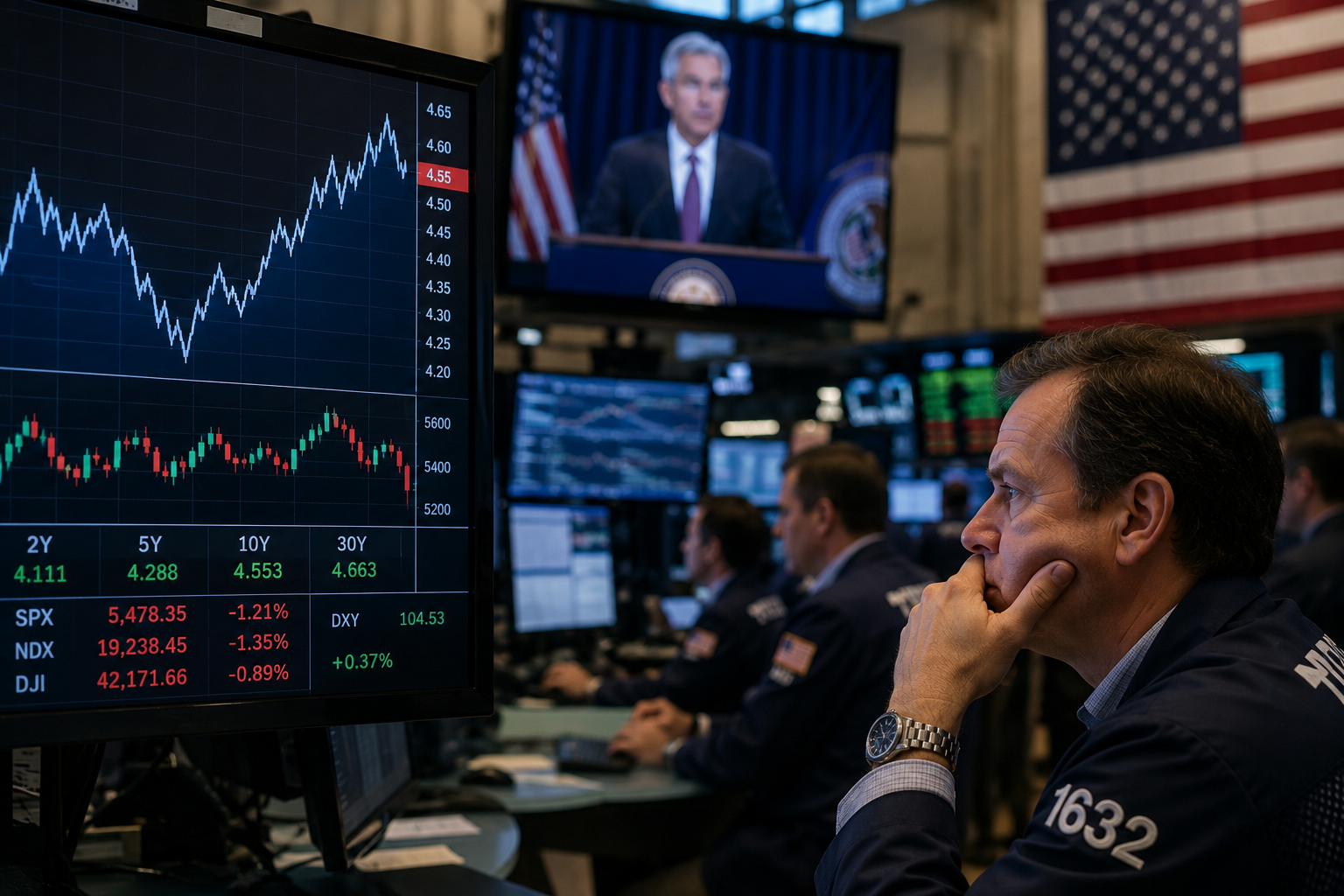
Wall Street entered June expecting a familiar Federal Reserve playbook. Instead, investors received a surprise that is rapidly reshaping market expectations, asset valuations, and portfolio strategies.
Federal Reserve Chair Kevin Warsh’s first policy meeting has become the defining market event of the week, and potentially one of the most consequential developments of 2026. By signaling a departure from the Fed’s traditional reliance on forward guidance and emphasizing a more data-dependent approach, Warsh has introduced a new layer of uncertainty into financial markets. Investors are now reassessing everything from future interest-rate expectations and equity valuations to bond yields and currency movements.
The immediate market reaction was swift. Treasury yields climbed, rate-sensitive sectors experienced increased volatility, and traders raised their expectations for additional interest-rate hikes before the end of the year. According to Reuters market coverage on June 18, investors are now adjusting to a Federal Reserve that may be less predictable and more responsive to incoming economic data than markets have grown accustomed to over the past decade.
For investors, this is not simply another Federal Reserve meeting. It is a potential turning point in how markets interpret monetary policy going forward.
A New Era for the Federal Reserve
For years, investors benefited from extensive forward guidance provided by Federal Reserve officials. Markets often received detailed indications about future policy intentions, helping reduce uncertainty and allowing investors to position portfolios accordingly.
Kevin Warsh appears determined to change that dynamic.
During his first meeting as Fed Chair, Warsh emphasized that future policy decisions will depend heavily on economic conditions rather than predetermined policy paths. While central bankers have always claimed to be data dependent, markets have historically relied on forward guidance to anticipate future actions.
The shift may sound subtle, but its implications are significant.
Without clear guidance regarding future rate moves, investors must place greater emphasis on inflation reports, employment data, consumer spending trends, manufacturing activity, and other economic indicators. Every major data release now has the potential to alter market expectations more dramatically than in previous years.
This evolving framework increases uncertainty, which often translates into greater volatility across financial markets.
Why Markets Are Repricing Interest Rates
The central issue facing investors is straightforward: higher rates for longer.
Before the latest Fed meeting, many market participants expected interest rates to gradually decline as inflation continued moving toward the central bank’s target. However, Warsh’s comments have led traders to reconsider that outlook.
Several economic factors are supporting the possibility of additional rate hikes:
Persistent Inflation Pressures
Although inflation has moderated from its post-pandemic highs, price pressures remain above the Federal Reserve’s long-term objective. Core inflation measures continue to indicate underlying strength in certain areas of the economy.
Resilient Labor Markets
Employment data remains relatively strong, supporting consumer spending and economic activity. While positive for growth, a resilient labor market can also make it more difficult for inflation to return fully to target levels.
Economic Growth Remains Stable
Despite higher borrowing costs, economic growth has remained stronger than many economists anticipated. Continued expansion reduces pressure on policymakers to ease monetary conditions.
Geopolitical and Supply-Chain Risks
Although recent progress on the U.S.-Iran agreement has reduced some energy market concerns, global supply-chain challenges and geopolitical uncertainties continue to present inflation risks.
Collectively, these factors have increased market expectations that rates could remain elevated longer than previously anticipated.
The Impact on Stocks
Equity investors are paying close attention because interest rates directly influence stock valuations.
Higher rates increase borrowing costs for businesses while reducing the present value of future earnings. This dynamic tends to affect growth stocks more significantly than value-oriented companies.
Technology and high-growth sectors often derive much of their valuation from expected future profits. When interest rates rise, those future earnings become less valuable in today’s dollars.
As a result, investors may see increased pressure on:
- High-growth technology companies
- Emerging software firms
- Unprofitable innovation-focused businesses
- Speculative market segments
At the same time, several sectors could benefit from the new environment.
Financials
Banks and financial institutions often benefit from higher interest rates because they can earn larger spreads between borrowing and lending rates.
Value Stocks
Companies with strong current cash flows and reasonable valuations tend to perform better when investors become more focused on earnings quality and profitability.
Dividend-Paying Companies
Income-generating stocks may become increasingly attractive as investors seek stability during periods of market uncertainty.
This rotation has already become a major discussion point among institutional investors and asset managers.
Bond Markets Are Sending a Message
While stock market headlines often dominate media coverage, bond markets may be providing the clearest signal regarding investor expectations.
Treasury yields moved higher following Warsh’s comments as investors adjusted expectations for future monetary policy. Rising yields typically indicate expectations for tighter financial conditions and higher future interest rates.
The bond market’s reaction is particularly important because it influences:
- Corporate borrowing costs
- Mortgage rates
- Consumer lending rates
- Business investment decisions
- Equity valuations
Investors should pay close attention to yield curve movements in the coming months, as they may provide valuable clues regarding economic growth expectations and future Fed actions.
Currency Markets and Global Implications
The Federal Reserve’s policy decisions extend far beyond U.S. borders.
A more hawkish Fed generally supports a stronger U.S. dollar by making dollar-denominated assets more attractive to global investors. Currency markets responded accordingly as traders reassessed relative interest-rate expectations.
A stronger dollar can create both opportunities and challenges.
For U.S. investors, it may help reduce imported inflation. However, multinational corporations often face earnings headwinds when foreign revenues are translated back into dollars.
Emerging markets can also experience increased pressure as capital flows toward higher-yielding U.S. assets.
This is one reason why Federal Reserve policy remains one of the most influential forces in global finance.
Why This Matters for Investors
The significance of Warsh’s first meeting extends beyond a single rate decision.
Markets are adapting to a potentially new operating environment where economic data carries greater influence and policy outcomes become harder to predict.
Investors who have become accustomed to highly transparent central-bank communication may need to adjust expectations.
Volatility is likely to increase around key economic reports, including:
- Consumer Price Index (CPI)
- Personal Consumption Expenditures (PCE) inflation
- Nonfarm payrolls
- Retail sales
- Manufacturing surveys
- GDP growth reports
These releases may now have a larger impact on market pricing than they did under previous policy frameworks.
Future Trends to Watch
Several developments will likely determine how markets evolve over the remainder of 2026:
Inflation Data
Persistent inflation remains the most important variable influencing future Fed decisions.
Labor Market Strength
Employment reports will continue shaping expectations regarding economic resilience and monetary policy.
Corporate Earnings
Investors should monitor whether companies can maintain profit growth amid elevated borrowing costs.
Interest-Rate Expectations
Treasury market movements will provide valuable insight into evolving investor sentiment.
Sector Rotation
The shift from growth-oriented investments toward value and income-producing assets could continue if rates remain elevated.
Key Investment Insight
Kevin Warsh’s first Federal Reserve meeting may ultimately be remembered as the moment markets began adapting to a new monetary policy era.
Higher-for-longer interest rates do not necessarily signal a bearish environment for investors, but they do change the rules of the game. Growth stocks may face valuation pressure, while financial institutions, dividend-paying companies, and cash-generating value stocks could become increasingly attractive.
Investors should focus on portfolio quality, balance-sheet strength, and earnings durability while preparing for greater volatility surrounding economic data releases. In a market driven by shifting expectations, flexibility and discipline may become some of the most valuable investment assets.
Stay informed with MoneyNews.Today for daily market-moving insights, expert analysis, and the latest developments shaping the global economy and financial markets.




