
For much of the past two years, technology investors have faced a difficult balancing act. On one side stood the extraordinary earnings potential of artificial intelligence, cloud computing, and semiconductor innovation. On the other stood persistent inflation concerns, elevated interest rates, and geopolitical tensions that threatened to disrupt global growth.
On June 18, 2026, the market received a development that could influence both sides of that equation.
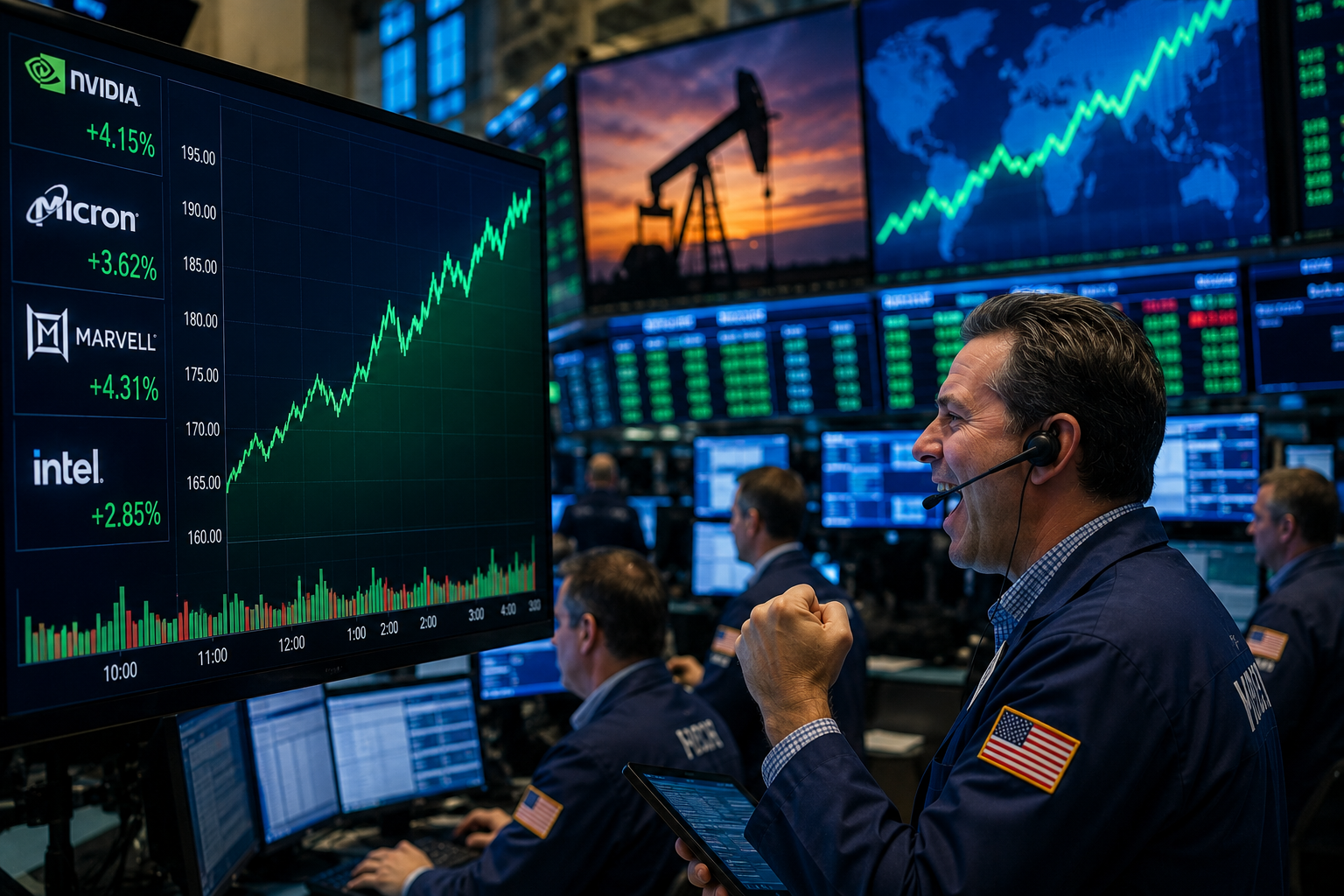
Technology stocks rallied after signs of progress toward a U.S.-Iran peace agreement helped drive oil prices lower and improve overall market sentiment. According to Reuters, major technology names including Nvidia, Micron, Marvell Technology, and Intel advanced as investors welcomed the prospect of reduced geopolitical risk and easing inflation pressures.
The market’s reaction underscores a crucial reality for investors: while artificial intelligence remains the dominant growth story in technology, macroeconomic factors such as energy prices, inflation expectations, and global stability continue to play a significant role in determining valuations.
As investors assess whether this rally has staying power, the intersection of geopolitics, inflation, and AI-driven growth is becoming one of the most important themes shaping technology markets in 2026.
Why the Market Is Reacting Positively
The connection between Middle East geopolitics and technology stocks may not appear obvious at first glance.
However, energy prices influence nearly every aspect of the global economy.
When oil prices rise sharply, transportation costs increase, manufacturing expenses climb, and inflationary pressures spread throughout supply chains. Central banks often respond by maintaining tighter monetary policies, which can negatively affect growth-oriented sectors such as technology.
Conversely, lower energy prices can help reduce inflation expectations.
The emerging U.S.-Iran agreement has fueled optimism that geopolitical tensions in the Middle East may ease, reducing concerns about disruptions to global energy markets. As a result, crude oil prices have moved lower, improving the outlook for inflation-sensitive sectors.
Technology companies are among the biggest beneficiaries of this shift.
Investors are increasingly betting that lower energy costs could support consumer spending, improve corporate margins, and reduce pressure on the Federal Reserve to maintain restrictive monetary policies indefinitely.
The result has been renewed enthusiasm for technology shares.
The AI Boom Remains the Dominant Growth Story
While geopolitics provided the catalyst for today’s rally, artificial intelligence remains the primary driver of technology-sector performance.
Over the past several years, AI-related spending has transformed from an emerging trend into one of the largest capital investment cycles in modern history.
According to industry estimates from firms such as McKinsey, Goldman Sachs, and Bloomberg Intelligence, global AI-related spending could reach trillions of dollars over the next decade as businesses invest in automation, machine learning, cloud infrastructure, and advanced computing systems.
This investment wave continues to benefit a broad ecosystem of companies.
Semiconductor Leaders
Companies such as Nvidia, Micron, Marvell Technology, and Intel remain at the center of the AI infrastructure buildout.
Advanced AI models require powerful graphics processors, high-bandwidth memory, networking hardware, and specialized chips capable of handling increasingly complex workloads.
Demand for these technologies has remained exceptionally strong throughout 2026.
Data Center Expansion
AI applications require enormous computing capacity, leading major technology firms to invest aggressively in data-center construction and expansion.
Cloud providers and enterprise software companies continue increasing capital expenditures to support AI deployment at scale.
Networking and Infrastructure Providers
As AI systems become larger and more interconnected, demand for networking equipment, advanced packaging technologies, and high-speed data-transfer solutions continues to accelerate.
The market’s focus remains firmly on identifying which companies are best positioned to capture this long-term growth opportunity.
Why Lower Inflation Matters for Technology Stocks
Technology companies often command premium valuations because investors expect significant earnings growth in the future.
The challenge is that higher interest rates can reduce the present value of those future earnings.
This is why inflation trends remain so important.
If lower oil prices contribute to easing inflation pressures, investors may become more comfortable assigning higher valuations to growth-oriented companies.
A more favorable inflation outlook can create several benefits:
Improved Consumer Spending
Lower energy costs leave consumers with more disposable income, supporting demand for smartphones, computers, software subscriptions, and digital services.
Higher Corporate Profitability
Businesses may experience reduced operating expenses, allowing more resources to be directed toward technology investments and AI initiatives.
Potentially Less Restrictive Monetary Policy
Although Federal Reserve Chair Kevin Warsh recently adopted a more data-dependent approach, softer inflation data could eventually reduce pressure for additional rate hikes.
This possibility is contributing to improved sentiment across the technology sector.
Nvidia Continues to Lead the AI Trade
Among the companies benefiting from today’s rally, Nvidia remains one of the most closely watched.
The company’s graphics processing units (GPUs) continue serving as the backbone of AI training and deployment across the technology industry. Demand for Nvidia’s products remains exceptionally strong as enterprises, cloud providers, and governments invest in AI infrastructure.
Many analysts view Nvidia as a barometer for broader AI spending trends.
If AI-related capital expenditures remain robust, Nvidia’s continued growth could provide support for the broader technology sector.
However, investors are also closely monitoring valuation levels.
The key question facing the market is whether AI-driven earnings growth can continue outpacing already elevated expectations.
Intel, Micron, and Marvell Gain Momentum
While Nvidia often dominates headlines, today’s rally highlights growing investor interest in other semiconductor players.
Intel
Intel has benefited from renewed enthusiasm surrounding domestic semiconductor manufacturing and AI infrastructure investment. The company’s efforts to expand U.S.-based production capacity align with broader government initiatives aimed at strengthening supply-chain resilience.
Micron Technology
Micron remains a critical supplier of memory technologies required for AI workloads. As AI models become larger and more sophisticated, demand for advanced memory solutions continues increasing.
Marvell Technology
Marvell’s networking and infrastructure products are becoming increasingly important as companies build larger and more interconnected AI systems.
Together, these companies represent key components of the AI infrastructure ecosystem that investors are increasingly targeting.
Why This Matters for Investors
The latest technology rally reflects more than just optimism surrounding geopolitical developments.
It highlights the growing relationship between macroeconomic conditions and AI-driven growth.
Technology remains the market’s leadership sector because it combines two powerful forces:
- Structural long-term growth from artificial intelligence.
- Potential cyclical benefits from easing inflation and improved economic conditions.
Investors are increasingly evaluating technology companies through both lenses.
Strong AI demand can support earnings growth, while improving macroeconomic conditions can support valuations.
This combination has created one of the most compelling investment narratives in global markets.
Future Trends to Watch
Several developments will likely determine whether the current rally continues:
AI Capital Spending
Investors should monitor whether technology companies maintain aggressive spending plans for AI infrastructure and computing resources.
Oil Prices and Inflation
Continued declines in energy prices could improve the outlook for inflation-sensitive growth sectors.
Federal Reserve Policy
Future inflation and employment data will influence expectations regarding interest rates and financial conditions.
Semiconductor Earnings
Results from leading chipmakers will provide valuable insight into the strength of AI demand.
Geopolitical Stability
Progress toward a lasting U.S.-Iran agreement could further reduce market uncertainty and support risk assets.
Key Investment Insight
The technology sector remains the market’s most influential growth engine, but its success increasingly depends on the interaction between AI-driven earnings growth and broader macroeconomic conditions.
The rally sparked by progress toward a U.S.-Iran agreement highlights how lower energy costs and reduced geopolitical risks can complement the powerful secular growth story created by artificial intelligence. Investors should closely monitor whether AI-related revenue growth continues to justify premium valuations as markets navigate a potentially higher-for-longer interest-rate environment.
Companies positioned at the center of AI infrastructure—including semiconductor manufacturers, memory suppliers, networking providers, and data-center operators—remain among the most important opportunities to watch in the second half of 2026.
Stay informed with MoneyNews.Today for daily market insights, breaking technology news, and expert analysis of the trends driving the future of investing.




