
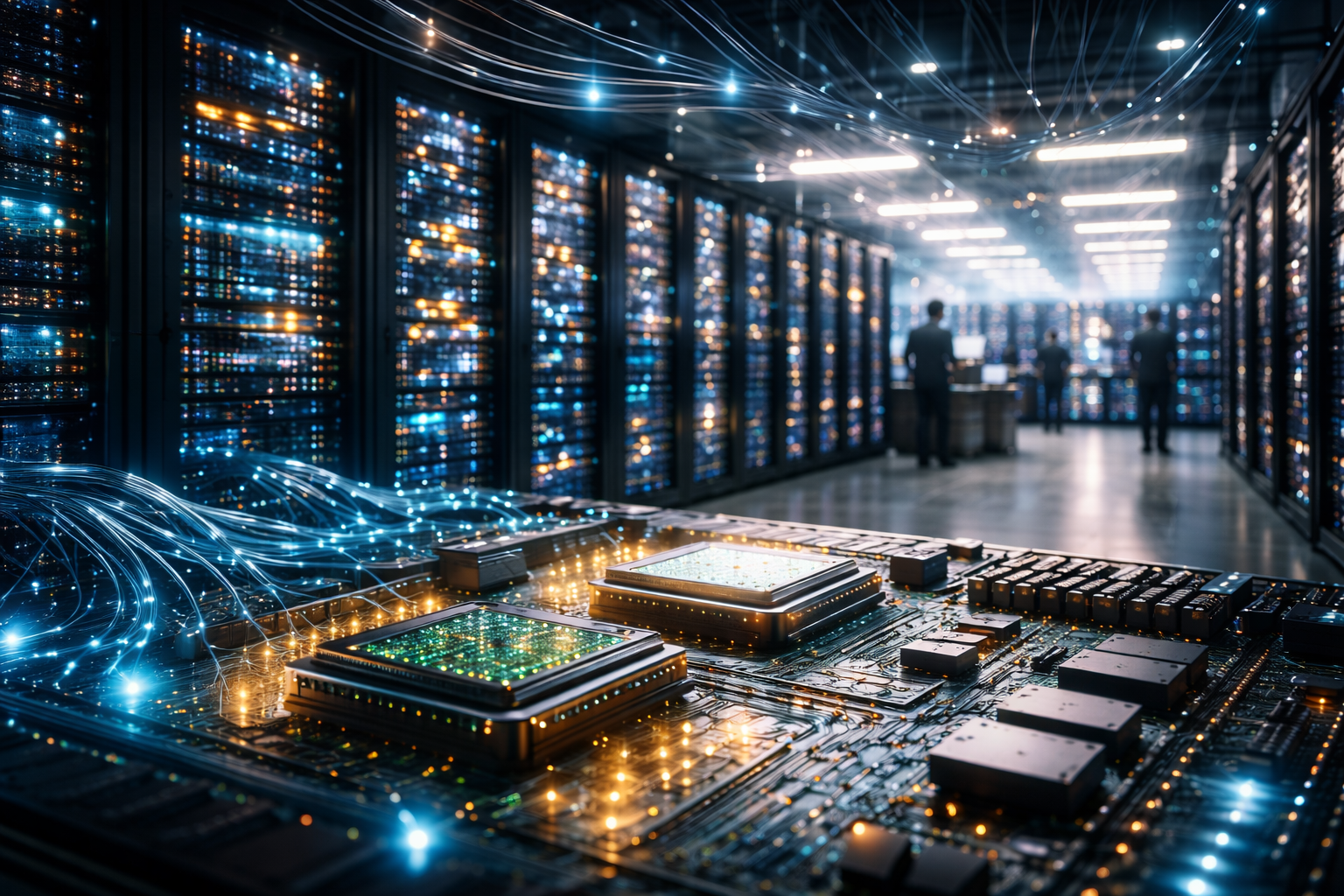
The AI arms race is no longer just about algorithms—it’s about infrastructure. Across markets and social media, one theme is dominating investor conversations: Big Tech is pouring unprecedented capital into AI data centers, even as power shortages and semiconductor constraints threaten to slow progress.
Companies like Microsoft, Amazon, and Alphabet are doubling down on AI infrastructure spending, signaling that the next phase of the AI boom will be defined not just by innovation—but by who can build, power, and scale it fastest.
For investors, this shift marks a critical inflection point. The winners of the AI era may not just be software leaders—but the companies enabling the physical backbone of artificial intelligence.
The Infrastructure Race Is Accelerating
According to recent reports from Bloomberg and CNBC (April 16, 2026), hyperscalers are significantly increasing capital expenditures to expand AI data center capacity. This includes investments in high-performance computing clusters, advanced GPUs, and next-generation networking systems.
This surge is being driven by explosive demand for generative AI, enterprise automation, and cloud-based AI services. From large language models to real-time inference systems, the computational requirements are growing exponentially.
However, this rapid expansion is running into real-world constraints:
- Power shortages are emerging as a major bottleneck, particularly in key data center hubs across North America.
- Semiconductor supply limitations—especially advanced AI chips—continue to restrict deployment timelines.
- Cooling and energy efficiency challenges are becoming increasingly complex as compute density rises.
Despite these headwinds, Big Tech is not slowing down. Instead, companies are accelerating investment, signaling confidence that demand will continue to outpace supply for years to come.
Why This Matters for Investors
This is not just another tech spending cycle—it’s a structural shift in how digital infrastructure is built and monetized.
Historically, cloud computing drove a decade-long investment boom. AI is now triggering a second, potentially larger wave of infrastructure expansion.
The implications are significant:
1. AI Capex Is Becoming a Secular Trend
Unlike cyclical tech investments, AI infrastructure spending appears to be long-term and persistent. Analysts cited by Bloomberg note that hyperscaler capex tied to AI is expected to grow at double-digit rates annually over the next several years.
This creates a durable demand environment—not just for AI software providers, but for the entire ecosystem supporting compute infrastructure.
2. The Value Chain Is Expanding
The AI boom is no longer confined to software companies. Instead, it’s spreading across multiple layers of the value chain:
- Semiconductors: Companies like Nvidia and Advanced Micro Devices remain central to AI compute.
- Energy Providers: Data centers are becoming massive electricity consumers, driving demand for reliable and scalable power sources.
- Cooling Technologies: Advanced cooling solutions are emerging as critical components of next-gen data centers.
- Networking & Infrastructure: High-speed connectivity is essential for scaling AI workloads efficiently.
For investors, this means opportunities are broadening beyond the obvious names.
3. Constraints Are Creating Pricing Power
Supply constraints—particularly in chips and power—are not just challenges; they’re also opportunities.
Limited supply often leads to:
- Higher pricing power for chip manufacturers
- Increased margins for infrastructure providers
- Strategic advantages for companies with secured supply chains
This dynamic could support elevated valuations across key segments of the AI ecosystem.
The Power Problem: AI’s Biggest Bottleneck
One of the most underappreciated risks—and opportunities—in the AI boom is energy.
AI data centers consume significantly more power than traditional cloud infrastructure. Training large models can require enormous amounts of electricity, and even inference workloads are energy-intensive at scale.
According to industry estimates referenced by CNBC, AI-driven data center demand could increase electricity consumption by double-digit percentages in key regions over the next decade.
This is forcing Big Tech to rethink its energy strategy:
- Long-term power purchase agreements (PPAs) are becoming more common
- Investments in renewable energy and nuclear solutions are accelerating
- Grid infrastructure is emerging as a critical constraint
For investors, this opens up a new dimension of the AI trade—energy.
Utilities, renewable developers, and even nuclear energy firms could become indirect beneficiaries of AI growth.
Semiconductor Constraints: Still a Defining Factor
While demand for AI chips continues to surge, supply remains tight—particularly for advanced GPUs and specialized AI accelerators.
Companies like Nvidia continue to dominate the space, but competitors such as Advanced Micro Devices are gaining traction as customers seek diversification.
At the same time, manufacturing capacity remains a limiting factor. Advanced chip production is highly concentrated, and scaling it requires significant time and capital.
This creates several implications:
- Sustained demand for leading-edge chips
- Potential for supply-driven price increases
- Strategic importance of semiconductor supply chains
In other words, semiconductors remain the backbone of the AI economy—and one of its most critical chokepoints.
Future Trends to Watch
As the AI infrastructure race intensifies, several key trends are emerging that investors should monitor closely:
1. Vertical Integration by Big Tech
Companies are increasingly building their own chips, data centers, and energy solutions to reduce reliance on external suppliers.
2. Geographic Expansion of Data Centers
To mitigate power constraints, firms are exploring new regions with abundant energy resources and favorable regulations.
3. Rise of Alternative Energy Sources
Nuclear and renewable energy are gaining traction as scalable solutions for powering AI infrastructure.
4. Increased Competition in AI Hardware
New entrants and partnerships could reshape the competitive landscape in semiconductors and infrastructure.
5. Regulatory and Environmental Pressures
As energy consumption rises, governments may introduce policies affecting data center expansion and energy usage.
What Smart Money Is Watching
Institutional investors are increasingly focusing on second-order effects of the AI boom.
Rather than chasing crowded trades in mega-cap tech, capital is flowing into:
- Infrastructure enablers
- Energy suppliers
- Specialized hardware providers
- Industrial companies tied to data center construction
This reflects a broader shift toward identifying “picks and shovels” opportunities—companies that benefit regardless of which AI platform ultimately wins.
Key Investment Insight
AI infrastructure spending is not a short-term trend—it’s a foundational shift in the global economy.
Investors should look beyond headline AI names and focus on the broader ecosystem:
- Semiconductors remain core beneficiaries of sustained demand
- Energy and utilities are emerging as critical enablers
- Cooling and data center technologies represent niche but high-growth opportunities
The most compelling opportunities may lie in companies that solve the bottlenecks—power, chips, and scalability.
Stay Ahead of the Curve
The AI revolution is entering its infrastructure phase—and that’s where long-term value is being built.
For investors looking to navigate this rapidly evolving landscape, staying informed is critical. Follow MoneyNews.Today for daily insights, breaking developments, and actionable analysis that helps you stay one step ahead in global markets.




