
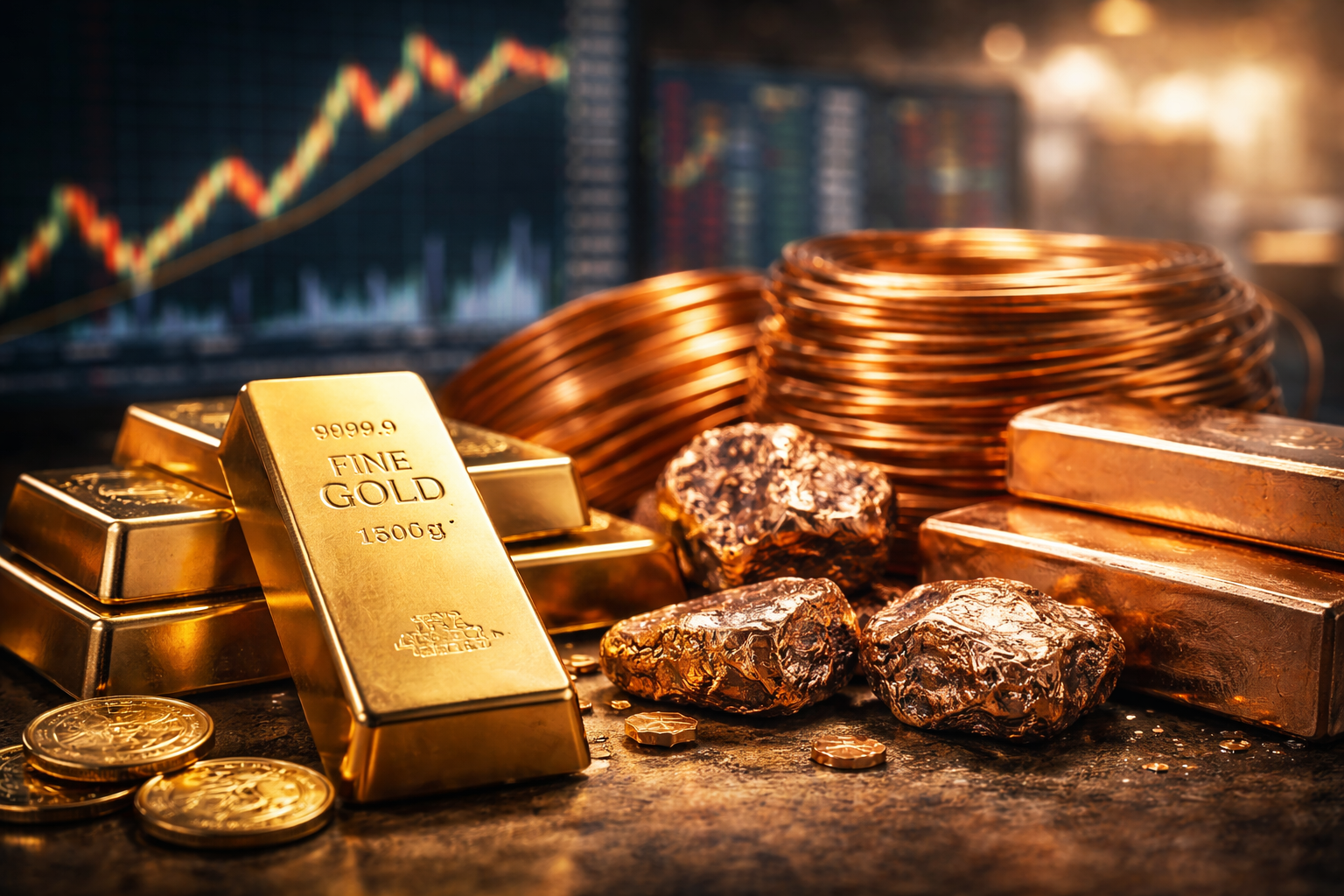
Commodities are back in focus—and this time, the drivers are both defensive and structural.
As geopolitical tensions rise and global supply chains face renewed pressure, investors are turning to hard assets for both protection and growth. Gold is climbing as a traditional safe haven, while copper—often referred to as “the metal of the future”—is rallying on tightening supply and surging demand tied to electrification and AI infrastructure.
According to Reuters and The Wall Street Journal (April 16, 2026), mining stocks are benefiting from this dual dynamic, positioning the metals and mining sector as one of the most strategically important areas in today’s market.
For investors, the message is clear: commodities are no longer just cyclical trades—they are becoming core components of long-term portfolios.
A Tale of Two Metals: Safety Meets Growth
The simultaneous rise of gold and copper reflects two distinct—but increasingly interconnected—market forces.
- Gold is responding to uncertainty
- Copper is responding to transformation
Gold’s rally is being driven by geopolitical risks, currency fluctuations, and concerns about global stability. As tensions escalate in key regions, investors are seeking assets that can preserve value during periods of volatility.
Copper, on the other hand, is benefiting from long-term structural trends:
- Electrification of transportation
- Expansion of renewable energy
- Growth in AI and data center infrastructure
These trends are driving sustained demand for copper, even as supply struggles to keep pace.
Together, these metals tell a broader story about the current market environment—one defined by both risk and opportunity.
Why This Matters for Investors
The renewed strength in commodities is not happening in isolation. It reflects deeper shifts in the global economy and investment landscape.
1. Commodities Are Regaining Strategic Importance
For years, commodities were often viewed as secondary assets—useful for diversification but not central to portfolio construction.
That perception is changing.
With rising geopolitical risks and structural demand drivers, commodities are becoming:
- Key hedges against uncertainty
- Critical inputs for future technologies
- Drivers of long-term investment themes
This shift is bringing renewed attention—and capital—into the sector.
2. Diversification Is Back in Focus
The recent rally highlights the importance of diversification in uncertain markets.
While equities and bonds remain sensitive to interest rate changes, commodities offer:
- Low correlation to traditional assets
- Protection against inflation
- Exposure to real economic activity
For investors navigating volatile conditions, this diversification can be invaluable.
3. Mining Stocks Are Leveraged Plays
Mining companies provide leveraged exposure to commodity prices.
As gold and copper prices rise, mining stocks often experience amplified gains due to:
- Operating leverage
- Improved margins
- Increased cash flow
This makes them attractive options for investors looking to capitalize on commodity trends.
Gold: The Return of the Safe Haven
Gold’s resurgence is closely tied to the current geopolitical environment.
As tensions rise globally, investors are seeking assets that can preserve value in uncertain times. Gold has historically played this role, acting as a hedge against:
- Political instability
- Currency devaluation
- Market volatility
Reuters reports that recent geopolitical developments have pushed gold prices higher, with increased demand from both institutional and retail investors.
At the same time, macroeconomic factors are also supporting gold:
- Uncertainty around interest rate trajectories
- Fluctuations in the U.S. dollar
- Concerns about inflation persistence
While higher interest rates can sometimes weigh on gold, the current environment of uncertainty is offsetting that pressure.
For investors, gold is once again proving its relevance as a defensive asset.
Copper: The Metal Powering the Future
If gold represents safety, copper represents growth.
Copper is essential to modern infrastructure and technology. Its applications span:
- Electric vehicles
- Renewable energy systems
- Power grids
- Data centers and AI infrastructure
As these sectors expand, demand for copper is accelerating.
At the same time, supply is facing constraints:
- Limited new mining projects
- Operational disruptions in key producing regions
- Long lead times for capacity expansion
The Wall Street Journal highlights that this imbalance between supply and demand is driving copper prices higher—and could continue to do so in the coming years.
For investors, copper offers exposure to some of the most powerful long-term trends shaping the global economy.
The Supply Side: A Critical Constraint
One of the most important factors driving the current rally is supply.
Unlike financial assets, commodities are constrained by physical production. Increasing supply requires:
- Significant capital investment
- Regulatory approvals
- Years of development
This creates a lag between rising demand and increased supply, leading to price pressure.
In the case of copper, this lag is particularly pronounced. Many existing mines are aging, and new projects face environmental and regulatory challenges.
For gold, supply growth is also limited, further supporting prices during periods of strong demand.
These constraints are a key reason why commodities can experience sustained price movements.
Future Trends to Watch
As the metals and mining sector evolves, several key trends are emerging:
1. Continued Geopolitical Volatility
Ongoing tensions could sustain demand for safe-haven assets like gold.
2. Electrification and Energy Transition
Copper demand is expected to grow as economies transition toward cleaner energy systems.
3. AI Infrastructure Expansion
Data centers and AI technologies are becoming significant drivers of metal demand.
4. Supply Chain Challenges
Limited supply growth could continue to support higher prices.
5. Increased Institutional Interest
Commodities are attracting more attention from institutional investors seeking diversification and long-term growth.
What Smart Money Is Watching
Institutional investors are increasingly focusing on the strategic role of commodities in portfolios.
Key areas of interest include:
- Gold as a hedge against macro uncertainty
- Copper as a growth play tied to structural trends
- Mining companies with strong balance sheets and low production costs
- Opportunities in related sectors such as energy and infrastructure
This reflects a broader shift toward recognizing commodities as essential components of modern investment strategies.
Key Investment Insight
The current rally in gold and copper highlights a powerful combination of forces:
- Geopolitical risk driving demand for safe-haven assets
- Structural growth driving demand for industrial metals
For investors, this creates a dual opportunity:
- Gold provides protection in uncertain markets
- Copper offers exposure to long-term growth trends
Positioning portfolios to capture both dynamics could be a key strategy in the current environment.
Stay Ahead of the Market
As commodities regain prominence in global markets, staying informed is essential for identifying opportunities and managing risk.
Follow MoneyNews.Today for daily insights, expert analysis, and actionable intelligence on the trends shaping the metals, mining, and broader financial landscape.




