The artificial intelligence revolution may have started with software, but investors are increasingly discovering that the next wave of opportunity lies in something far more tangible: infrastructure.
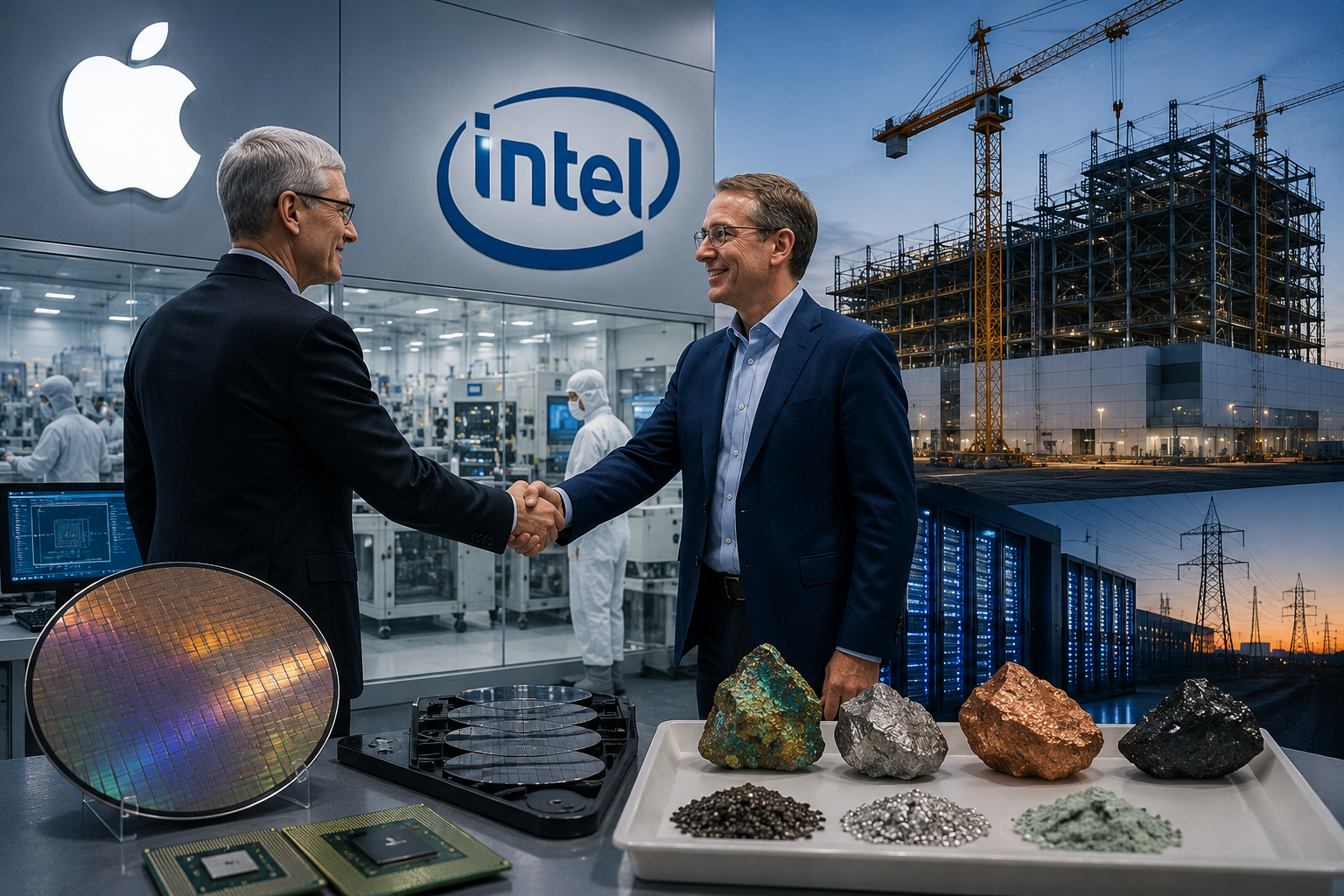
That reality came into sharper focus on June 18 after reports that Apple plans to partner with Intel on U.S.-based semiconductor manufacturing, sending Intel shares sharply higher and reigniting investor enthusiasm for America’s growing AI infrastructure ecosystem. According to Reuters, the reported partnership underscores a broader trend that is reshaping technology markets—AI spending is expanding well beyond software applications and into the physical assets required to power the next generation of computing.
For investors, the significance extends far beyond Apple and Intel.
The AI boom is rapidly evolving into one of the largest industrial buildouts in modern history. Semiconductor fabrication plants, advanced packaging facilities, data centers, networking infrastructure, power generation assets, and electrical grid upgrades are increasingly becoming the foundation of the AI economy. As a result, investors are beginning to shift their attention from the companies creating AI applications to the businesses supplying the “picks and shovels” that make those applications possible.
The reported Apple-Intel partnership may ultimately be remembered as another milestone in that transformation.
AI Is No Longer Just a Software Story
Over the past three years, the stock market’s AI narrative has largely been dominated by software platforms, cloud computing providers, and advanced AI models.
Companies capable of developing powerful large language models and AI-powered applications attracted enormous investor interest. The success of generative AI fueled unprecedented demand for computing resources and sparked one of the strongest technology investment cycles in decades.
However, as AI adoption accelerates, a new challenge has emerged.
Running advanced AI systems requires enormous amounts of computational power. Training sophisticated models can involve thousands of high-performance processors operating simultaneously across massive data centers. Deploying AI at scale requires extensive networking infrastructure, advanced memory systems, cooling technologies, and reliable electricity supplies.
As a result, the market’s focus is broadening.
Investors are increasingly recognizing that AI’s long-term growth potential depends not only on software innovation but also on the infrastructure supporting it.
The Apple-Intel development highlights this shift perfectly.
Why the Apple-Intel Partnership Matters
While the financial details of the reported partnership remain limited, the strategic implications are significant.
Apple has historically relied on a highly globalized semiconductor supply chain. A deeper relationship with Intel’s U.S.-based manufacturing operations would reinforce a growing trend toward domestic production and supply-chain diversification.
This trend is being driven by several powerful forces:
Rising AI Demand
The need for advanced processors continues growing as AI applications expand across industries.
Supply-Chain Resilience
Governments and corporations remain focused on reducing vulnerabilities exposed by previous supply-chain disruptions.
National Security Considerations
Semiconductors have become increasingly important to economic competitiveness and national security.
Industrial Policy Support
Programs such as the CHIPS and Science Act continue encouraging investments in domestic semiconductor manufacturing.
For Intel, a partnership with one of the world’s most valuable technology companies would represent a major validation of its foundry strategy and manufacturing capabilities.
For investors, it reinforces the idea that semiconductor manufacturing capacity itself is becoming an increasingly valuable strategic asset.
The AI Infrastructure Investment Boom
The Apple-Intel story is part of a much larger trend that is reshaping global capital spending.
Technology companies are investing billions of dollars in AI infrastructure at a pace rarely seen outside major industrial revolutions.
Industry research from McKinsey, Goldman Sachs, and leading technology analysts suggests that AI-related infrastructure spending could reach hundreds of billions of dollars annually over the coming decade.
This spending is flowing into several key areas:
Semiconductor Fabrication
Advanced chip production remains one of the most critical components of the AI ecosystem.
Building a modern semiconductor fabrication facility can require investments exceeding $20 billion, creating substantial opportunities for equipment suppliers, materials companies, and manufacturing specialists.
Advanced Packaging
As AI processors become more powerful, advanced packaging technologies are becoming increasingly important.
Many industry experts believe advanced packaging may become one of the fastest-growing segments within the semiconductor industry as demand for high-performance computing accelerates.
Data Centers
Artificial intelligence workloads require vast amounts of computing capacity.
Major cloud providers and technology companies continue announcing new data-center projects designed specifically for AI applications.
Networking Infrastructure
AI systems generate enormous volumes of data that must move quickly between processors, storage systems, and cloud environments.
This is driving demand for networking hardware, optical technologies, and high-speed connectivity solutions.
Energy Infrastructure
Perhaps the most overlooked aspect of the AI boom is electricity demand.
Large AI data centers consume significant amounts of power, creating opportunities for utilities, power-generation companies, grid operators, and energy infrastructure providers.
Why Investors Are Expanding Their Focus
The first phase of the AI rally largely rewarded software companies and AI chip designers.
The next phase may be much broader.
Many investors are beginning to evaluate opportunities across the entire AI supply chain rather than focusing exclusively on the most visible AI names.
This shift is important because infrastructure providers often benefit from long-term capital spending cycles that can last for years.
Unlike software adoption trends, infrastructure investments typically involve multi-year projects supported by large budgets and strategic commitments.
As a result, companies involved in semiconductor manufacturing, equipment production, memory technologies, data-center construction, and power infrastructure may enjoy sustained demand growth even as individual AI applications evolve.
The market increasingly views these businesses as essential enablers of AI rather than secondary beneficiaries.
Government Policy Is Accelerating the Trend
Another reason investors are paying close attention to AI infrastructure is the growing role of government support.
Across North America, Europe, and Asia, policymakers are treating semiconductor manufacturing and AI infrastructure as strategic priorities.
The United States has committed significant resources to strengthening domestic chip production through the CHIPS and Science Act and related initiatives. Similar efforts are underway in allied countries seeking to reduce dependence on concentrated global supply chains.
Recent G7 discussions have further emphasized the importance of securing technology supply chains, critical minerals, and advanced manufacturing capabilities.
These policy initiatives provide an additional layer of support for companies participating in the AI infrastructure buildout.
For investors, this means the sector is benefiting from both commercial demand and government-backed strategic priorities.
Future Trends to Watch
Several developments could shape the next phase of the AI infrastructure boom.
Domestic Semiconductor Manufacturing Expansion
Additional partnerships between major technology firms and domestic manufacturers could accelerate investment across the supply chain.
Advanced Packaging Growth
Demand for sophisticated packaging solutions is expected to rise alongside increasingly complex AI processors.
Data-Center Construction
Technology companies continue expanding computing capacity to support AI workloads, creating opportunities throughout the infrastructure ecosystem.
Energy and Power Demand
Electricity consumption from AI data centers is becoming a major investment theme, benefiting utilities and energy providers.
Supply-Chain Localization
Governments and corporations remain focused on securing reliable access to critical technology infrastructure and manufacturing capacity.
Key Investment Insight
The reported Apple-Intel partnership highlights one of the most important shifts occurring in financial markets today: artificial intelligence is becoming an infrastructure-driven investment story.
While software innovation will remain a crucial part of AI’s growth trajectory, some of the most significant opportunities may emerge among the companies building the physical foundations of the AI economy. Semiconductor manufacturers, foundries, advanced packaging firms, memory suppliers, networking providers, data-center operators, and power infrastructure companies are increasingly positioned to benefit from a multi-year capital spending cycle.
Investors who focus solely on AI applications may overlook a broader opportunity unfolding across the industrial backbone of artificial intelligence. As capital spending continues expanding, the next generation of AI winners may be the companies enabling the revolution rather than the companies merely using it.
Stay informed with MoneyNews.Today for daily investor insights, breaking technology news, and in-depth analysis of the trends shaping the future of global markets.