
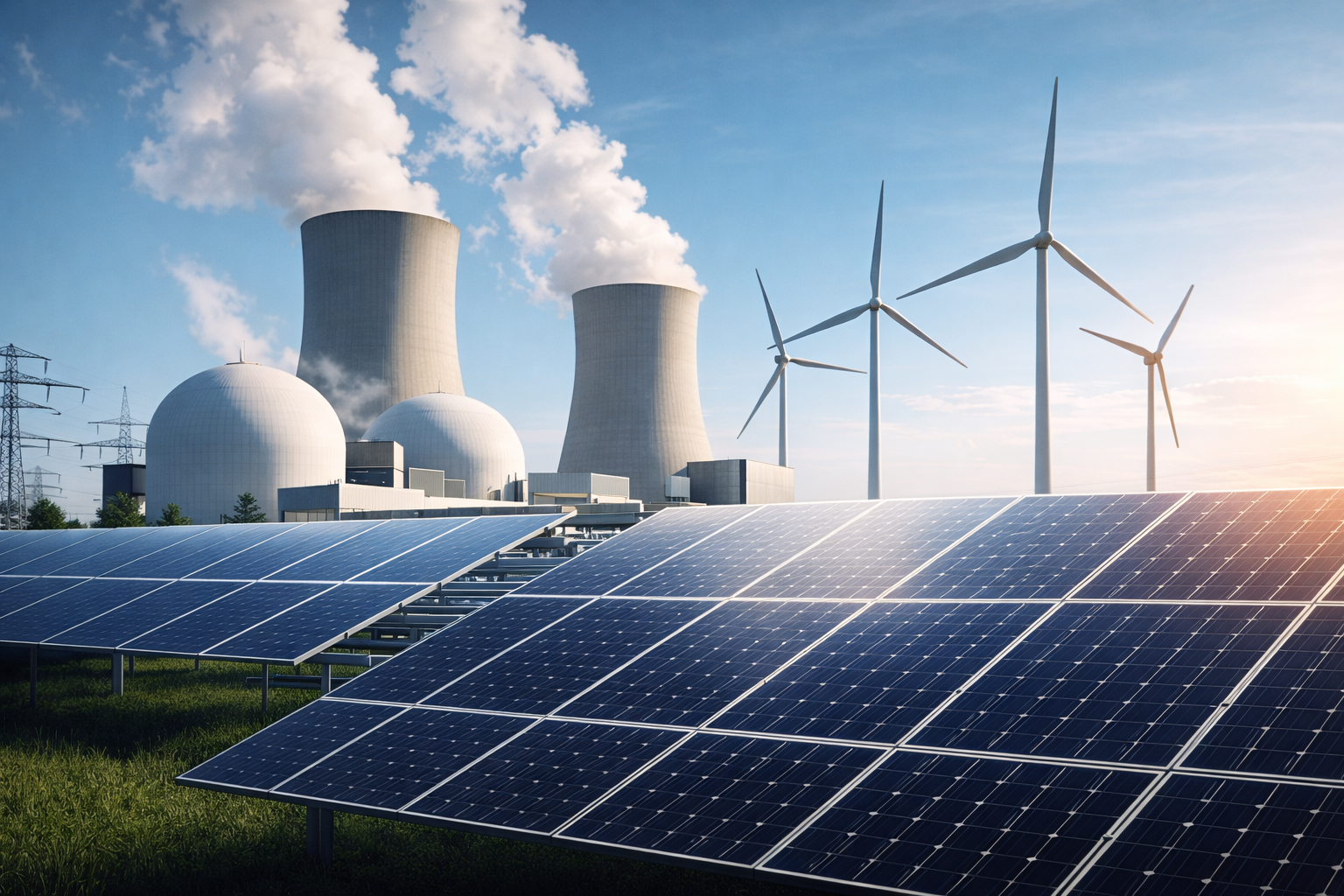
The artificial intelligence boom is hitting a hard physical limit—and it’s not chips, data, or talent. It’s power.
As AI infrastructure scales at an unprecedented pace, a new reality is emerging across global markets: energy is becoming the defining constraint of technological growth. From hyperscale data centers to advanced AI training clusters, the electricity required to power this revolution is surging—and governments and corporations are scrambling to keep up.
According to recent reporting from Financial Times and Reuters (April 16, 2026), North America is witnessing a sharp acceleration in investment into nuclear energy and next-generation clean power solutions, particularly small modular reactors (SMRs). What was once a niche segment of the energy market is now rapidly becoming central to the future of AI—and a compelling long-term opportunity for investors.
AI’s Energy Appetite Is Reshaping Markets
The rise of artificial intelligence has dramatically altered the energy equation.
Training large-scale AI models and running inference workloads require enormous computational power—and, by extension, vast amounts of electricity. Data centers, once seen as passive infrastructure, are now among the fastest-growing consumers of power globally.
Industry estimates cited by Reuters suggest that AI-related electricity demand could increase total data center power consumption by double-digit percentages over the next decade. In key regions of the United States and Canada, this demand is already straining grid capacity.
This is creating a structural imbalance:
- AI demand is accelerating exponentially
- Energy infrastructure is expanding incrementally
Bridging that gap is becoming one of the most critical challenges—and opportunities—of this decade.
Why Nuclear Energy Is Back in Focus
For years, nuclear energy was sidelined in favor of renewables like wind and solar. But the AI era is forcing a reassessment.
Unlike intermittent energy sources, nuclear power offers:
- Consistent, baseload electricity
- High output with low carbon emissions
- Scalability for large industrial applications
This makes it particularly well-suited for powering AI data centers, which require uninterrupted, high-density energy supply.
Governments and private firms are now accelerating investments in nuclear infrastructure, with a particular focus on small modular reactors (SMRs)—a next-generation approach to nuclear energy that promises faster deployment, lower costs, and greater flexibility.
Financial Times reports that several North American initiatives are moving forward, supported by policy incentives and growing private sector interest.
For investors, this marks a significant shift: nuclear energy is transitioning from a politically sensitive legacy industry to a strategic growth sector.
The Rise of Small Modular Reactors (SMRs)
At the center of this energy transition are SMRs.
Unlike traditional nuclear plants, which require massive upfront capital and long construction timelines, SMRs are:
- Smaller and more modular in design
- Faster to deploy
- Potentially more cost-efficient
- Easier to integrate with existing infrastructure
These advantages are attracting attention from both governments and corporations seeking scalable energy solutions for AI workloads.
Reuters highlights that multiple SMR projects are currently in development across the U.S. and Canada, with partnerships forming between energy companies, technology firms, and policymakers.
While the technology is still in early stages of commercialization, the investment momentum is building—and with it, investor interest.
Why This Matters for Investors
The convergence of AI and energy is creating a multi-layered investment opportunity that extends far beyond traditional tech stocks.
1. Energy Is Becoming a Bottleneck—and a Catalyst
The rapid growth of AI is exposing limitations in existing energy infrastructure. This constraint is not just a risk—it’s a catalyst for capital deployment.
As demand outpaces supply, investment is flowing into:
- Nuclear energy
- Uranium production
- Renewable energy expansion
- Grid modernization
This creates a broad opportunity set across multiple sectors.
2. A Multi-Decade Investment Theme Is Emerging
Unlike short-term market trends, energy infrastructure investments are inherently long-term.
Building nuclear plants, expanding grids, and scaling energy production requires years—often decades—of sustained capital investment. This aligns with the long-term growth trajectory of AI.
For investors, this means:
- Predictable demand growth
- Long investment horizons
- Potential for stable, recurring returns
3. Diversification Beyond Big Tech
While companies like Microsoft, Amazon, and Alphabet are leading the AI charge, the energy sector represents a less crowded—and potentially undervalued—entry point into the AI theme.
This allows investors to gain exposure to AI growth without relying solely on high-valuation tech stocks.
The Role of Uranium and Supply Chains
Nuclear energy investment naturally drives demand for uranium—the key fuel for reactors.
As interest in nuclear power grows, uranium markets are tightening. Supply constraints, combined with rising demand, are pushing prices higher and attracting investor attention.
This dynamic mirrors trends seen in other resource-driven markets:
- Limited supply meets accelerating demand
- Prices rise, incentivizing new production
- Investment flows into mining and exploration
For investors, uranium represents a leveraged play on the nuclear energy theme.
At the same time, supply chains for nuclear technology—including reactor components and engineering expertise—are becoming strategically important.
Grid Infrastructure: The Overlooked Opportunity
While nuclear and renewables dominate headlines, one critical piece of the puzzle often goes overlooked: the grid.
Expanding energy production is only part of the challenge. Delivering that energy efficiently requires modern, resilient grid infrastructure.
In many regions, existing grids are not equipped to handle the surge in demand from AI data centers. Upgrading these systems will require significant investment in:
- Transmission lines
- Energy storage solutions
- Smart grid technologies
This creates additional opportunities for investors in industrial and infrastructure sectors.
Future Trends to Watch
As the intersection of AI and energy continues to evolve, several key trends are emerging:
1. Tech-Energy Partnerships
Technology companies are increasingly partnering with energy providers to secure long-term power supply agreements.
2. Policy Support for Nuclear Energy
Governments are revisiting nuclear policies, offering incentives and regulatory support for new projects.
3. Acceleration of SMR Deployment
As technology matures, SMRs could become a mainstream solution for industrial-scale energy needs.
4. Integration of Renewables and Storage
Hybrid energy systems combining nuclear, renewables, and storage are gaining traction.
5. Global Competition for Energy Resources
As AI demand grows globally, competition for energy resources could intensify, influencing geopolitical dynamics.
What Smart Money Is Watching
Institutional investors are increasingly positioning themselves around the energy-AI nexus.
Rather than focusing solely on AI software, they are targeting:
- Energy producers
- Nuclear technology developers
- Uranium miners
- Infrastructure and grid companies
This reflects a broader understanding that the AI revolution is as much about physical infrastructure as it is about digital innovation.
Key Investment Insight
Energy is no longer just a supporting player in the AI story—it’s becoming the central constraint and, therefore, one of the most powerful investment themes.
As capital flows into nuclear energy, uranium, and grid infrastructure, investors have an opportunity to position themselves at the intersection of two transformative trends: AI and clean energy.
The most compelling opportunities may lie in companies that enable scalability—those solving the power bottleneck that could define the pace of AI adoption.
Stay Ahead of the Curve
The race to power AI is just beginning, and the investment landscape is shifting rapidly as a result.
For investors seeking to identify long-term opportunities and navigate emerging trends, staying informed is essential. Follow MoneyNews.Today for daily insights, in-depth analysis, and actionable intelligence on the forces shaping global markets.




