
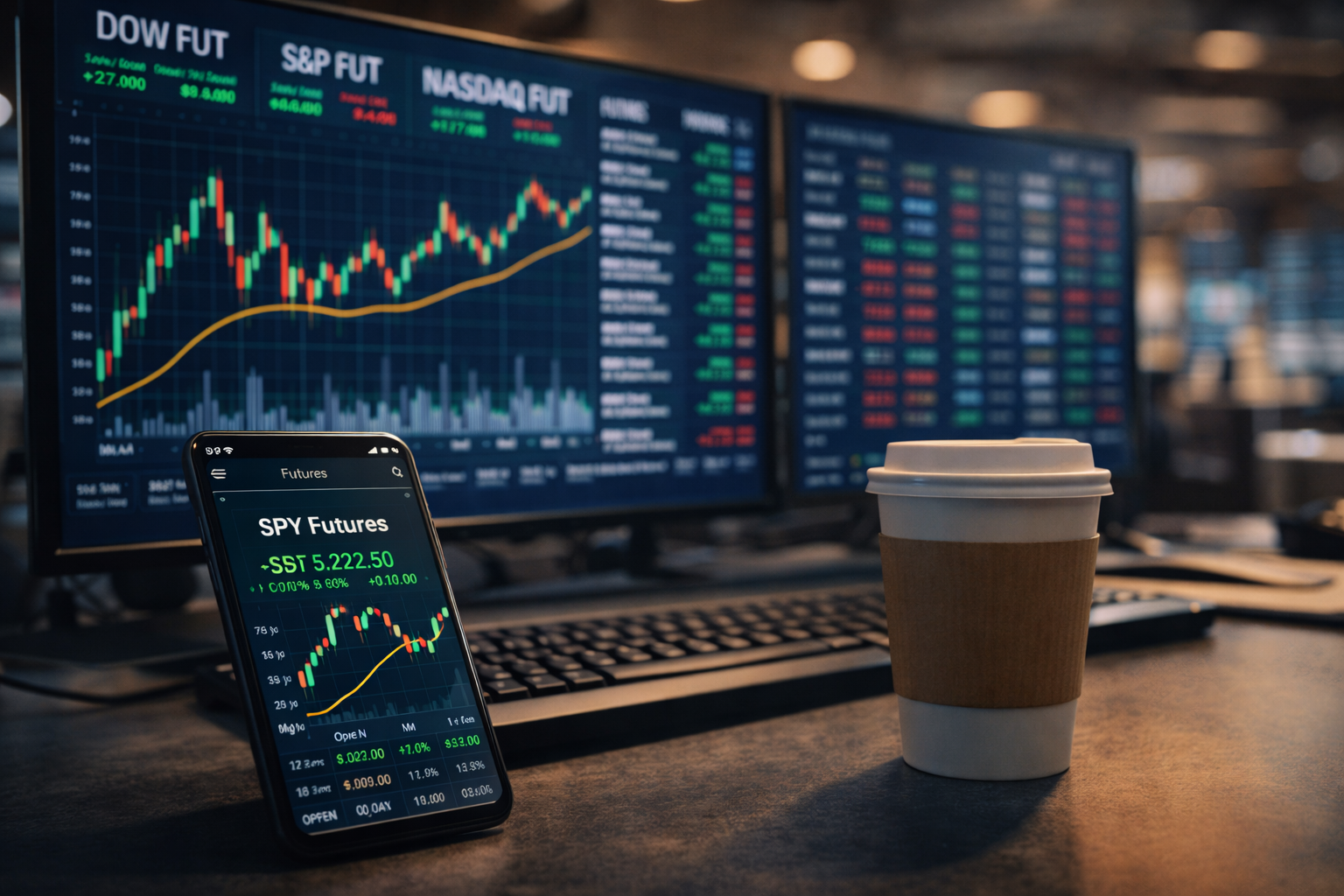
Markets are searching for direction—and right now, the only certainty is uncertainty.
After weeks of sharp swings driven by shifting expectations around interest rates, U.S. equity futures are beginning to stabilize. But beneath the surface calm, investors remain deeply divided on one critical question: when—and how aggressively—will the Federal Reserve begin cutting rates?
According to Bloomberg and Reuters (April 16, 2026), recent volatility has been fueled by conflicting economic signals—resilient labor markets, sticky inflation, and uneven growth data. As a result, investors are recalibrating their positioning, balancing optimism about economic strength with caution about prolonged tight monetary policy.
This is not a typical market pause. It’s a recalibration phase—and for investors, it presents both risk and opportunity.
A Market Caught Between Growth and Policy
The current market environment reflects a classic tension: economic resilience versus monetary restraint.
On one hand, economic data continues to show strength:
- Labor markets remain relatively tight
- Consumer spending has held up better than expected
- Corporate earnings have shown pockets of resilience
On the other hand, inflation remains stubbornly above target, forcing the Federal Reserve to maintain a cautious stance.
This has led to a “higher-for-longer” narrative around interest rates—one that has significant implications for asset pricing across the board.
Reuters notes that futures markets are now pricing in fewer and later rate cuts than previously expected, a shift that has contributed to recent volatility in equities.
For investors, this creates a challenging environment: strong fundamentals are being offset by restrictive policy.
Why This Matters for Investors
Interest rates are the single most important driver of market valuations—and right now, they are highly uncertain.
1. Valuations Are Under Pressure
Higher interest rates increase the discount rate used to value future earnings, which disproportionately affects growth stocks—particularly in sectors like technology.
Even small changes in rate expectations can lead to significant swings in equity valuations, as seen in recent weeks.
2. Volatility Is Becoming Structural
The market is no longer reacting to isolated data points—it’s reacting to the evolving narrative around rates.
This creates a feedback loop:
- Economic data influences rate expectations
- Rate expectations drive market movements
- Market movements reshape investor sentiment
As long as uncertainty around rates persists, volatility is likely to remain elevated.
3. Sector Rotation Is Accelerating
In a higher-rate environment, capital tends to shift toward sectors that are less sensitive to borrowing costs and more resilient to economic fluctuations.
These include:
- Financials
- Energy
- Industrials
- Select defensive sectors like healthcare and consumer staples
This rotation is already underway, with investors repositioning portfolios to align with the new macro reality.
The Data Dilemma: Mixed Signals Everywhere
One of the biggest challenges facing investors is the inconsistency of economic data.
Recent reports highlighted by Bloomberg show:
- Inflation is cooling—but not fast enough
- Employment remains strong—but showing early signs of softening
- Growth is stable—but uneven across sectors
This mixed picture makes it difficult for policymakers—and investors—to form a clear outlook.
The Federal Reserve has emphasized a data-dependent approach, meaning each new economic release has the potential to shift expectations dramatically.
For markets, this translates into:
- Increased sensitivity to economic data
- Rapid repricing of assets
- Shorter market cycles
Futures Stabilization: Calm or Pause?
The recent stabilization in U.S. futures may appear reassuring, but it’s important to understand what it represents.
This is not necessarily a sign of renewed bullish momentum. Instead, it reflects:
- Positioning adjustments by institutional investors
- A temporary balance between buyers and sellers
- A pause as markets await clearer signals
Historically, periods of stabilization following volatility often precede the next significant move—either higher or lower.
The direction will largely depend on:
- Upcoming inflation data
- Central bank communication
- Broader macroeconomic trends
In other words, the current calm may be temporary.
Rate Sensitivity: The Dominant Market Force
If there is one theme defining the current market, it is rate sensitivity.
Virtually every asset class—from equities to bonds to currencies—is reacting to changes in interest rate expectations.
This is particularly evident in:
- Growth stocks, which are highly sensitive to discount rates
- Bond yields, which directly reflect rate expectations
- Currency markets, where rate differentials drive capital flows
Bloomberg analysts note that even minor shifts in rate outlooks are triggering outsized market reactions, highlighting just how dependent valuations have become on monetary policy.
For investors, this underscores the importance of monitoring macro signals—not just company fundamentals.
Future Trends to Watch
As markets navigate this uncertain environment, several key trends are emerging:
1. Continued Volatility Around Data Releases
Expect sharp market reactions to inflation reports, employment data, and central bank statements.
2. Delayed Rate Cuts
Markets are increasingly pricing in fewer rate cuts, pushing expectations further into the future.
3. Increased Focus on Earnings Quality
Companies with strong balance sheets and consistent cash flows are likely to outperform in a higher-rate environment.
4. Global Spillover Effects
U.S. rate policy is influencing global markets, affecting currencies, commodities, and international equities.
5. Tactical Trading Opportunities
Short-term volatility is creating opportunities for active investors to capitalize on market swings.
What Smart Money Is Doing
Institutional investors are not sitting still—they are adapting.
Key strategies emerging in the current environment include:
- Diversification across sectors to manage risk
- Increased allocation to defensive assets
- Selective exposure to growth stocks with strong fundamentals
- Higher cash positions to maintain flexibility
This reflects a broader shift toward risk management and adaptability.
Rather than making bold directional bets, many investors are focusing on positioning themselves to respond quickly to changing conditions.
Key Investment Insight
Markets are entering a phase where macro dynamics—particularly interest rates—are overshadowing traditional drivers like earnings and growth.
For investors, this means:
- Staying flexible is critical
- Sector selection matters more than ever
- Risk management should take priority over aggressive positioning
In a rate-sensitive market, the winners are not just those who predict direction correctly—but those who can adapt as conditions evolve.
Stay Ahead of the Market
As uncertainty around interest rates continues to shape global markets, staying informed is essential for making smart investment decisions.
Follow MoneyNews.Today for daily market insights, expert analysis, and actionable strategies designed to help you navigate volatility and uncover opportunities in an ever-changing financial landscape.




